10 Fascinating Human Body Facts: Part-3
Embed This Infographic[Source: Today I Found Out] Click Here for Part 1: 10 Interesting Things About The Human Body Click Here For Part 2: 10 Fascinating Facts About The Human Body
Read more
Embed This Infographic[Source: Today I Found Out] Click Here for Part 1: 10 Interesting Things About The Human Body Click Here For Part 2: 10 Fascinating Facts About The Human Body
Read more
You should know the difference between venom and poison. The difference is in the delivery. Poison must be inhaled, ingested, or delivered via touch, while venom is injected into a wound. This may seem overly pedantic, but it should be noted that venom isn’t usually poisonous (meaning it generally won’t hurt you too much or at all if delivered in […]
Read more
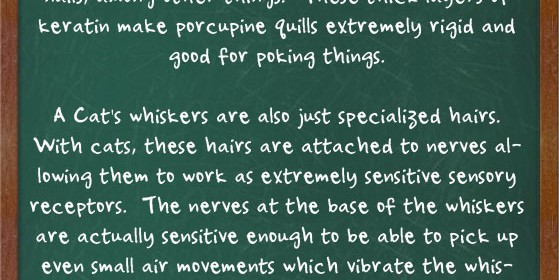
A porcupine’s quills are just extremely enlarged specialized hairs that have unusually (compared to other mammals) thick layers of keratin, which is the main structural component of hair and finger nails, among other things. These thick layers of keratin make porcupine quills extremely rigid and good for poking things. A Cat’s whiskers are also just specialized hairs. With cats, these […]
Read more
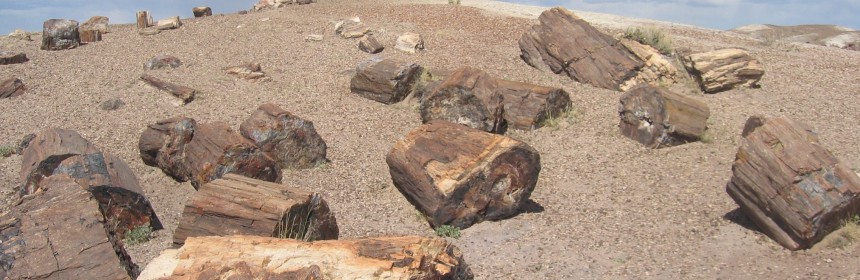
Today I found out how things become petrified, rather than just decaying normally. Petrifaction (also known as petrification) is a type of fossilization which leaves living organisms preserved as a type of stone. In order for this to happen, a specific set of circumstances has to be present when the organisms cease to live. When any living thing dies and […]
Read more
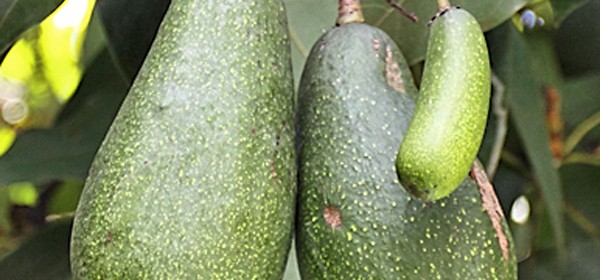
Today I found out that “Avocado” derives from a word meaning “testicle”. The word Avocado comes from a Nahuatl Indian (Aztec) word “ahuácatl” meaning testicle. It is thought that the reference is either due to the avocado’s shape or the fact that it was considered to possess aphrodisiac qualities by the Aztecs. In Spanish, “ahuácatl” became “aguacate” and eventually “avogato” […]
Read more
Jimmy K. asks: Can the great wall of China really be seen from space? That depends on what is meant by “seen” and “space” because the definitions of each determine whether or not the Great Wall of China can be seen from the heavens above. First, let’s look at whether the Great Wall of China be seen by the unaided […]
Read more
You should know looking up at the TV with your head tilted up will cause more eyestrain than if you’re looking straight on at it. Having the TV below your eye level, so your head is tilted down, also produces less eyestrain than if you’re looking up at it. The same type of thing applies for computer monitors, so it’s […]
Read more
Dolphins have no sense of smell due to lacking any olfactory nerve or lobes. Instead, they use their sense of taste much like we use our sense of smell. Dolphins will often taste the water around them for this purpose. Source
Read more
Today I found out why beans give you gas. Beans contain a sugar molecule called ‘Oligosaccharides’. These types of sugars cannot be digested by the stomach or small intestine. They get passed on to the large intestine where numerous types of bacteria begin to break them down. During the process, the bacteria release several different types of gases, mainly hydrogen, […]
Read more
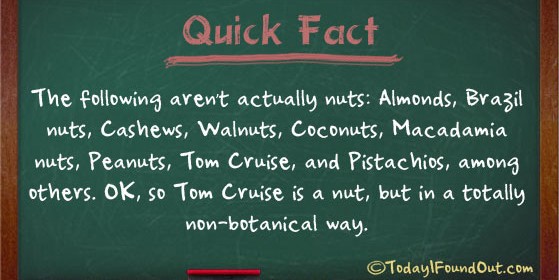
You should know almonds come in two varieties, sweet and bitter, and the latter is highly poisonous when raw. Bitter almonds contain glycoside amygdalin. When eaten, glycoside amygdalin will turn into prussic acid, a.k.a. hydrogen cyanide, which incidentally was the key ingredient to Zyklon B, the pesticide used in the Nazi gas chambers. So if you’re walking out in the […]
Read more
Kirk Douglas was born Issur Danielovitch Demsky. His parent’s original surname was Danielovitch, but they changed it to Demsky when they immigrated to the U.S. in 1912. When Douglas first started acting on Broadway, he went by Isadore Demsky, then changed it completely to Kirk Douglas just before enlisting in the navy during WWII. I couldn’t find any reliable source […]
Read more
This is a Sponsored post written by me on behalf of Crucial.com for SocialSpark. All opinions are 100% mine. You should know how to add RAM to a computer. As a Computer Scientist (Master’s degree and all), I can tell you that in the vast majority of cases, dollar for dollar there is no single thing you can do to […]
Read more
The Ecke family of Encinitas, California once had a virtual monopoly on poinsettia sales starting in the early 20th century due to the fact that they discovered a way to create compact, fuller poinsettias by grafting two varieties of poinsettia together. Other poinsettias sold at the time tended to look more like the weeds they are. In the 1990s, however, […]
Read more
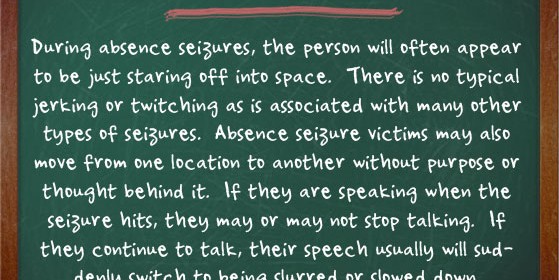
You should know what to do if you see someone having a seizure. Not all seizures result in a person jerking about uncontrollably. With many seizures, the person may simply smack their lips, seem to be oblivious to their surroundings, wander around mindlessly, stare off into space, or the like. In these cases, there is often little to be done. […]
Read more
A Walmart store in Springfield, Missouri sells more Duct tape per person than any other place in the world. Springfield, Missouri is also considered the “Duct tape capital of the world”. Reference
Read more
Petyl asks: Where does the word robot come from? The word robot was coined by artist Josef Čapek, the brother of famed Czechoslovakian author Karel Čapek. Karel Čapek was, among other things, a science fiction author before there was something officially known as science fiction, in subject matter along the same vein as George Orwell. He introduced the word in […]
Read more
Today I found out Ben Franklin’s proposal of something like daylight saving time was written as a joke. In a comedic letter he wrote, An Economical Project (published in 1784), “to the authors of the journal of Paris”, Franklin mentions something like daylight saving time. Although, instead of changing clocks, he suggested ringing church bells and firing cannons, among other things, as […]
Read more
D. Braxton asks: Is it safe to eat moldy bread or moldy cheese? For the quick answer to your question: no and sometimes. While not all molds are bad for you to eat, many are, and unless you want to whip out a microscope and meticulously identify the mold present on your food (note: there are 300,000 known types and […]
Read more