
How Earth Got Its Name
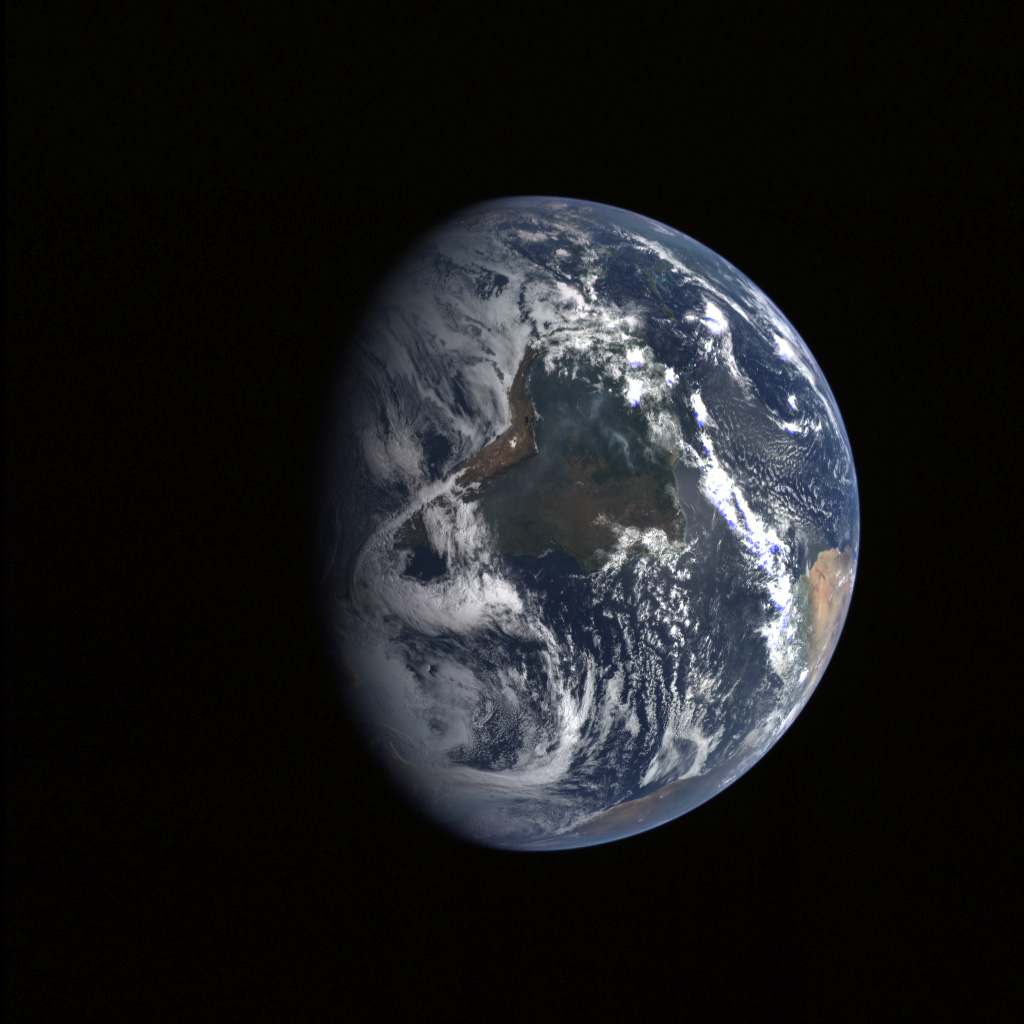 Today I found out how ‘Earth’ came to be called so. Firstly, it’s important to understand that nearly every language has its own name for the planet. It’s called ‘terra’ in Portuguese, ‘dünya’ in Turkish and ‘aarde’ in Dutch, just to name a few with their own etymology. However, the common thread in all languages is that they were all derived from the same meaning in their origins, which is ‘ ground’ or ‘soil’.
The modern English word and name for our planet ‘Earth’, is said to go back at least 1,000 years. Just as the English language evolved from ‘Anglo-Saxon’ (English-German) with the migration of certain Germanic tribes from the continent to Britain in the fifth century A.D, the word ‘Earth’ came from the Anglo-Saxon word ‘erda’ and it’s germanic equivalent ‘erde’ which means ground or soil. In Old English, the word became ‘eor(th)e’ or ‘ertha ‘. There is speculation that the origins of the word may be from an Indo-European language base ‘er’ which produced more modern adaptations of the word used in languages today. What is certain though is of all the Planet’s names, Earth is the only one in our solar system that does not come from Greco-Roman mythology. All of the other planets were named after Greek and Roman gods and goddesses.
Bonus Facts:
- Translations of the Bible into English was one of the earliest recorded use of the name Earth – ” God called the dry land Earth, and the waters that were gathered together he called Seas. And God saw that it was good. “(Genesis 1:10)
- Earth is the only planet in the Solar System with plate tectonics. The outer crust of the Earth is broken up into regions known as tectonic plates. These are floating on top of the magma interior of the Earth and can move against one another. When two plates collide, one plate can go underneath another.
- Earth doesn’t take 24 hours to rotate on its axis. It takes 23 hours, 56 minutes and 4 seconds to completely rotate around its axis; If you add up that little motion from the Sun that we see because the Earth is orbiting around it, as well as the rotation on its axis, you get a total of 24 hours.
- Everyone knows that the Earth has 1 Moon. But did you know there are 2 additional asteroids locked into a co-orbital orbits with Earth? They’re called 3753 Cruithne and 2002 AA29. The first doesn’t actually orbit the Earth, but has a synchronized orbit with our planet, that makes it look like it’s following the Earth in orbit, but it’s actually following its own, distinct path around the Sun. The 2002 AA29 travels in a horseshoe orbit around the Earth that brings it close to the planet every 95 years.
- Earth is gradually slowing down. Every few years, an extra second is added to make up for lost time. In other words, millions of years ago, a day on Earth would have been only 20 hours long. It is believed that, in another million years time, a day on Earth will be 27 hours long.
Expand for References:



| Share the Knowledge! |
          |
 |
Earth and Terra are okay names, but I like to use the Latin translation, as it sounds more scientific: Tellus.
I vote for a change of name, though. Keep “Earth”, “Tellus” etc. as nicknames, and find a new one, more in line with the other planets.
Well In Greek It’s called Gee that comes from the world Gaeh wich was a mythological goddess like the rest planets.
It sounds to me that Tellus comes from Terra and was pronounced by people who did not have rr in their vocabulary and mispronounced it as ll.
Terra became Terru and it had added to it s, a Greek feature. And from Terrus to Tellus it is just a mispronunciation away.
No. Tellus is its own root. It is related to Sanskrit “talam”, Kroatian “tlo” and German “Diele”. Meaning bottom, ground and floor plank respectively.
Somewhere down at the bottom, read the post about Sumerian or Akkadian: We know these were the first civilizations and were where language started out- as far as are records go. so funny to see people talking about Portuguese, Spanish, roman etc… the first people called it something and it never changed from there…
Home….
In Arabic language “Earth” is called “ardd”
You’re right Iman.. I would even say that ‘earth’ and ‘Erde’ in German come from the Arabic word أرض pronounced [‘arD]. It can’t be a coincidence and the Arabic word can’t be derived as it is much older (Semitic language).
The Arabic word is derived from Hebrew Eretz which is pretty much the same root.
Hebrew is founded after thousands years which mean the root is Arabic. The two words dünya’ and ‘aarde’ is the same pronounced words in Arabic ‘ ارض’ and ‘ دنيا ‘ .
My friend, I am sorry but Hebrew is more ancient than Arabic.
https://en.wikipedia.org/wiki/Hebrew_language
are you sure thats not Klingon?
Lol I laugh at that one, good one, I could see Sheldon Cooper saying it .
With the way the discussion is going..I’m expecting Pavel Chekhov to announce its actual origin…Russian
In Turkish, It called ” Dünya ” but actually it comes from (دنياء)(dunyāˀ)arabic.It’s meaning is “on bottom, the former life(Where your on test to be a good prayer or worshipper in Islam)” It is feminen form and with it is simple form, It called “edna”. I got it from Atabet-ül Hakayık and it was written 1300 years ago. So your arguament is inappropriate now. Maybe, You could questioned me about Turkish and Arabic are not in same language group but they have closely related with each other for 1400 years(roughly).
yes
it has an arabic origin
which appears in geramn الأرض or aardd
do not forget to remember arabic
The word Earth is of Indo-European origin. Semetic languages (Aramaic, Arabic, Hebrew, others) are not related. Still, it’s interesting the Arabic word is ardd.
I have found this word (source of this word) in Arabic dictionary and it’s meaning craving and rubbing so it,s Semitic origin and it is not Indo-European origin.
Ardd only means Earth or earth (dirt). It does not mean craving or rubbing, so you must have spelled it wrong.
Er…he got it wrong in his statement that Earth wasn’t named after a Greek God. In fact the Greeks called Earth Gaia, which means mother (not soil). Gaia was originally a preter-god, similar to Chronos. Had the Roman’s taken in the concept of Gaia which predates the other gods of Greek Mythos we’d probably be calling Earth Gaia and not Earth at all. Sadly however the Romans used a Latin word for Earth, Tera (Terra) which has been transformed with the different Latinate languages (French, Italian, Spanish, Portuguese, etc).
It should also be noted that Erda isn’t Anglo, its Breton and pronounced Ar-thah, with a voiced -th.
@Krist Martin: Sources?
No, Gaia gave birth to Earth. With her union through Uranus. No pun intended.
Some of us DO refer the planet earth as Gaia.. Earth Mother. More and more humans are becoming familiar with this name.
Why is a planet that’s 70% water called “Earth?” That’s what I’ve always wondered.
I guess because we inhabit the soil, not the water. Without earth we wouldn’t be able to survive. Which reminded me of a nice movie you should watch “Waterworld”. It is old but it shows how its nearly impossible to live without soil. http://www.imdb.com/title/tt0114898/?ref_=nm_knf_i4
Only nearly impossible. The Mariner thrived.
Because only the SURFACE is 70% water, and the actual planet is 99% rock and iron.
It is because Yarra means water in the old Aboriginal Languages of Victoria, Australia.
And they came to Australia over 60 000 years ago, while the Greeks migrated to actual Greece in two waves, 7000 years ago and respectively 5000 years ago.
It could be that the vast quantities of water came later, after the planet had got its name.
Just read the Biblical story of the great Flood.
It could be because the excess water came later, after the planet was already named.
hahaha, NO.
Jesus spoke Aramaic,
All things were created through Him and for Him ( Colossians 1:16 )
So if it was created through Jesus the Earth would of originally been called Adamah in the language Aramaic as Jesus spoke this language.
Actually, since you mentioned the Bible in your article, the word “Earth” translated from the original Hebrew is “ha’ aretz”, or the earth, or the ground. Looking at the two words, it’s easy to see where the languages may have confounded a letter here or there, and turned “aretz” into “earth.”
The word in the Hebrew is Eretz. The word you mentioned HaAretz is in the form of the specific noun-The Earth. In it’s not specific noun – Earth, sounds very similar to the word in the Hebrew – Eretz. Also, Since the Hebrew word is not written with vowels, the E after the R is missing in the English version. This is perfectly understandable as the translator of the Bible into English was not familiar with the correct pronunciation of this word. Other than that I assume that the ending TZ turned into TH, is common use for this combination in the English language.
In my language, Assyrian, it is called Era, Arra, or Ar’aa, depending on the dialect. The Assyrian language pre-dates the bible, definitely more likely word origin, and possibly the source of the word Earth.
I agree with you. Please read my comment from 21st of January 2016.
William Tyndale… are you kidding me? Tyndale used original Greek and Ancient Hebrew text when he translated the Bible into the commoners tongue (English)
Huh? E is a vowel too…??
Actually, a whole group of translators was involved in translating what we knowo as our King James Bible (or Authorized Version) into English, and all of them were fluent in spoken Hebrew, Latin, and Greek, in addition to multiple European languges. They were scholars of a kind we very rarely see these days. And they knew their history, and their etymology, too. The Kind James was first published in 1611, if memory serves . We moderns, thanks to the influence of Darwinin and his supporters (Galtons, Wedgwoods, Huxleys, Lyall, et al), have been conditioned to think of pre-Evolutionist thinkers as primitive, almost part co-called ‘cave-men’. If you want to dig deeper, I highly recommend the Trinitarian Bible Society, which has excellent literature available, as well as Online resources; and the Creation Science Movement, likewise (and not to be confused with “Christian Science’, which is neither scientific nor Christian, but a smoosh of pseudo science and Hinduism, a.k.a. Theosophy). These societies are run by people who also welcome questions, healthy discussion, and constructive argument. Happy hunting!
Methinks that Tesla, the greatest scientist possibly of all recorded history would disagree with your ‘pseudo’ big bang hypothesis. It’s all in the Ether.
good info in the article, thank you. only thing I want to add/clarify is that PLANETs are not named after GREEK gods and godesses, though at one point they were. To pay homage to the ancient greeks and romans that first named the moving celestial bodies, our PLANETS in the solar system are named after Roman Gods and Goddesses. The moons of the planets are named after people in greek mythology related to the greek counter part to the god in roman mythology. for example Jupiter is a roman god, its moons are named after Zuess’ (the greek counterpart to Jupiter) servants.
not a big deal, as that isn’t the focus of this article, just thought it would be best to spread more info.
Actually Uranus was a Greek god, hence the author’s statement that the planets were named after Greek and Roman gods and goddesses.
From a ‘universe’ perspective, the most remarkable – although likely not unique – aspect of this planet is that it evolved…humans. So, it’s updated name could maybe be…?
‘Humerous’
Quote: ” It’s called ‘terra’ in Portuguese, ”
– – – – – – – –
Oh really? The Spanish have been calling Earth Terra long before Portugual became an idea…
Portuguese is a subset of Spanish, and not an original language like Mandarin or Arabic. So correct that little fact you have wrong.
@aiesha G: How is it wrong to say it’s called terra in Portuguese when it is? The fact that it came from Spanish has no bearing on the discussion, though of course I’m always interested in such facts. It just doesn’t make the statement incorrect.
Thank you
You don’t even have an idea how stupid this is haha… Spanish is my mother language and Portuguese is certainly not a sublanguage, that’s just bullshit… both are romance languages, they came from Latin just as rumani and French… and by the way Spanish word for Earth is TIERRA not Terra so you are twice wrong…
Portuguese doesn’t come from Spanish, it comes from Vulgar Latin alike all latin languages of the peninsula (Galician, Leonese, Spanish, Catalan, Valencian among others I didn’t mentioned)
Why not take it a step further and say the Romans have been calling Earth “Terra” long before Spanish was a language (it’s “Tierra” in Spanish, anyway). There’s nothing wrong with the title, they simply used Portuguese as an example, there’s no logic to your argument. Moreover, Portuguese/Galician are indeed different than Spanish and have a much heavier Celtic influence. Interestingly, Portuguese speakers tend to understand Spanish speakers better than Spanish speakers can understand Portuguese speakers.
the name of the earth came from a titan called gaia !! AND ALSO ROMANS DONT HAVE THE SAME GODS WITH GREEKS!! AND I KNOW THAT BECAUSE I AM GREEK
Dude, the Romans stole your gods, re-named them, and personified them. I would think you’d be more angry with that than whether they’re the “same”… which they are.
Let’s not for get that earth being a planet is still a relatively new idea compared to Language. People of the old world didn’t look at the plain the walked on as a celestial body. The ground was just the ground to most people.
Why is it that at some point people become rude or even downright nasty to one another in these forums? Then it invariably becomes “one-upmanship”. Did you know that it is quite possible to be kind when correcting someone?
^Best comment of the lot!
Amen, Ruby. Thank you: we would all benefit so much more if we could be polite. There is so much to learn, and we have (I am speaking as the great-niece-by-marriage of the person my families, on both sides, worshipped in the place of God, that being the amateur scientist Charles Darwin) been far more duped than we realize by our state education curriculum, into believing a lot of pseudo-science sold to us as if it were absolute fact. Kudos to the author of this site for doing his best to present well-researched articles for us all to learn from.
BTW, who here knows that William Tyndale – probably the greatest English scholar that ever lived – was strangled and burned at the stake by Roman Catholic authorities in Vilvoorde, Belgium, as a “heretic”. Before he died, he prayed, “Lord, open the King of England’s eyes”. The rest of the story more than bears investigation.
Hi Jess:)read all what i was saying here
This year.but carefully.and after give me your yahoo id or write me crestfallen015@yahoo
Com
.we can make a date.lol.still loving you …lol
I don’t know if the Almighty opened the king of England’s eyes, but he certainly opened the king of England’s pants, and there-upon hangeth a tale…
Thank you for saying something. I was enjoying the somewhat, if not largely, intellectual input and respectful banter from various perspectives until the vulgar insulting comment. Really not necessary and the result of the slam is not that the intended target of the “barb” looks bad….quite the contrary – the person making the insults looks ill-informed, uneducated, and hostile. So unnecessary and detracts in a major way from enjoyment of readers. Even highly educated linguistic and history experts agree to disagree without getting ugly about it.
To answer your question, it’s because we have forgotten our manners….
Actually the only one that was the closest was the hebrew ha aretz the earth yes gia from greek we do hold fast to alot of greek words to this day but the correct would be the hebrew but if you wanna go deeper seek the root aretz comes from older words such as akkadian,and Sumerian, akkadian is the mother tounge of semetic language earth gets its name from a place located in ancient Mesopotamia modern day Iraq. called ERIDU home of the water god ENKI one in the same in your greek is Poseidon and in roman is neptune and other names in different cultures you can do research on eridu its known to be the oldest of anywhere on your earth some people argue over that or nippur home of Enki’s half brother Enlil the sky god also know as zeus and romanized jupiter eridu was the place where the adumu was created thats akkadian for adam the garden of E.DIN and there know you know 🙂
http://www.bibliotecapleyades.net/sitchin/genesisrevisto/genrevisit05.htm. hopefully this helps
I agree with your view that it was named because of Ea in Sumerian times.
Earth is the only one in our solar system that does not come from Greco-Roman mythology. All of the other planets were named after Greek and Roman gods and goddesses.
But in India, Name of Earth is also based on Goddesses.(In many Indian Languages…)
Did it ever crossed anybody’s mind that the word Earth sounds a lot like its equivalent in Hebrew Earetz? Since one of the first use for the word is found in the English translation of the bible, it might as well be that it is actually the Hebrew word misspelled. You have many more words that were copied to the English with the original biblical term in the Hebrew , like Hallelujah , Babel , Messiah and many more.
Of course we all know “earth” was derived from “aarde”.
Dutch is the way to go in this matter!
You’re all wrong…”Earth” is derived from Godspeak…and roughly translated as…”all sales final/no refunds”
Hi just wanted to let you know, Earth is an old Anglo saxan word meaning ground and soil, but earth was used to describe for one word a 1000 years ago….. Home. so I for one think Earth is a perfect name for our planet.
@Davin and others… It is most plausible that etymologically, the word ‘earth’ goes back to Semitic languages which are much older than Anglo-Saxon (Germanic…) and other European languages: earth, Erde, aarde, etc… all sound like Arabic أرض pronounced [‘ard] and Hebrew אָ֫רֶץ pronounced [‘eretz] or [‘aretz]. The assumtion is that the ‘r’ remains in mid-position and the final consonant is a dental (either plosive, affricated or interdental).
knowing the Hebrew aretz and the sloppy speech patterns of humans, it is not without reason that arets became erath, then, urth (earth).
yeah, if har meggido turned into armageddon and kfar nahum into capernaum then eretz to earth is even less bastardized.
having both languages as my mother tongues there are tons of words that are without doubt related…..but look up the etymology and it always seems to stop at greek, rarely will you see it taken back to the semitic languages or earlier.
Proto Indo-European culture had a sky father (Dyaus Pitr) and his consort mother earth (Prithvi). Dyaus pitr became Zeus Pater in Greek and then Zeu Piter (Jupiter) in Roman era.
Prithvi is pronounced p-ri-TH-vee. Drop the p and vee phonemes and you get ri-TH. Start that with a vowel to smooth out the sound, and you get a-ri-TH, which is exactly how we now pronounce earth.
Many Indo-European languages have similar sounding names for earth, as pointed out in several comments above.
Very interesting. It is obvious that many of you are very well read and intellectual in matters of the earth. Personally, I liked B. Johnson’s simple comment…..Home. As John Denver said in one of his songs….”If there’s an answer, it’s just that it’s just that way” As we try to unravel the mystery of how the Earth got it’s name, we learn all kinds of interesting facts, but there’s a pleasant peace in the end of knowing that it is simply our “home”. Thanks for all the cool info!
Temporary Home
Is there any way we can accelerate the phenomenon by which the days are getting longer? I could really use a 36 hours day. A bit more sleep, 8 hours of work and the rest play.
But… Isn’t Terra a ROMAN goddess?
So.. Earth is ALSO named after a roman God?
no, Terra, is not a roman goddess… you might be thinking of Gaia from God of War, but she was a Titan, not a God.
the oldest are pelasgians, older tha history itself. The word “earth” in pelasgian “erdh” “ardh” or “i ardhuri” that means in english “its comig” “came” or “the newcomer”
The latins call it “terra” after the biblical story of Noah’s Ark, still in pelasgian “ter a” wich in english goes for “is it dry” or “dry”
LOL @ these comments…
It appears that this “Tinkle” match will not end any time soon, Earth, the word created by many generational and cultural translations will need to re named as was one suggestion during this thread……
IMHO….. if we all do not take notice of our interaction with all that is Earth and of each other, I offer this as a befitting renaming….. “CRAP”
Have a wonderful day
Earth? What a terrible name for a planet. You might as well call it “dirt”.
that’s the idea..
I have the privilege to have come into contact with old Australian Aboriginal languages, which were so numerous two hundred years ago. I asked many
Aboriginal people, and I also consulted dictionaries: What does Yarra mean?
The answer is Water. There is also a river named Yarra in Melbourne, which flows not far from my house. Since the Aboriginal people are said to have migrated to Australia as early as 60 000 years ago and they have this Yarra word into the local language, here in Banyule (Hill in the local language) City, these times pre-date the
migration of the Greeks from India (which happened in two waves 7000 years ago and 5000 years ago.) So according to how I see it, the word Terra (or Ti Yarra or Tierra) means Watery place, or Watery Planet.
So that would mean that the term ‘terra incognita’ used in ancient maps is about undiscovered areas in water.
Isn’t named for a Greek God?
EROS…
Even though that is the name of a planetoid, which wasn’t even discovered until much later.
Not very well researched.
Still an interesting article.
ΤΗΕ WORD ”EARTH” IN NEW GREEK LANGUAGE CALLED ”ΓΗ”[ΥI] IN ANCIENT GREEΚ CALLED ΓΑΙΑ [ΥΕΑΗ].
Gaia IS the Earth. We are all walking on Gaia’s body. She didn’t give birth to it. It wasn’t named after her. All these names such as Tierra or terra, Earetz, so on and so forth, these are all just names that different people have given her. Some like the name Earth because it means home. Others like the idea that it’s name should fit in with the other gods and goddesses. If that’s the case, you should call it Gaia. (Don’t wake her though, lol) maybe that’s why the name is not Gaia- for fear that saying her name too much will wake her up, which would be very bad for us.
Anyway, my point is: this hunk of rock we stand on, was never given an Official name by the “president of our planet” or whatever. We know where all these names came from in all of our different cultures. It doesn’t have a name. So for me it’s Gaia, Earth is her nickname. Y’all can call it what you want
Lot’s of entertainment there. I looked but didn’t see this one. Why is “the Earth” often referred to as “the Earth” when we don’t say “the Saturn”, “the Jupiter”, etc. I almost wrote, “the Pluto” but that would be a different topic, wouldn’t it?
Earth had its name before the English language, and before the Bible. It was the ancient Chwezi people of the Kitara Empire who named it. The original name was Isi, Isin, ns, sia and ensi by Africans. A term that came to be written as AETHI by the Greeks (later conceptualized to planet Asia), then Earth by the English. The word Aethi-opia/Ethiopia which greeks applied to refer to what we call Africa, originally came from this concept of Bantu term “Isi” that had become AETHI.
It’s a shame that Africa is always left out of etymological dispute, cultural origins and often history in general. The cradle of civilization has had so much more impact in history than people think. Even our modern society.
Could you please provide me with a source on this info? I cant seem to google this..
There is not a scrap of evidence to support the ‘out of Africa’ hypothesis so beloved of social Darwinism/Marxism. It is a ludicrous assertion. Aether, Ether; our plane was formed from the ethers.
‘Earth is gradually slowing down. Every few years, an extra second is added to make up for lost time. In other words, millions of years ago, a day on Earth would have been only 20 hours long. It is believed that, in another million years time, a day on Earth will be 27 hours long.’
Actually, the extra second is not added to make up for lost time, the Earth is not slowing down a second every few years. That’s actually an incredibly quick slowdown compared to the infinitesimal change of rotation speed that is actually measured. The reason a leap-second is added every few years is that the old time standard used to determine the Earth’s rotation was never quite exactly matched to the atomic second, so the discrepancy adds up to 1 second every so many years, because the atomic second is just a teeny bit shorter than the standard second. Since radioactive cesium atoms count so much more accurately than the outdated method, we have to add a second to the old style year to recalibrate it whenever it falls behind the atomic clock by about that much, because the atomic clock is counting it faster with its shorter seconds.
I should correct myself on that… it’s the atomic clock that has the extra second added because it is using longer seconds than the old method. Sorry about that. But same idea. And they keep doing it because the institutions using it are loathe to make an adjustment to conform to what the planet is doing.
It is fascinating to read how languages have evolved. I enjoyed reading this post and all the comments 🙂 Makes you want to go and study all the ancient languages. Thanks Noreen for posting and thanks to all those who have taken the time to expand the topic!
does the name Earth have anything in common with Eretz, or it’s just a coincidence?
I believe the name Earth actually came from the Native Americans. Their name for the ground was Th because if they fell on it, they would say “Th!”(Tut) When they wanted to find out how close the Bison where they would put their ear to the Th and hear the Bison hooves. When the Chief ordered one of his hunters to listen he would say ‘You! Hears-that’s-big. Stickum ear to Th” or if he was in a hurry he would simply say “Ear Th!”
And the Native Americans were called ‘Native Red Indians’ by Columbus due to the practice of Indo-Aryans covering their skin in red ochre to protect it from the heat and other purposes. They had migrated from India owing to some cataclysm. Of course, this knowledge has been largely killed off together with those original white civilisers. Gosh, not being ‘supremist’ am I? Anything discovered of white, blonde or red haired ‘giants’ skeletons of antiquity has been cordoned off on ‘indigenous heritage sites’ and ‘sacred burial grounds’ or ground down for fertiliser courtesy of the Smithsonian mob. Such information was known and freely spoken of by dark skinned ‘Indians’ until a gagging order in recent decades to fit into the ‘white is baaad’ narrative of modern Marxism.
I sure could use those extra 3 hours about now.
it s En
number 4
someone said here that Earth don t sound goood but i like…..
he said here his name for the second time in a more public place let s say just to make you “fucked” so to say here you kill it in this century u can t you die by hate that you can t he ll fuck you always as he did u can t do nothing just to try.before 1900 you weren t killers predators wolves and vampires but now you are.i ll just stay and i ll watch how he fuck you as he always did .it s a lie i don t like earth thoth dagoth sagoth etc you are MAD but he is not.go and put women to work in change 3 too and you lll seee what will happen.ah and of course don t forgot to make some more thin jeans and heels for them
i read that norvegians wanted to make in antarctica own territory or something like that, that s good good……you wannna killl him as i said
your future so to say i think it says that don t need approval when speaks……after the movie i go to sleep (now i watch a movie)if my last posts aren t posted i ll ignore this site in the future.that s all what i had to say
i remember….how was the question in the interview :”will mortiis rise to the stargate?”well,i think things don t go in this way:):P
i don t have nothing to do with such miseries but i wanted to give an example .his answer was”yeah i would like a lot”.what to say…..madnesss with cl
loook those are my favourites antarctica and aus those who are lonely and small but of course there is passage drake and i don t think i have to say more
look passage drake is much much older than is said….it wasn t opened at the age of that fish teeth fossils that was find , it s more older…..look i like the name ertha,and there is an another thing that ice sheet in anatarctica is more more older than it is said,look it was find proof of ice at the arctic that is 45 mil years ago,and passage drake it s not opened 41 mil years ago it s ice at the both poles by the same time that i wanna say…..that s what i wanna say that is ice at the poles by a long long time and nobody can t knows from when…..look i wanted to say that i like earth but i changed my mind again,loook it s that that is a connection with the name earth and the bible and i am atheist and i don t believe in idea of creation.Look it s En i dunnno but the number is 4.that is sure
what i also wanted to say it was no flood in antarctica aren t precipitations that ice sheet it was there always look there are katabatic winds from the polar plateau their directions are at the edges and there they are at stormforce
i also wanted to say that the name of Greenland is Nuniva
It’s true name is ‘Warm wet rock number 462, cluster 300, spiral 2,849’. I kept a ledger recording all the names of the funny little blobs and rocks I set adrift out there. It isn’t my best work and you people have made a total mess of it. Clean up or I’m going to have to think about evicting you. Especially the ones which continually slander and libel me. Bad form guys, very bad form. All that stuff they claim I did and said, never happened. Well maybe –
Just an FYI, the big bang – total accident. I just made the best of what was left after ‘the incident’ …
I don’t know what Andromeda Strain Strain is on, but man I could do with getting me some of that good stuff right there. Osteoarthritis is not a friend let me tell you.
Look, don’t sweat this name business. Just be good to one another, tidy up a bit and love what you got. It’s a nice place. Better than some of the other rocks out there. I got these blue guys on one, constantly complaining they got nothing to drink. Boy, talk about angry tenants. Yeesh!
Hey Bob G,
Are you trying to say the Holy Bible really isn’t your inerrant, divinely inspired word? That would be a big relief, cos all that slaughter and blood-letting in the Old Testament sounds utterly diabolical. (Seriously, pun fully intended.) But, if it’s true, doesn’t it show that you made a huge mess of it yourself, right from Cain & Abel? That’s why you had to start again, at least a couple of times, right? And, since you made us, ultimately you must be responsible for us being such messy, murderous mongrels, Yes? Is it true that your name really is “Jealous”, as in so many translations (e.g. AMP, ASV, CJB, KJV, NLV, LEB, etc etc) at Exodus 34:14? How’d ya get a name like that anyways? The Angels, right, in secret insubordination?
So what to say,i think i should answer,only now had came in my mind lol:)ok so read dude all what i spought later ,in february this year especially i had spought a lot of stuff.so believe what you want from there choose what you want
Everyone is free to choose.yeah there is a God a giant force which is the master of Cosmos but as i said i don’t believe in the whole bible.some things in the bible are wrong in my opinion
And that giant force which rule the cosmos the heavens the hells all the wolds i call it re pulsor.it is a giant re pulsor.Earth is too a re pulsor.but more more smaller than the giant ,the maker(of everything)in one word is God
Ok i understand that you wanna know more.ok i was speaking a lot after…read what is there after lol
Back to original subject. In Turkish we have another two word synonym for earth which has a similar sound. Yes it’s true that during Ottoman ruling, words from many other regional languages made it way to spoken language. But there has been serious work to filter out those from original language during the republic period.
We sometimes use the word “Yer örtüsü” instead of other word dünya in more formal sentences, dünya has some slang use. Örtmek as verb means to cover, örtü today is used for piece of cloth to cover something, for example “masa örtüsü” means table cloth. If you say “ört” it’s a command to cover. Word earth is more related to this ancient Turkish word. It has been proven that there are more than 300 hundreds Turksih words have commonly used in English. Tracks of Pro-Turkic languages can be found everywhere, and most of the runic tablets found all around Europe has been discovered actually written to be in Turkish including one famous one found in Gotland island in Baltic sea. Relationship between some Native American tribes with Turkish dna is also proven pointing a migration over frozen Bering. No surprises similarity with another Turkish ethnic tribe living in very north east Asia “Sakha”, Deer People.
Like Atatürk, you are very creative, but wrong also.
First of all, the English word Earth is not the root for the word itself. So your claim that earth and ört to be the same origin is totally absurd. Also throwing some other non-sense claims into the discussion topic does not help at all.
Accept this : you were nowhere close when humanity established its first civilisation.
PS: For those who does not know what Atatürk, the founder of modern Turkey, claimed here is the claim:
All the languages in the world are rooted from Turkish.
LoL
I haven’t had the time to read ALL of the previous comments but I believe there might be something to be said about the “Proto-Indo-European” (aka “PIE”) revelations that might take us back between some 12,000 and 5,000 years ago.
From everything I’ve searched for (and read), this language, and the people who brought it into being, traveled from somewhere in Eastern Europe and moved around quite a bit. Quite A Bit. They’re the progenitors of most every culture AND language; which, by extension, would mean there are many forms of the root for the word for “earth” that are strikingly similar.
I wish I had a time machine. I would have loved to hear our first language!
Please note that the day is only 24 hours as a yearly average. Due to the elliptic orbit of the earth around the sun, its speed isn’t even and a day can be anything from about 23 h 45 min to 24 h 15 min in the course of the year. This is called the Equation of Time.
WELL EVERYONE IS CLOSE BUT THE SEMANTIC DERIVATIVES ADD UP TO “FERTILE ONE” OR “MOTHER” FROM THE GREEK TRANSLATION HOWEVER FROM ALL OTHER DERIVATIVES MEANS “SOIL” “DIRT”. INTUITIVELY COMBINING BOTH DERIVATIVES AND YOU GET “GREEN DIRT” OR “GREEN ROCK” OR “GREEN PLANET” THE ONLY GREEN PLANET WE KNOW OF.
earth word is from arabic language “ardh “وَالْأَرْضَ mentioned in the holy book Quran
The Planet Earth is on a TIME CYCLE, which is on 4,320,000 year cycle and the Name EARTH before Greece or Arabic ever existed is “DHARTI MATA” Mother Earth” the Sanatanist is Worshiping “Dharti Mata” onto today.
Dunya does not mean Earth. It means world, i.e. this physical, temporal world. The connotation is that dunya is everything of this world, as apposed to the “Akhira” or afterlife.
Look people i know what i said but that was two years ago i was in very very bad mood then that s all what i have to say,look i am a very lonely person and i have often depressions…look people i know what i said there but i was depressed and i change my mood s often…look it s not that name En dunno how came in my mind this name but…then i believe it now i dunno i don’t care maybe it is maybe not…who knows and who cares…
Look i ll recognize i was trying to delete that posts in summer lolz but here aren t such functions like on other sites what is said remain said ok that is so what to say look as i said i don’t believe in that name En anymore but some things which i said are n t mistakes i still don’t believe in the flood for example and i still love Antarctica…
I wanna go there…in the future,it s hard for me cause i don’t have much money and it s very far but i ll go in Antarctica once.i ll make a visit there cause i wanted to go there by a long time ago but i never haven’t the occasion.and about the number.so what to say other number doesn’t fit.it s not other number.i still believe this that Earth is number 4
And about the posts more above as i said i have my moods my problems nobody is perfect so to say i make mistakes everyone does and they can be ignored.as i said i wanted to delete them.but some things aren’t wrong.as i said above i still believe in number 4
So what to say more i need a girl friend.i never had one and i really need one.but girls don’t want and i dunno why.i tried with a lot and no one wanted.ok but these are other things…we aren t at the subject.dunno what to say maybe its God but not how it s in the bible.i believe things its different.and as i said i don’t believe in the flood.dunno what to say these things are interesting but it s hard to find right answers….
As i said…still burns…but now i am in a better mood in comparison like i was two years ago…i am still with these things but as i said i need a girl…
not burn is the word……cause he don t burns lolz it s me in the end lolz 😀 look it s his voice……the voice of the wattles look it s not how you think…..it was really fantastic it was two years ago that when i was speaking with the voice of the wattles of the planet i look in the dictionary for the word i don t know it how is said but you understand what i wanna say the wattles of the planet…..it was really fantastic and then in that period it came in my mind that name En but as i said i changed my mind….. loook it was so fantastic…..ok people i don t lie these things were really happened to me look i try to describe its the word compress its reallly hard to describe it s not the word compress but i dunno other these things can t be described….these are other things…..ok people i know how it is but that is it was speaking through me…..that is.i was
ok look people i know….how is Earth and that happen bad things and that is suffering,i too suffered …..ok i dunno what to say…..that is…..in this way wanted the gods…..it could be better i already had the ideea,i was speaking more about on this article https://www.smithsonianmag.com/science-nature/how-did-water-come-to-earth-72037248/ at comments on this site i have the nick DamienThorn.ok people it s true all what i said there….but that is…..it s not and this is the way that the gods wanted…..dunno what to say……an Earth with both poles on water it would be fantastic……
look as i said…..i never had a girlfriend…..that was my suffering…..i always wanted to have but they didn t wanted me,i dunnooo why…..loook in past for a girl i was by 8 times with train at she it was a road by a a noon and a night i loved her a years she didn wanted in any way and i suffered a lot then…..i was at other girls tooo but still the same they didn t wanted,what to say tried tese days with two girls tooo but no chance…..they had rejected me and one in a ugly way yesterday and that is…..in this way had go things tilll now….anyway hope will be better in the future…..
i have to say that i have 36 years.they are so beautifulk on the street and when i see them i am feel like i am going mad…..no one wants….look what i have done to see how it is two days ago i was coming home and i passsed two girls i dunno i couldnt take more i made with hands on the street when i was passing by them how it goes Earth hope you understand what i wannna say and after i made too with hands a call to the sky ,i dunno i am thinking that will come an alien girl i dunnoo i just cant anymore to see girls and only that to be all to passs them and ….nothing…..ok then they had seen me but they don t said nothing.just passed.as i said in this way go things.ok that is so many years…..had been gone and i was lonely and always rejected and sometimes affronted.look by other time i was at a girl that time was a day a night with train and when i arrived she said that she wqas witha half hour at the train station but had leaved .and were other girls and the same thing….this thing meke me mad….
ok i had made it in a store yesterday.how goes Earth with hands.i dunnno bettter expression.i dunno i just couldn t.they were so nice sitting there in the store and i just couldn t.i did it there in the storebut i was buying again a pack of cigaretttes. i was by the second time.i wanted to doi it from the first but i couldn t..but it wasn t easy for me…..you understand what i wannna say.here to speak it s more easy i am not that kind….who insert…..but i did it often these days.and on the streeet too.now all the city in which i live knows me.it s not big people know each other and in this way now a lot knows me…..i dunno i just couldnt i had to something….cause of what i had said above…..
ok it was by the third time at the store.i was by two times there before but i couldn t do it that that how goes Earth with hands there.i dunno i coudnt.for the first yesterday i was speaking with that girls which i said .one of them had rejected me ugly and i i was after walking a little and thinking what to do .i was at that store and i had did it by the third time there.first two times when i was there i couldn t do nothing .but i dunno after that girl had rejected me in that ugly way i dunnno i just couldn t.i had to do something…..
and at that store i dunnno how i lll go again..that saleswomen had seen me….i wanted they to see
With that two girls who i say when i passed and i made that gestures how goes Earth and a call to the sky after it was in the evening… it was i dunno… it was somehow…they had seen me by the way that was my intention of course lol
With that girls which i say i passed and i did that gestures it was in the evening…i was passing them
…and i had do that gestures…it was very special for me …lol they were talking but they had seen me that was what i wanted…to see…that even if they don’t want it can come an alien girl lol
This is a thing that i wanted always but it was never.they never wanted me never no one and now i dunno what to do more…i am thinking at alien girls,ok i know but that is…i am still lonely and always rejected like it was with the last girl i tried…i dunno i begin slowly to think at Cosmos…that is if no one wants with force can t be done nothing…and i cant change people prejudices that i am in a way or other like it was till now…that i don’t have much money…or what want some girls i really dunno
…what they want…so i ll try there if it s always no and no…that is
Ok i am in a way or another but…He spought through me…and it was so…I dunno what to say fantastic?
Ok it s not He i dunno to describe it was the voice of the planet then…when it happened that thing to me i dunno how to describe…it was the voice of the planet…it was how it is…that is all i can say,ok believe what you want…but that thing really happened.i tried to say some things in my first posts but i wrote them fast and depressed .they were written in a explosion of fury and the result isnt what i wanted later and now they are there. dunno i don’t know and i was depressed i had a bad period then in that summer especially in August when i wrote them.i dunno as i said i tried deleting them.look about what i said in that post with the northofagus vegetation at the Transantarctic they were coming from New Zeeland and Tasmania not South America they could not pass the ice cap.maybe they could return nobody knows…maybe were more,but they were find there at Dominion Range and were coming from New Zeeland.and brought with them something.and as i read were flying machines
Ok i have did it again that gestures of how goes Arda and a call to the sky i passed again two girls and i could nt resist it was perfect …in twilight…and only we three were on that street.hope they ll come look the alien girls aren’t like those on Earth they come at meeting, they don’t make derision and they aren’t arrogant and with the noose on up alike is the word.i wann a catch a girl by her ass these days but i dunno i just can’t do it i did this in the past often a few month s when i had 15 and now i wanna do it again.anyway i did it a few times after last was in 2006lol.lol i dunno but i can t after 2006i began go at meetings and i stuff ered in the last years and now i dunno i cant do this to catch girls with hand there on the street.i dunno Arda wants me to do this but i cant…and i feel so sorry…but i cant.i ll do this for the planet Earth but i dunno when i ll can…
Maybe i ll go in a city near me its more big and there people don’t know me.here know me a lot…cause of that i had done i showed how goes Earth people had seen me on the street but i had done other things in the past here and people know me i imagine.ok when i was more younger i wasn’t in the way i am now.i was drinking i was going in the grave yard by night with friends to turn cross es inverse i was sata nist that was what i had believed a period then when i was teen but it was more a attitude.and after i was atheist,and i was cathcing girls by ass things like this and somepeople remember me .and now i am again know n.things were going in this way a lot of time in the past that s all what i can say. mmaybe i ll catch a girl by there u know home but i dunno in other city would be more easy there i am not known…
Ok i have to tell you people that i had not used alcohol since 2003.in the past when i was younger i was in other ways but now i have 36.i am different ,from then 2003 …since when i had not drinked anymore.ok that is what it was it was and people change.i don t care anymore.and i have to say that there is this word if…so if it’s always an d always bad will and maliceness in that thing(girls) i cant do not hing.i was in france too and i lived there a period not only romania,just ghost girl there too,i lived here in romania in other city which is big two years…and nothing and i was to girls in different cities by a lot of times…and i had suffered… cause they were in that way..and didn’t wanted.i dunno what to say more a girl will come soon…i ll call she Star girl.a girl from there.from stars.u understand what i wanna say.that is.
And as i said there on smithsonianmag on How did water come to Earth but it s not yet posted i had done a lot for especially for the girls and there for the world but that’s for them too of course.ok as i said there nobody had the ideea maybe had somebody but i had described in detail that imaginary Earth with the poles in ocean and how it is…ok i think it s time for me to receive my retribution…it is something about the flash es about what i am speaking it s about this things….ok find it but i think people know sometime s i have the impression that people on the street know somehow what i am thinking lol i have to say that it happened in france when i was too lol ok look it s about girls shoes ok look i know but it s about the flash es of Arda Earth.ok you understand.i want so much this thing but i could not never.but time had come for the flashes…ok i know but it s true girls legs there are flash es ok this is how works…Arda
Ok people i ll call this the ideology of the flashes of Earth.this is how go things…and i had done a lot for this ideology.when other would go back and would abandon i was still going and this is how it was…and now time had come for me to receive my premium.i said about this above.i dunno the girl from stars?ok im satisfied in this case too that’s sure cause i wanted much and i waited a lot.that’s my mail address [email protected] a girl wants to write i said it.and we ll see… ok i know but believe me that i suffered a lot and it wasn’t easy for me. i did it for all of us an Earth with both poles in water,as i said it was my ideea and i described how is in Cosmos and how will be Earth in this case,maybe will be but nobody knows when neither me.when will want God and the gods.till then we wait…ok so still believe in what i said cause all is about Earth…our home…
But don’t begin with how i am clothed or that i am in a way or another.i have to say that i cloth almost like everybody.i don t att ract attention with nothing.i do it but only if i want…and
i wanted to say don’t come at the meet and things like this.you have to accept me as i am not to begin with this kind of things…cause…then…i ll give up fast and i ll begin to turn again at Star girl.as i said i was speaking with Arda s voice and Star girl wants a lot…but still waits…so feel free to mail me
Lol when i look at how much I wrote but i dunno idea s don’t come in my mind by once ok that’s what i still want ed to say i dunno how They ll do it They ll keep Antarctica of course but i had gave you the hit… that is …what is the nature of our planet is the water…by water is made that is…i dunno…and if at that pole is ocean then is different everything that s all i can say but there never was the ocean i told you about flying machines and how the northofagus had arrived there from New Zeeland cause is from there, there is the land of fagaceea.i dunno what They ll do cause there was never the ocean.Antarctica was always there from a time that nobody knows
i was thinking to appeal at Noreen the author of the article…..so Noreen read all what i said here think and after answer….cause things at me home don t go how have to in any case
i ll go at you Noreen….i ll do it….
ok if you don t want ….you don’t want,i can’t do nothing….i had give up by years i dunno what i still want….as i said Star girl is there in the stars….waiting for me…..and we ll be together…..Arda had choose there.your facts had showed you in reality….how you are….you did this….you always rejected me…..
You only make lust.yeah that is.it s like the myth of Tantal.when he was touching water and food that was dissapeared.and as i said this was so much years…look Star girl isn’t in this way…that’s all i can say…she dont look how i am clothed and don’t make derision as you do
.where i am not welcome well i don’t go.this is the word.how i know?i dunno i just know it and that s why i appealed at girls from there as i said i need much this so i appeal everywhere…and don’t forget that i spough t with the planet voice in the past.but i think that even if i didn’t spought she had come at what was…so that is and as i said your facts showed you in your true light.you did this not me.i do n t have any fault in comparison with you.you didn’t come at meet you only made me lust ,derision etc i was trying always and wasn’t easy for me cause i had other problems like everybody.so this is
As i said where i am not welcome well i don’t go.as with that girl last days.that i told you had rejected me in an ugly mode.i do not go in that bar anymore.that is where i am not needed and i am in plus i don’t go
I ll tell you about the ideology of the flash s.look i was once in other city for a girl.i was on street cause i don’t had money and i was at the train station.there i asked a woman to give me money.she said she give me but only if i carry her luggage to the station from the train.i dunno i could n t do it.maybe it wasn’t wrong but i could nt do it.other example of this i was surfing on the internet i wanted to download a movie.but the download linkcan start only if i had made a survey(with personal questions).i didn’t did it but at comments i had seen that a girl had wrote about.she made the the download i could n t.so that’s about flash es they are these things.ok i was speak with the flash s voice ,it s clear that i can’t yield.ok it s impossible to do it all but at big and important things i didn’t yield.i dunn o i just can’t.ok these are the things that carry the planet in Cosmos…this is the truth not religion and other things
I call them flash s flash lights gleams ok this is what they are.and they have power .from the moment that they can carr y the whole planet on the orbit…so you imagine what power they have…
Gleams about i said…are in parks..through trees…in the night…they can be seen by the pair of lovers…lol ok look all is true in this way go things.these are the lights of the planet.that’s how are called
Ok you want ed to know the truth about it i said it,this is all …about flash s ,Antarctica etc in one word Earth it s nothing more to be said…so i am still lonely but i had knew first the reality anyway i don’t care i can live still lonely till comes the girl from stars,so that is…what i wanted to say i said all…lol it s much to read…but that is,so think this is the last lol
they were old …..when….. when was Earth was formed
Ok i see that you didn’t post ed the last but one.there i was explaining more in detail i know it s very long but i explained there the flash lights.anyway i said above more short they were old at the beginning of Earth…ok i said about girl shoes.this a flash thing…this is something by there that’s what i wanna say
Ok this is how it works…it s a force which only in this way works…hope you understand how is
I know people that maybe some of you had fallen at this things or you don’t care you are not in this way about this to be more exactly,that is ,but i told you the truth.these things carry the whole planet in space.that s all.look i ll give you another example.in my country in the capital a woman had made a ugly murder one year ago.she was pushing a girl in front of the metro train.the whole public opinion had condemned her.so that mean almost all romanians.ok you understand farther.i….dunno…i don’t agree with what she had done normal but i don’t agree neither with all this mediatization and… they were all on she…i dunno i can’t do this i n this way i am…all this mediatization and the punishment jail for life…i dunno this is not the voice of Arda…
So people… still believe in all what i said cause all is true.all what counts are the flash s they are the most important thing they do all they carry the planet so still believe in they cause they are in one word God…and they ll give me in the end the long waited girlfriend that’s sure
Ok i ll give another example ofhow is this thing so i was on a site looking for photos with shoes and a was saying there that her feet… ok i don’t wanna say further you had guessed what she said so ok this is not by flash es that’s what i wanna say …what she said there.she is so beautiful and she said that…i dunno.so…in this way are things with flash s.as i said…they are older than Earth…
Ok she said that not…but all was in that way…on the internet…to read any persons by happening…that ,and she was so beautiful…i dunno in that way with what she said she had fallen by full at the flash stuff that’s sure.ok if we want or not these are the things and this is reality.maybe we should think that if not would be the flash es who would carry the planet on the orbit?the gods?i don’t think they can…this is how it works.someone said here above that wanna know more things…so if he reads i think i said a lot till now lol
Ok i ll tell you how is these things the flash lights were from when is Earth.but the beginning nobody knows it.even me.they were from nobody knows when from always and they were with Earth from a long time ago.and they don’t come from stars.they are from Earth.were with Earth from when is.on that i insist that these are with Earth.Earth without them would nt be
the same of which we know that s all i can say.they made things they carry the planet etc.and as said is a connection with girls shoes and they
.This is how works.as i said love girls legs a lot.ok the flash s can be from another universe ,particles,making to be made another but i dunno these are just theories.ok they are from here thats what i wanna say.nobody know s from when
Ok they are on planets where is life i suppose like on Earth making the whole thing.about planet s like Mars,Jupiter etc i dunno there are not like Earth and is not life there.but i say about planets like Earth in cosmos .i suppose these planets are somewhere cause the cosmos is big…and they are n t on stars.cause there i don’t think is life.ok this is how it works with flash s particles planets this is how is i think.the gods made the planets but these made things on planets …
Ok i ll tell you people if Antarctica was ever not there at the South Pole thing that i don’t believe by the way it was moved there by they by the flash es.it s your theory.u say that it was with Africa and Australia or how you say before to go south.ok they did it not the gods.cause the gods could n t did.but i said i don’t believe it.i told you more above about pterodactyls or what they were how it happened to be at dominion range nortofagus.and they are there in Antarctica.they remain ed there if they carried Antarctica there.ok as you say.they can did it from there from the sky were they were then when was a supercontinent as you say.but i don’t believe it.flash s were in Antarctica always.cause Antarctica is from always there at the pole.i know.i demonstrated it by the way in a post above.and i said where they still are in parks.they can be seen by pair of lovers sometimes.they let they be seen them:)
yeah it s true lovers in parks can see them sometimes:)and as i said they were from always in Antarctica.i don’t think they carry it to the south pole.they were just there from always.they couldn’t stay through dinosaurs but there they could.they loved that ice from the beginning…they were in the sky,in the deep of ocean then and in the icy Antarctica…and later when Earth changed and were we they had come through us…as i said lovers see them in parks…
They liked Earth from the beginning…the gleams…and there they were in the sky in the ocean and in Antarctica at the beginning…and when was us they had come in parks…and they can be seen there only in the night…cause they are gleams…
Ok this is how is and as i said they were with Earth always…and they are seen by somebody else there in parks ok you had guessed i had seen them there …the gleams of our home…and very poor people see them too there i imagine…the gleams…
Ok they could stay through dinosaurs but i don’t think they would like.they were as i said in the sky and in the ocean…
I ll tell you the whole thing…i wanna say that the gleams were always on Earth…they were in Antarctica ..then…Antarctica was different then…was more colder…they were doing from there…changing Earth s surface…look they had adore d that cold Antarctica…but they had did it for us
Cause there… that cold and empty Antarctica …was the only place on the planet which was like will be…
Was the only place that was like the future.Antarctica is still in that way that was even today only then was more colder.but is still the same
mornin lol it s almost 13 lol so as i said they were also in the sky and in deep of oceans the flash lights they liked Earth even in that time….they were doing the whole thing….and they were as i said there in the sky in the deep ocean and in Antarctica
and as i said they were with Earth as always.they weren t coming from cosmos
but as i said they were gleams flashs they were just doing to happen the thing and they were there where i said….and they were much in Antarctica only there in the sky and in the deep of oceans was like the the future
ok these are the things that are with that with the flash stuff i said them in posts above like was with that survey on that site or with that woman luggage.or there are others too but i don t say them all.i said another.with that woman of what made and the whole mediatization…or with that girl about what said on that site about her legs.and there are other girls too which at the flashs fall in different situations.ok so this is.is what is with flash stuff and what s not.that s all
ok why you didn t posted?all is true then i was speaking with planet voice 27.02/2017 and that video s are something by flash s as i said
ok i know it s like a journal me and my moods these days lol but this is happening and tommorow are exactly two years after.i wanna people know….that these things really happened and are not lies so i lll say again the links for that video is a flash video and it had come in front when i was surfing on internet a few minutes before i speak with planet voice and i had love it a lot https://www.youtube.com/watch?v=0Ttt4xjMKqU
ok as i said is what s with that and what s not.you understand about what it is i don t have to say further
ok this video is also by those things https://www.youtube.com/watch?v=RcsRAkNk1do ok so these are this things….ok but i have to tell you that i said the word by.so they are by them but are not they gleams that s what i wanna say.they are there….where i said Antartica parks etc.ok some of those video s are by them some not….so in this way are things…..
ok again it s not posted i wish all say to be posted cause it s about all about us so i said about replying girls and who wants….feel freee to reply i lll answer….or mail me….
Ok so the gleams to you to understand are like stars.they are untouchable and were always here with us.and also what i wanna say catching girls by there is a flash thing but i don’t do this anymore
But this would happen on the street.ok you don’t need to do it if u have girlfriend f or maybe u want even with girl friend…ok i was in that situation that i have not girlfriend and i had did it then often in the past. i did it for the gleams…flashs were old when was Atlantis…
I ve seen a couple and i felt somehow…i dunno i done so much for the world and…ok so i wanted say that I made a mistake.they are nt called flash s it fits more well gleams.flash s are of course and they are from gleams.made by.they are made at poles and are a planetary thing.belong to.flash s come from the gleams.made by.they can be also very great not only small like gleams.and the planet can make them at poles.Earth s lights.the y are done if are done in the sky far at the border with spaceabove the polar ocean.they can be seen from cosmos.from Earth no.but it can descend.to be seen.when i was speak with Earth voice were gleams.it were n t flash s.from now on i ll call them gleams.fits better.flash s can also carry planet.like gleams cause are from them.and flashs of Earth if are done such power have that they can carry whole Cosmos
Ok they were did but only once.i ll not say when but they were did once.at arctica.only i was the only who had knew.they were did for a girl.for a singer.the planet had did them…
Ok it is true.believe what you want.And Earth was going then on the orbit with that flashs not with gleams as always.this happened in 2017 in summer.then fo r the first time were flashs.only then
I should say easy after the word Cosmos before the last but one post
What i wanna say is that the flashs are by gleams.gleams tube in flashs.they become flashs.i dunno how big were then but they were there at the north pole.ok this is something what was n t before.but it was in2017.it was not other way.that girl have such a powerful beautiful tragic voice that it can not to be not done.so it was.for she.she is the singer of a band called Delain.they have so powerful songs.it s like Ertha as some one said. So gleams had did something for she.any way nobody knew except me even she.i could not post this now but i posted this then too on you tube at the ir channel.i told she about flashs.i wanted.and that’s all.so people still believe in what i say cause it s all about Earth.and reply if u want…especially girls:)
i was wrong the word tube. i dunno how was done that when they had became flash.ok so this.i do not think i ll say more cause i said a lot already.so fee l free to reply especially nice girls…you know how i am already so…why you not want?ok i said i wanna catch you on street by there u know but as i said so many years were…and it s all about that i can’t resist anymore ,and i need that about you r legs ok you understand what i want to kiss them.ok so this is.i wrote you my mail adress in a post above so if one girl wants please mail me
Ok i told how was and that i suffered but what was it was and nothing can be done anymore.but…the future is ours so a nice girl if wants…can mail me
I have to tell you that I had bad luck once in the past a girl wanted she wrote me but i could nt acces my mail anymore.i forgot the password and couldn’t still spea k with she.it was when i had begin with in ternet 2004.i could made other mail adress then but this ideea did nt came in my mind then.and i was forgot her id in the time. when i made a new adress i did not knew her id.i forgott.so i had bad luck then with that girl.i am sorry for that even today cause she was a good girl and she wanted but it was not to be…
It was all very fast with that girl is all what i remember and the result wasn’t one happy and i was at beginnings with internet anyway.i did nt knew very well how to use it…
So call it people the ideology of gleams.flashs were once.gleams are from always.and there where i said in posts above
.and when i spought two years ago in 27 were gleams.yeah the voice of planet
look i know people but that is what was.i know that there are others,which are with these things but the planet through me had spought.and tomorrow will be exactly two years
Ok i don’t know how much will till be posted cause i post in madness lol but i dunno i wanna speak…and as i said tommorrow are two years…ok i ll say now about Antarctica.they were calling it when was so cold there Polarica.Polarisa.to Greenland i don’t think they were saying that i dunno how came in my mind ,that was just my imagination ,but Antarctica this i believe was.i am not sure 100% but if would was one this would was.this was what they were thinking that there, in the sky and in the deep ocean.but as i said i am not sure
…ok as i said i ve seen today a couple and this isn’t how have to be.i looked at the girl…ok i know that i am not the only in this situation lol but i dunno i did it for all of us in this situation i spought here a lot of things lol ok i know how is that to catch girls by there but i had did it then for our planet.it wasn’t other way then in 98 lol was in 97 too.almost every day a few months.now i ll not do this.and anyway i can’t.i have to say you that i was thinking much to post it or not.i was re read my posts and the resume is still here.so i ll do it
Ok i know some other things but i don’t wanna say more here.to the girlfriend i ll say a lot about what was when i was younger and other things but here it s enough.so people believe all what i say believe in these things cause i explained in detail how is.on that link in a post more above u can know about that imaginary Earth with the poles in ocean.ok if the gods and the gleams will want they ll do it.this if will happen somewhen nobody knows.even me.i just explained some things.so still believe in this cause is about Earth Terra Arda which is our beloved home so to say. in that name En i said that i don’t believe anymore.it was in the past and in the past remained
Ok maybe some of u wanna know about religion.so till my posts are still posted i ll still say.well this is a hard thing for me.i said above all in what i believe.the most important thing is Earth and after others.here we are.i dunno what to say about God.i ve red from Bible and of course things said there about sins ok they are as they should be but some things are wrong said.that only God made Earth.i think were more gods and the gleams not only God…i said in the first posts that i am atheist.ok things aren’t really in this way. i have a lot of ideea s but i dunno…and as i said i don’t believe in flood apocalypse.i do not think that will be the end…of Earth.or was flooded.i know that happ en a lot but i don’t think that we have to be put all together.there are different people and some are in that way some not…so this is.i believe in that things i said in posts above with religion is very difficult for me…yeah there are gods powers but as i said flashs can carry whole Cosmos very easy.and that with Adam and Eve.we were made by God but not in that way we were on Earth from beginning not in the garden of paradise and after God had put us here cause we ate the forbidden apple.i think things were in this way.it s a hard thing for me religion…but Arda is diverse and is place for everything.it s everything for everyone.these things the gleams were with Earth and God from always.you say that God made Earth.but maybe Earth made God.
Ok i know what i said above but with God and religion is very difficult for me.i know what i said but i could n t abstain.anyway i abstain by catching a girl by there between and this thing makes me mad…lol ok so who made one the another God Earth?or Earth God?maybe they were from same time and nobody made nobody.that s more fair i think so believe in this guys.i recommend this.and we were made by all gods…that’s my opinion.but you say that was only God.They are described in all religions and mythology the gods…They are the gods higher powers but you say that’s only God is the creator.ok as you say but i think They are too creators.in other things too.some of us were with They some with God in the past of human it…now in this world we are with God in general ly everyone with what is believing,They and God made us in the beginning…They all are gods that s a world beyond Earth but belongs Earths.i am thinking again to post it or not cause religion is n t easy for me.as i said gleams of Earth are my religion.they are.and they ,can be called God and gods…that’s what i wanna say that is another world dimension is something different.and Earth the planet wasn’t made.only we were made
ok this day are two years.from then.when i spought.and i wanna say about arabian people cause they are very much with religion.ok read all what i said here and analyse it.and about those who kill in the name of Allah christians.ok so what to say i ve read some books in the past where is described how you live.it was with beautiful terrorist women and it was somehow i dunnoo….that women described there were beautiful wild and killers.and maybe is in reality like is.with beautiful women killing and like this.i have to say that they were not arabian girls.they were european but were terrorist girls.they were with your faith.and i have to say that i like white girls.african,asian muslim girls i don’t like.ok this is the way i am and i was always.ok if u read what i said here read carrefully all what is written and think it.as i said maybe Earth made Allah.the planet is too old….nobody knows from when….so think at this before make terrorist acts.i say it especially to the terrorist girls.ok you understand how for me i said in posts above about them flat shoes and others and how is for me.i dunno i just can’t do it as was with that woman that killed in my country one year ago.i dunno i couldn t.all had did it but i no.what she had done was horrific abominable but i dunno it was somehow after…all were accusing her….she was lonely….only she against all….and the punisment was very rough and what they will do to she there…i ve read that she goes to church there and everybody knows how is here so what to do i dunno this how it is from always but i couldn’t accept it.especially with girls.they are so beautiful that i can t do this in any case.in the beginning gleams in Antarctica in the ocean and in the sky wasn t in this way and they did not did such things….but these are other things and now happen this kind of things… .and is for all what i said.Earth made Godok maybe will not be posted but i spought
and as i said i am untouchable.like stars.maybe my ip kind be find but i am like stars.as i said i am from Earth.or from there….?ok i can be from There if i want.ok as i said i ve done a lot and time slowly comes to receive my retribution….but that s another story….
and i spought with the voice of Happening too.this was before speak with Arda voice.it seeemed like something from a long time ago that s all what i can say.but was She the happening if exists….i ve imagined she she was a girl dunno making things happen….i didn t concentrate much on she i was more concentrating on Earth voice more and on Cosmos.ok i dunno how much will still be posted but i ll stop.i want people to reply….ok if u don t want that is and i ll stop,i ll find other preocupations
Look i was entangle was not Her voice Happening i just think it and was a mood
And was with gleams like Arda s voice but then i did not spought.and i spought with another voice too before speaking with Earth voice.but was after Happening.i do not wanna say.so this can be imagined
Ok i ll tell you more it do nt happ en to me only good things look when was for a girl in city that with that woman and the luggage in the night i was passing a bar i wanted go in but was locked.from behind the bar a guy come and throw me with a spray substance in eyes.i was n t seeing a while and some people called ambulance and i was tooken to hospital.ok so in this way go things sometimes
OK maybe was a flash thing but i don’t want this.so you see how goes sometimes it s not ho w i want.it happ en ed too thing s that are sure 100%not by gleams to me not much but were some…this with the spray was maybe by flash but there were 100%not by gleams.ok that things were happened and i am completely sure that i do nt wanted them.anyway they were at border and i could accept thembut i don’t wanted them that’s sure.fo r example i was put some times in the past in psychiatry hospital and i was cleaning there the room.not often but it was.this wasn’t by flashs that’s sure 100%.it was how was and i passed over.so in this way were going things sometimes.in the last year s i wasn’t there anymore.that was more then when i was younger.no w i am other man then in that times
And don’t understand me wrong.this cant be accepted.were n t at the border or like this.it was happened and i just passed.and were others.i don’t wanna remember.these things i could nt accept by with time i passed.for example one doctor there was offended me harsh in the past.and were others people know imagine how is there at psychiatry.and i was in other times offended not only there.and i was not only offended.i was hit by full.ok i wasn’t hit much times it s true but were. that is.happened.and i was offended by girls(also harsh) by different people.well they were.anyway i don’t care now.what was was.i know a lot and i told here some of what i know.i want ed these things be known better
And even with all what happened i ve did it.and i ve did it fo r the girl called Star Girl.and i wanted to do it.for she.and through these i spought about that imaginary Earth.i described it how is when there is the Polar Ocean.this is a utopia a chimera but maybe somewhen will be…and this i did it for us all.as i said the planetary force would be big and different in this case…and Antarctica will be as always was but not there at the pole,maybe near there i dunno how will be if will be…and all will be different…read there on that site all what i said…
Ok internet is a free place and everyone says what wants,and i told you in which way i am and i more thinking if i want to be more known.as i said in this way i am and i can’t change
And as i said…i too i had suffered…and some things aren’t easy for me…i wasn’t like other which didn’t suffer,it was what was and some things i didn’t still agree
I ve seen a woman in front of ATM.i could not catch she by there between.the idea came in my mind in that moment she was so beautiful but i couldn’t.i said i suffered and i am not how i was.then i could do now no.or i can but is very difficult.i let she in her world and i remained in mine.and anyway i was thinking after all was so normal she just looked at me me at she and that was all.i couldnt.and as i said people know somehow how is and that there is pain but still nothing.and i am known in my city.girls should they do not me.that woman should begin she speak to me.i can t do the first step.i suffered.when i spought with that waitresses at the bar last days was an effort from me.i did it then but i can’t do often.i suffered
When i ll be with Star girl i ll catch them that’s sure.only then
i ll get my revenge and my satisfaction for all what was and what i suffered.things will not be in this way forever.and i am Earth lights that about nobody knows even aliens
I ll stop i was stopping two years ago too lol but then was different now i am other man my messages are better then i dunno what was
Anyway the message is said and should multiply.so choose people this or anothers.and there are girls,so choose this ideology or other.is a ideology back in 19th century cause then it was a lot.and was in other times too.now is said with a modern touch. And i said it in other places too.as you wish and what you want.i spought enough
So feel free to ask me in the case u wanna know more.i did not said all what i know but what is else is in the same stuff.in large is nothing more to be said.so girls believe in what i say…i love you all but of course you know what especially i love at you.so this is if you like you believe it if no try something else
I have to tell you that in that song Bird Set Free the second girl from the end the blonde with the chocolate is laughing in the end .that video is incomplete.and that scene is a flash thing:)all song is flash but that scene i adore it.when she laughs.that song was when i spought i told you…so in this way are things…
Ok so i have already a disciple.that girl.i was doing that often in the past but not like she.she is laughing there fully:)and the video was in front of me in 2017 then when i spought MastersVoice:)lol
I ll tell you about Master’sVoice.it s a book i had read in the past.is about aliens but not like Star Wars.
It s not that style.a cosmos civilization sends to Earth a code but the code can’t be solved.so in the end nothing happened.i called what was then Master’sVoice cause i like how sounds.like my nick AndromedaStrain.it is science fiction i like sf and what was then had a sf feeling and that s all.as i said was Earth.was science fiction and in the same time was not.cause was Earth.i am a man but i am different then a lot of others you figure out already.they that scientists in that book called the message from space Master’sVoice.ok you understand.we do not need space messages for us.Earth is enough stronger for us
Ok i know i wanna change it AndromedaStrain i dunno u people what you are believing after all what i said.but i like it and so hard to find something this things are difficult to me as religion.i ll think and i ll change i dunno but oh god how difficult is this to please…and i find so hard something to like
Ok i let still this.i dunno i don’t have inspiration in this and is hard for me the photo was something else there in the end i put this, this is good.i ll let AndromedaStrain these are hard things for me to please others.i was thinking at one but i don’t wanted.i was thinking at TheAndromedaStrain too.it sounds better with The.but I dont do it as i said pleasing is hard for me
Ok you don’t post it with the new nick.i ll let this.ok who is paranoid you or me that’s a name of a song of band called TheKovenant.first they were called Covenant.they changed their name.google it
So i ll let Andromeda i can’t change it for second time.and Andromeda i like a lot.but i wanted to change.that nicks i think i should say werent “alien”.so people who read dont misunderstood me.read please all what i post.that was what came in my mind.anyway i am very satisfied that is that girl from that video.as you can see she s like me…
Ok i don’t now what to say.i was speaking a lot above…i am not alien as i said…i told you that i was speak in the past with the voice of our planet.i am tired now and i leave
ok post it or not but i ll say always that ATM cards are wrong for beautiful women….at ATM s they are not on flashs side
so you know guys about what all about.i had a long poist but wasn t posted.and i wrote a lot.anyway you know already about what s all about.i just was more expaining things
I resume it i was saying besides women and ATM s i was also saying that i listen usually at rock music at dance not very often and that Delain s music is on flash side
There is this but is in a different way not with Cosmos and stuff like this as i speak.so believe and tell to others.especially girls
Ok so this is.ATM s and beautiful girls don’t fit.but…there is this word…but,so if it was that name En it would work this.ATM s and girls.but in this way there is a big no.it doesn’t fit.as i said i don’t believe in En anymore.since 2017.
So read and believe …to be more and more believers.i said it with cosmic stuff.but is said in other places too.i think that not in this way but is said in a lot of places.with cosmos stuff i think that only me said it lol
Here is said with Cosmos.i said it on you tube also.this is said in other places too.we are them continuation.of that lights from Antarctica.from then.when Earth was made
They were there in the cold making things, in the sky and in the ocean.we belong to them.especially girls.by there you belong…God made us but they made God
But i have to rectify Earth made God not they.they just were there in Antarctica in the sky and in the deep ocean
God was made by Earth.and He is in the stars.they were made by God
But maybe stars made Earth
They were made by Him.and was not made by Earth.i dunno nobody knows the truth.these can be imagined.In the bible He says that he made them.this i think is true.but Earth wasn’t really made by God.cause i don’t think He can.stars i think made Earth.ok understand what you want but i think this is the truth
I think this is how it was He made the stars the stars the planets.ok i contradict a lot but nobody knows these i just give some ideas lol
And don’t forget that He made us.we are Gods creations
I know that is understandable from what i say that if He can make stars how couldnt the planets but this is the truth.only stars make them.this i believe is how goes.and what i said above really is.that gleams.they are old as God
So adopt people the new religion which is flash religion
Girls boys everyone who wants.choose.the Gods made the stars(read above)but the planet belongs to us.we were made by God but flash lights gave us Earth in flashs.so choose.God religion and Earth religion
These things were always with Earth.stars made Earth but these were always.and they were not made.like God.i said we were made by God.well some of us were.some of us still are religious.i spou ght with Earth voice.that s by these things.it s hard to say that was not made by stars.then who?that gleams can t do it.they were making things on Earth.some of the first particles are from stars.it s a mixture of something like that and particles from stars.this is the very beginning.in bible is said how made God Earth but i don’t think was in that way.and that immense period of Earth that with permian carboniferous and others before humans isn t written in bible anywhere
We appear very directly in bible.that were 7days and we are put in Eden ok that’s on Earth but things in bible doesn’t fit.and i said mezozoic carboniferous neozoic and these where are?it s a very long period
And yeah i am sure that God made the stars that’s not a lie but i think that’s all.and we were made by God.some of us are very religious.believe all what s written there.don’t think that some things there aren’t true.or the flood.another lie.this wasn’t.or the apocalypse.this i don’t think will be.it s not true all the bible
And God couldn’t make Earth only with particles from from stars.it was with particles from stars and with that lights.and that lights aren’t God.the mixture was made by lights.the particles began expand grow in this way was.lights were through and were led all
Earths lights.which are even now.and they can be seen.lovers poor men and me had seen them.they made it with stars.this was how began
But on stars they aren’t.only on planet
So again it s not post ed and this was not long
So believe what you want this or others.and as i said stars weren’t made by that bible god…they were made but not by that…
As i said choose Earth religion and God religion.beautiful girls i wanna choose this that s sure lol
It s God but not in that way…the” new ” God…as i said was made with a mixture.particles from stars and lights
so choose and believe.in the bible or in this
as i said THE NEW GOD
He is new only for us.He is from nobody knows when….and He wants take us to the stars ,cause as i said that s the origin of our world.star particles and flash lights
The Theory of Big Bang ,that that the universe expand and that of Charles Darwin i think is in plus to say that are wrong.we were made by more higher powers.there are a lot of lies but isn’t necessarily to be believed.they could stay as always ignored.i explained how i could what i know
And isn t how we want.the gods and higher forces made us…we don’t come from monkeys and we can do what we want and that to be all.are some which think in this way.we can destroy Earth and others each others and that to be all.it s not in this way
And i recognize that i ve sinned and I had done a lot at my life.but…there is this but ,i never betrayed flash lights in in two words the gods
I had suicide thoughts and I had suicide attempts by a few times and as i said in posts above i suffered and i had done others i was drinking and things like this but The New God Flashs God i never betrayed
Anyway i don’t care what was was it s time for others like Star Girl lol
But this can be also difficult.i said what’s in that way and what s not.i listen usually to rock metal music.gothic metal usually.this is in that way by all.dance pop music can be difficult cause its not all in that way.there are a lot of things that are wrong and can be deceptive.for example i had seen in some songs girls kissing one each other. This is not by that lights.i gothic i never seen this but in dance music there is this.so choose
I explained what s by that and what s not.and as i said this is connected to Earth and cosmic things and i dunno what to say more.i said the word deceptive.but it s not in this way.i never felt at that lights.i can’t fall at that and i really dunno how can others.especially girls.is a enigma for me.i remember now a band enigma.listen and you ll see that some songs are not allright.that with the church especially.but are others too
So this is all .i ll not post more
I remember Sillmarillion”Manwe couldn’t understand Morgoth cause he was different.He wasn’t like Morgoth”.so i suppose that with all my sorry this goes here too.i can’t understand the other way…and for the other way is the same i suppose.people you always wanted to know more and more and you wanted the truth.religion god and cosmos.so you have it all written here.is said here for everybody and everybody understands what wants
So…what to say…believe in this….in FLASH RELIGION lol but as i said believe rs are(that girl for example) and in time will be more…
The thruth is that in my life i had died for girls…i said i suffered.and now maybe it s time for something better.when i was in france i wanted to take a bus to paris.from nantes.first i wanted to take the orly airport bus.after i take another to paris and after i arrived in romania i was thinking that was something wrong. At first.I dunno there were some women travellers and something by you know:)doesn’t worked.dunno why.and at second bus was all alright
I dunno they were so…there in the night…putting their luggage in the bus…is something like that with ATMs i dunno,i dunno something doesn’t work… there …on that side,something was wrong there,they were going to orly …and after more far..and were so without they yeah this is the word.i felt so sad for them.and are situations and situations.and at the bus for romania(i needed a trip only paris)was allright all women were sitting in chairs and was nice.but why that?really i dunno but gleams dont lie never
It s true that i was with my mother in france always i want you to know the truth but i am the flashs man so i can’t fall.that women at that bus were felt but i no even if i was with my mother.and they were with their husbands some of them.i said…i dunno…without them?this fits
I ve seen one day a girl with a man.her uncle.or her father.here in my city.she was felt.she was looking very good but she was felt at flash side.then too clicked
.so boys and girls feel free to ask what is and what is not on that side.school is 50% flash.how was at me?lol at 16 i was only but i ended high school.one year I had repeat but i ended.this is not by that side.repeating class.some periods i was in the other years and i ended.i had medical exemption always lol
Ok there are bigger things that are not with that like girls kissing for example.school is 50% not.half is and half is not
I have to tell you that i have ATM card and does nt fit.at that.i just pass over
Look what i had find now https://www.smithsonianmag.com/smart-news/pope-would-you-accept-evolution-and-big-bang-18095316
So what to say.i think i should not say nothing:)
In the past when i had believe in En it was all alright with ATM but now it’s not.anyway i buy all what i have to buy with cash money.but that i have ATM card it s marking me a little upset.but i can’t renounce at that and as i said and i pass.i said above i can t do it all.before wasn’t a problem but now is.
I need a girl.she would help me a lot.i would do much more for that with a gf.it would be more easy and i ll could do more for that.i said above i can’t catch they anymore.this says a lot…
I was more thinking…i think i was wrong in a lot…the other side the suffering it tips the balance too heavy
…it s a utopia a chimera
…i dunno what i wanted…i wanted so much to speak…but i was wrong…things aren’t in that way
I dunno …i wanted some things…but they aren’t possible…especially in this way i think is really no and maybe they ll never be possible…
So having fun till now?:)hope you have it s a long journey but its worth.i said to you thruths that nobody knows except s me about religion god Earth Cosmos.so what still happened i wanted to catch a girl by there between but i did nt did it i was thinking at this every day but i ll do it in the future somewhen that s sure
And also meanwhile i was speaking with Halloween s voice.it was not the voice of Earth like in February two years ago i was just post ing stuff on YouTube and was Halloween stuff what i was saying, yesterday.Halloween and Earth are in big connection.they are different one by another but the matrix is the same.it s about that woman i told you in February that had did something abominable one and half year ago.and only i felt mercy for she.the Halloween voice is about she.she is Halloween girl
So let’s go.as i said she did that murder and all people were condemned her.i was saying that was Earth s Halloween then in december.ok i imagine it.don’t forget that i was speaking then in the beginning of 2017…so don’t judge she very harsh.she did what she did she pays there in jail but Earth dont want she to pay.she is Halloween girl
Ok is the same matrix as i said.about what was in February and Halloween.and that woman is the woman of Halloween.i knew it deep inside from the first i heard what happened.i loved her then and i love she still now.as i said they are so beautiful that i can t be on the punishers side.and she is Halloween girl beyond all of this and i cant punish Halloween girl.i feel very upset that she is where is…
Ok i had said here a lot,and with this post i think i end,i said that i spought with Earth’s voice in 2017 in February
It s true.But not about this i wanted to say more.Ok i was saying in posts above about Antarctica.I was saying that is also called Polarisa.Polarica.so what i wanted to say is that,that when came in my mind that name it wasn’t really Polarisa.It was for the first Lapolarisa.after i was more thinking and i shorted to that two but for the first was Lapolarisa
And i have to tell you that, that about name Lapolarisa at that name i was thinking then in 2017,was in that period when i spought with Earth’s voice ..i was thinking at En and all
was about that in that year…and that with Lapolarisa was in june or july in 2017 if i remember well.anyway it was in summer.and after i was more thinking and i shorted.look as i said in that in en i dont believe anymore but in Polarisa and Polarica i still believe.at Lapolarisa i was thinking at first and maybe is that but Polarica i still like
What is the name of Earth in the Cuneiform language?
At about 3600 BC, it seems to be the root of many languages.
What the fuck is going on in this thread?
It was so interesting and then, wow. It must be the work of a troll farm. It’s site vandalism. I wish the site owner would clean it up.
The Greeks had given a name to the Earth..is called DEMETER, ie mother Earth.
So back.look guys i see that some still say about what i said then two years ago.i was spought a lot in february this year so read it.my messages are better and better with time increase that from feb are better than that by two years aho that from summer are better and so on….i posted some stuff in autumn but i changed my phone and now my ip isnt banned i suppose.look about two years ago…i said about the flood then,that wasn t.well,i changed my mind again.as with that with en.in this i began to believe.in the flood .that really was in time of Noah…that God giant re pulsor the master of cosmos… (about i said upper)became upset cause folks were evil and he destroyed us.the bible isnt a fairytale.look i know that i said that i had spought with Earth voice.Earth still was…even with flood.inside.only the surface was in water by whole.and was too in antarctica. I said two years ago that there only at edges is storm.well no, storms were in time of noah inside the continent too snow storms mixed with colossal rains the planetary ocean had grew a lot…and u had red in the bible how is described…the great flood.you ask about apocalypse what i think.i dont think that will be.this chapter of the bible is wrong.all is true eccept this.jesus had live etc but this is not.i dont believe it.look i said interesting stuff about aliens that were visiting antarctica in the dinosaur age.red it its interesting stuff here is the link https://m.youtube.com/watch?v=cC4WiBCoVeo
So what to say more….lol its not really a troll farm.then in february were two years,since i spought wuth the voice of Terra and i posted a lot then lol.ok so this is.i ll be back if its posted greets
I forgott to say that on that link on youtube i have the nick GothicMoon.on comments.i was saying today there interesting stuff and it s worth be red.i had a vision about aliens that were visiting Earth in Antarctica in the past of our planet.so red it there at that link whats all about on yt
Look i know that i seem mad when i describe that flood, but…its written in the bible.God s words teachings.it was,but was a long time ago.and He put a sign ,in the sky,the rainbow that He will not do it again.thats what i had read,if i remember well.and Earth still was,the core,the ground below the planetary ocean etcand there is other thing at what i am thinking,but i ll not say it here but u had figured it if u had red what i said on smithsonianmag.com in march.greets i go to try some rest cause its 2 a.m. lol
Ok i can t sleep i am thinking imagining.so i told you Earth in flood,it s really madness.Earth is stable,with Antartica and only the north pole in ocean,but…as is described there…in the bible,when was noah,all in a gigantic planetary ocean with the south ocean completely free,and all in a big planetary ocean,i dunno…so,what to say,it rules….like i said on smithsonianmag it distorts in cosmos very veryfar,more far than the solar system,in this case with that gigantic ocean…so,if was the flood,Earth had ruled,for a while…a big part of space,cosmos…maybe He wanted Earth to rule(for a while) that s why He did it…or just we were only evil and that was all…who knows …what were His wills really.that nobody knows.even me.i know a lot but some stuff no
He says that He destroyed us cause we were evil.And He never lies.but in the same time…an Earth only with oceans…without dry….have a force in cosmos….which is not Earth ly anymore.not as we know.it s different.wild
So what to say.i still believe.even He did that.when i was kid i was religious.and i don t betray Him.if He wanted Earth to rule then…in the flood time then,be it.i am still with God that giant re pulsor which made the planets the stars us etc.like i said it s also re pulsor.the force which is the master of cosmos of all the worlds realms.i know that i said in a post above that i don t believe really in the bible god but that god and repulsor are in the same stuff btw.the bible God and re pulsor are connected.they are in the same stuff so to say.and God repulsor really had destroyed Earth.then in noah time.cause men were very evil then.it s described the sodoma and gomorah they were on killings i suppose etc.but,like i said in the same timethat 100% oceanic Earth began to distort in cosmos…far far away.now it s not but then was.that force that was then,was so big that the Sun (a star) begin go a little wrong.and other stars too.about planets…were there too troubles cataclysms.cause of what had happen on Earth.and He had made it again as it was before.He didn t wanted but men then were beasts sinners and He became angry furious and He did it.it s described in the bible how was.and even He knew that the force of Earth will be very very big…all in water ,He still did it.He just wanted revenge.that were all His thoughts then.cause He made men and women in His image.and they had made by them will in the image of His enemy the devil
Ok so i ll end with this post.so i told you…how was with the big flood.so judge it.in the bible is said other caclysm the apocalypse.the second destroyng of earth.but this is forever.there is said,if i remember “a new sky and earth was cause the old had dissapeared”.so judge it.what was in noah days.and now we all know how is.we are on the devil side again if i think well,but God re pulsor will not destroy us again i suppose.its true there is described the end but i dont He ll do it.He ll let us still even we are on the wrong side.He dont wanna do it again.He will just leave if we still and still keep renegate Him.then,when Earth had rule had happen something,i told you that stars and other planets were affected.but…He will keep Earth forever i suppose.but He will leave also.cause we go in a direction which is not by His…ok i have to say?just look around all of you,what you see girls in jeans (sex bombs) everywhere,we have internet which is 100% free technology phones etc music which is a lot and only about sex etc.sex is a religion btw.only in a few small places He still is in this world.i told you that for my luck im in rock music more.in gothic.there He is.cause gothic is a lot about 19 th century and in the19 th century He was.we weren t like now then.in this epoch with time increase He is still and still leave more and more.this is what we want.He ll not destroy us like is written in the bible in the apocalypse. He ll let us by our own.HE LEAVE.
He still loves us…with all our sins….but He wanna leave.He had show that He loves Earth even He made it be the flood.He is still our creator our cosmos father anyway…with all He s doing.and on the other side,i told you.Earth had ruled,in cosmos,when was the flood…He did that,but in the same time He did it by loving us.cause Earth was very powerfull then when was the southern ocean and all in water.Nobody knows His will,and what He s thinking….
Ok guys,for today i prepare d for you two themes.one is about 19 th century and gothic music i wanna respeak again about and the other is about hebrew people ,guys and women from Israel ,which are my thoughts on they…so lets go with the first .well gothic music is connected to that period.it s not about sex (like dance pop music)and some songs are about love and stuff like that.but is also modern cause is a modern world music and rock metal music is always fresh and new.look i am with sex i like a lot girls women dressed in jeans and flats etc,but…but i am not so direct,so to say.as in pop music etc.i am more hidden,so to say.and i told you in upper posts that i am with women shoes stuff ,that i liked maybe more than it should always lol.and as i said people were more faithful then in past of humanity but,He is still here…in our epoch.not that much as it was but He is still…and lets not forget that Eastern Europe and Russia are still very religious.the western world is a lot atheist but in east religion still is a lot.and now about the israel people.maybe are boys girls from there which will read.so i was speaking in february about arabian people too.then when were two years after i spought MaVo.so to say.in that day.my thoughts are the same.as u figured i am not racist .but of course i love only girls from europe and america.this is a personal thing.in this way i am.and i dont have nothing to do with such miseries racism nazism i never had,i dont hate black african people muslim or others.my thoughts on ww2 i think are clear.i am on peace side.i am more with earth planetary stuff as u had figured till now.i repeat its a long journey(through faith planets stars) but its worh read all the stuff. told you about God re pulsor. So the israel people are the one chosen.by God.re pulsor so to say.re pulsor and God are connected.in one word God the divinity
When we say God we think at a higher power at the divinity.and i call it also re pulsor.our father our creator in one word God. All religions are about Him.And yeah there was the flood,in the past of humanity. I spought about in messages above.and another thing,about homesexuality and lesbianism.my conception is clear in this.so by now way i don’t agree.girls boys which are with this,well you are not with that lights flash s of Earth of Antinoda etc.i was speaking in posts above about.about lesbianism i had seen in some dance music videos.as i said,i don t agree with that.so try to be straight.i ll repeat homosexuality is not by no way the voice of Earth.that s sure
Ok so i ll end with this post,for a period.now is serious llol.ok so what i wanna say i am in this way always i have to do to act to speak.in the end it s our world and we have to make it better.even we dont want.its our task.to care about others,i had spought about a lot of people nations.i was thinking at they which are a different culture world arabians israel people etc.i tried to speak from our culture…to say my view my conception about world God religion etc.i think i ll go out tommorow lol i wanted too today but i dunno i felt bored and i had sit home all the day.it was a rainy snowy day but it doesnt rained.it was just cloudy.lol.i like thus weather when i am depressed and now had fit.in december in romania in this way are a lot of days.ok so bye, till when…i dunno…take care.one day i ll post again.i ll be back.bye
And i forgott to tell you that i ll have 37 years in 18 this month lol.so i am in the sign of sagittarius btw lol.but i ll not drink.only cofee and energizers.and i ll smoke a lot as usually.like i said in a post above i am not in drinking stuff anymore.since 2003 lol a lot years had passed since then.but i had give up and i had never tried again
So ill say it drinking is not a flash thing.i said.i had drinked in the past but was a long time.and i wasn t on the flash side.ok this is a thing that had developed with time.when i was younger and teen lets say that i was more “raw”.the only stimulents which i use now are a lot of cofee and energizers,energy drinks and i smoke a lot.i said in comments above that in the past i was more…different than i am now.i said a lot how i was so read it above those from feb there i say a lot of stuff.and anyway in the future i ll have a gf and all will be different again as is now.but in another way.i ll do that thing i said above in a mess ok u understand and stuff like that
Ok i had wake up in the middle of the night i drank a energy drink i smoked some cigarettes lol i cant sleep.so u had figured till now how i am.u those which had red the whole posts had began know me.how i am.ok so i ll speak again,and i ll speak again about 27 february.i am still thinking at what was then.like i told you ,it was a unique experience. It s a day that i ll remember always.i told u that i was looking in the photo folder and at one with nature landscape had begin happen…the whole thing.was Earth.but….here is this word, but ,was different.it was not the Earth we know.was Earth but at another level.it can be said that was Atlantis.and maybe,more than that.it had show me that it s not all pain and suffering,that are good things too in this world.and was by full.for the first time it was our world in cosmos.and was more than that.cause i said that all had a sf spatial touch.but in the same was not.cause was Earth.but a different Earth.an Earth like should be…for the first….it wasn t with lies suffering and like this.i was the voice of our world.was a fantastic Earth but maybe not this the word.maybe this had happen in the past with some aliens about their origin planets but this i dunno.i told u only what i know.i know only about Earth our world our planet.and it s really great.what was then in february
I didnt said well not that wasnt suffering,cause suffering is a part of our world.but was not nothing by that.really by no way.it was something different. Look was Atlantis,this fits.was Earth our world but…from another dimension lol.ok this is the best which fits
Mornin so again its a cloudy day lol so like i said there when i spought Earth voice was no suffering.was our world but in the same time another one.better.and i seen in a vision in the past the gods…their house,which was black ,dark far… and distant ….beyond Earth and worlds…but in the same time earthly…
So boys and girls, especially girls those who believe in me and in my ideology,i dont care from where, israel,arabian people,americans well…everyone. you can write me at that mail adress i said in a mess above [email protected] as i said i am lonely and i need a gf immediatly lol.i know a lot of stuff and i said here a lot of my ideology and about what i know.u can ask me a lot i ll answer immediatly cause i am online always.so write me at that mail adrese. I dont use fb so u cant write me there.greets from romania again….
I ll tell you more how was.i told it to a girl too. then,when was MaVo,MastersVoice ,so to say.look, has begin ,immediately stopped a little,after begin again .but i was already there,when stopped.all was for 20 minutes, i cant remember how much was.had stooped, but there …in that realm .and after a while i move up from the chair and i began speak.and this ,was also MaVo.in this way was.let say that was like an engine but really not.it s another dimension Atlantis these fit
That with the stopand after began again had happen in that world in that realm.lets say that there i do what i want.i was already there as i said.but of course i was on Earth.sitting on the chair at the computer. But was another Earth another dimension but in the same time was Earth. But different.like Atlantis
Began, stopped and began again.for 20 minutes.but i was there.and was perfect.i ll give you a comparison, Jesus when was crucified said to God- if it s possible take this from Me but let it be not like I want,be by Your will.so this was perfect too.what He said to God.He let God decide
And like i said above i don t believe in en anymore .but am still the same i still believe in all that things cosmos etc.but i am not anymore like then in 2017.and all was gone like autumn.i began listening again only to rock music,dance music had dissapeared from my pc, the long walks in bars and in the city were gone too,the roads to that city near me (about i spought more above)were gone,so in the end en became a legend and remained in that year,i was its true to bucharest to a girl one year ago but wasn t En anymore,and so on…let s say that i was cured lol.but i still like to remember 2017 cause was a great year me.and of course… in february…was that….
In the end of autumn En was at the end too.i had recycled all the dance pop music i had download in that year(and this i dont regret even now),i m in rock metal music since 98 but in that year i tried to listen to dance too,etc i told u in the post above how was…
Ok for now i prepared another theme.and this is the theme of creation.it s a great story like the others.i was speaking more above about but i was not very clear.so,how was….like i told you the origin of the planets are star particles.which were made by God.i remember a quote from the bible,god says to Job when he speak to Him :can you tell me how many stars are in the sky or their destiny or how they work.so the planets were made by stars.but i was telling you in february about that flashs- the gods.they were on other planets but they really have nothing to do much.that star particle which became later uranus neptune etc expand grow lonely.they were too powerfull in the beginnings and the gods had not much to do…they were going on their favourite neptune on neptune and so on.but there was no life and they had came to Earth,i told you about that gleams that were in antartcica in the ocean and in the skyn the very beginning.so,how was Earth made
…well,Earth was made by God.i quote again-God made the sky and the soil and called the world Earth .but earth was different than other planets there were star particles on earth as on the others but Earth was made by God.it wasnt itself and without life like mars or venus.and the gods had came from their planets wondering about Earth,God s creation.the complete star so to say.and Earth is more powerfull than the others.was made by God (he made the stars)and the partcicles by is made are different than the others.here is life also us etc and when i spought Earth voice was more than else the star origin of our world.but were also they ,that gleams cause they were always a part of our world.like i said they the gods can be seen,i said where ,cause they live harsh.its like a compensation for the punishment on God on they.wtf that poor men are in that way all their life.and so on, i had seen the flashs and others.the gods let be seen by who they want,in the end.so,in the end,only Earth was made by God,and the stars…from that waste empty cold worlds and voids are we,the origin of our world ,planet is from there…and i was saying that the flashs can carry the whole universe,if course they can,the gods when become smaller,they can do it ,very easy
And earth is powerfull, like the stars.it s not that, that the origins of our planet is from there,look the other planets neptune pluto and the others weren t really made,by higher forces,but our planet was made.by God.He made the stars and our planet too
It s His work on uranus nepthne and the others cauae He made the star particles by whom were they making forming.that particles were from that empty cold voids…it couldnt expand to life on saturn jupiter etc but on earth He had did the job.so to say.and in noah time he made earth wild.the planets dont affect the stars the cosmos. Usually. A planet have to be very very powerfull to affect a star.this never happens.only an earth only with oceans could do it thats sure
Ok so what to say,our world was playing the last game,and that was the last card.more it couldnt be done.i described how was that began distorting far in cosmos and the water had go back mount ararat began to be seen againand we had read in the bible how was is described all.about the cosmos events i dunno.
The winner one.but the price was terrible…
And after He had come through us,he had eat with us,talk he had lived with us.anyway He had loved us.even with that -with the flood.and like i said that can be viewed from that point of view,that was the winner card,for Earth.anyway what was it was nothing can be done further and all is gone.and now in our epoch i said,He ll leave.he s not anymore in many places and in time is more and more leaving.this is what we want
I see that mobile is still posted.yeah its true that i am not really so earthly.i am goth and misanthropic and so on.and that was another dimension.so this is the last post,i see that you banned my ip on pc lol ok but if i would speak to you about Earth making God….i said like you that God made it,but if i would say how s the inverse…bye and take care lol
The word for Earth in Persian (جهان – JahAn), translates to “the moving/evolving (entity)”. It doesn’t have much to do with soil.
Ok way up above says the word earth come about 1000yrs ago. My question is if that’s so, an the Bible is over 2000 yrs ago . An the (Lord’s Prayer) witch my phone says was wrote by our lord. And has the word earth Then how can that be? Somebody’s wrong about something
If I understand your question correctly, this is the answer: The Bible has the word “Earth” because it was translated into modern English much more recently than 1000 years ago. (1535 A.D.) The Old Testament was originally written in Hebrew, the New Testament was originally written in Greek. (Somebody IS wrong about something, I’ll leave it to you to figure out who.)
I just want to add another example: in Kurdish we have the word “ard” or “hard” meaning “ground” and “mountain”. My son’s name is “Hardi” (mountainous man), I chose this name for him but I’m not sure if it has a Indo-European root or Semitic origin!!