
A Japanese Soldier Who Continued Fighting WWII 29 Years After the Japanese Surrendered, Because He Didn’t Know
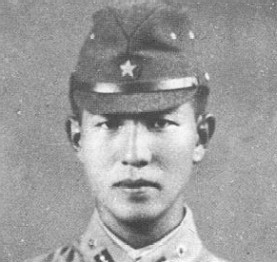 Today I found out about a Japanese soldier who continued fighting World War II a full 29 years after the Japanese surrendered, because he didn’t know the war was over.
Hiroo Onoda is a Japanese citizen that originally worked at a Chinese trading company. When he was 20 years old, he was called to join the Japanese army. He promptly quit his job and headed off to training in Japan. At a certain point in his training, he was chosen to be trained at Nakano School as an Imperial Army Intelligence Officer. In this specialized military intelligence training, he was specifically taught methods of gathering intelligence and how to conduct guerrilla warfare. He was being groomed to go in behind enemy lines and be left with small pockets of soldiers to make life miserable for Japan’s enemies and gather intelligence in the process.
On December 26th, 1944, Onoda was sent to Lubang Island in the Philippines. His orders from his commanding officers, Major Yoshimi Taniguchi, were simple:
You are absolutely forbidden to die by your own hand. It may take three years, it may take five, but whatever happens, we’ll come back for you. Until then, so long as you have one soldier, you are to continue to lead him. You may have to live on coconuts. If that’s the case, live on coconuts! Under no circumstances are you [to] give up your life voluntarily.
Onoda then linked up with Japanese soldiers already on the island and shortly thereafter the island was overrun by enemy troops when other officers that were already on the island refused to help fulfill part of the orders that Onoda was given to destroy the harbor and airfield among other things. This in turn made it easier for the Allied forces to conquer the island, landing on February 28th, 1945. Shortly after the island was conquered the remaining Japanese soldiers split up into small groups of 3 or 4 and headed into the jungle.
Most of these small groups were quickly killed off. Onoda’s group though consisting of himself, Yuichi Akatsu, Siochi Shimada, and Kinshichi Kozuka, were not. They continued to use guerrilla warfare tactics to harry the enemy troops as best they could while strictly rationing supplies including food, ammo, etc. Supplementing their small rice rations with bananas, coconuts, and other food from the jungle as well as doing raids on local farms when they could manage it.
In October 1945, after another cell had killed a cow from a local farm for food, they came across a leaflet from the local islanders to them saying “The war ended August 15th. Come down from the mountains!” The few remaining cells discussed this leaflet extensively, but eventually decided that it was Allied propaganda trying to get them to give themselves up. They felt that there was no way that Japan could have lost so quickly since the time when they were deployed. Indeed, this would seem strange to anyone who had no knowledge of the atomic bombs dropped on Hiroshima and Nagasaki. Also, another one of the cells had been fired upon just a few days before; they felt that this wouldn’t have happened if the war was over.
Eventually, near the end of the same year local islanders, fed up with being shot at and raided, got a Boeing B-17 to drop leaflets all over the jungle. These leaflets had the order to surrender printed on them from General Yamashita. The few remaining cells once again scrutinized these leaflets to try to determine their authenticity. In the end, the wording on the leaflet pertaining to the method with which they would be sent back to Japan seemed fishy to them; largely because the wording made it seem as if Japan had lost, something they couldn’t fathom and which was a big problem in their willingness to accept the war had ended. If Japan had won, they would come and get them. Japan couldn’t lose, so the war must still be going. So they once again believed it was the Allies becoming more tired of their successful guerrilla tactics and trying to get them to surrender.
When this didn’t work, more leaflets were dropped with newspapers from Japan; photographs and letters from the soldiers families; delegates were sent from Japan and went through the jungle speaking over loudspeakers begging the soldiers to give themselves up. In every case the cells encountered, there was always something suspicious in their minds about the way it was done to cause them to believe it was an elaborate hoax by the Allied troops.
Years passed in the jungle with these four soldiers continuing to perform their sworn duty of harrying the enemy at every opportunity and gather intelligence as best they could. At a certain point, when most everybody they saw was dressed in civilian clothing, they began thinking that this too was a ruse from the Allied forces to lull the Japanese guerrilla soldiers into a false sense of confidence. They considered the fact that every time they fired on these “civilians” shortly thereafter search parties would arrive hunting them. Over time they had gradually let their solitude twist their minds into thinking everyone was an enemy, even their own fellow Japanese who would occasionally come and try to find them and get them to come home. These of course in their minds were Japanese prisoners forced to come lure them away from the safety of the jungle.
Eventually, after about 5 years in the jungle, Akatsu decided he would surrender, but didn’t tell the other three soldiers. So, in 1949 he slipped away from the others and after 6 months alone in the jungle was able to successfully surrender to what he thought were Allied troops. Because of this event, Onoda’s cell became even more cautious and went into deeper hiding and took fewer risks as they viewed Akatsu leaving as a security threat. “What if he was captured”, they thought.
About 5 years later, another of the small group, Shimada was killed in a skirmish on the beach at Gontin. Now there were only two, Onoda and Kozuka.
For about 17 more years the two lived in the jungle, gathering intelligence as best they could and attacking the “enemy troops” when they could risk it. They were still convinced that eventually Japan would dispatch more troops and they would then train these troops in guerrilla warfare and use the intelligence they had gathered to re-take the island. After all, their orders were to stay put and do as they had done until their commanding officer came and got them and their commanding officers had promised to do so no matter what.
Now in October 1972, after 27 years of hiding Kozuka was killed during a fight with a Filipino patrol. The Japanese had long thought he had already died, they didn’t think he could have survived so long in the jungle. But now when they had his body, they began thinking perhaps Onoda was also still alive, even though he had also long since been declared dead.
The Japanese then sent a search party to try to find Onoda in the jungle. Unfortunately, he was too good at hiding with 27 years of practice. They could not find him. Onoda continued his mission.
Finally in 1974 a college student, Nario Suzuki, decided to travel the world. Among his list of things to do on his journey was to find “Onoda, a panda, and the Abominable Snowman”. He traveled to the island and trekked through the jungle searching for signs of Onoda. Shockingly, where literally thousands of others through the last 29 years had failed, Suzuki succeeded. He found Onoda’s dwelling place and Onoda himself.
He then proceeded to try to convince Onoda to come home with him. Onoda refused. His commanding officers had said they would return for him no matter what. He would not surrender nor believe the war was over until they returned and ordered him to do so. At this point, he would not have been allowed to simply go home; he would be required to surrender and throw himself on the mercy of the enemy. Over the years he had been too successful at using the guerrilla tactics he had mastered. Killing 30 Filipinos and injuring over 100 others as well as destroying various crops and the like for almost 30 years.
Suzuki then traveled back to Japan with the news he’d found Onoda; Major Taniguchi, now retired and working at a book store, was then brought back to the island and to Onoda to tell him that Japan had lost the war and he was to give up his weapons and surrender to the Filipinos.
As you might expect, after living in the jungle doing what he thought was his duty helping Japan, now only turning out to be wasting 29 years of his life, and worse killing and injuring innocent civilians, this came as a crushing blow to Onoda.
We really lost the war! How could they have been so sloppy?
Suddenly everything went black. A storm raged inside me. I felt like a fool for having been so tense and cautious on the way here. Worse than that, what had I been doing for all these years?
Gradually the storm subsided, and for the first time I really understood: my thirty years as a guerrilla fighter for the Japanese army were abruptly finished. This was the end.
I pulled back the bolt on my rifle and unloaded the bullets. . . .
I eased off the pack that I always carried with me and laid the gun on top of it. Would I really have no more use for this rifle that I had polished and cared for like a baby all these years? Or Kozuka’s rifle, which I had hidden in a crevice in the rocks? Had the war really ended thirty years ago? If it had, what had Shimada and Kozuka died for? If what was happening was true, wouldn’t it have been better if I had died with them?
On March 10th, 1975 at the age of 52, Onoda in full uniform that was somehow still immaculately kept, marched out of the jungle and surrendered his samurai sword to the Philippine President Ferdinand Marcos. Marcos, very unpopularly in the Philippines, but immensely popular in Japan, pardoned Onoda for his crimes, given that Onoda had thought he was still at war the entire time.
Now in the end, we might look at Onoda as a fool and worse, a murder of innocent people. In the end, he was both of those things, there is no denying it. But at the same time, not everyone who lives by strict convictions and puts their all into achieving what they believe to be the right thing, ends up having what they strive towards turn out well or end up being a good thing. This is one of those cases where someone did something remarkable, showing extreme dedication to his country and his duty, as well as fortitude unmatched by many in history.
Had circumstances been different and the war really had waged on so long; soldiers and people from both sides of the fight would have respected him for his courage and dedication. In that respect he was more of a hero. However, the world wasn’t the way he thought and in the end, in retrospect, he was more a fool than anything else. But at the same time, we can’t ignore that this was a man who did something great with respect to doing something that few others could have done; had circumstances been as he thought, what he did was something to be admired. He faced (what he thought) was death around every corner and lived in an extreme situation for 30 years, fighting for his country. That should be respected. It’s a rare person who could do something like that and never quite or surrender; never take the easy way out as most of us do all the time when faced with adversity that is orders of magnitude less than what Onoda faced for almost 30 years in the jungle.
If you liked this article, you might also enjoy our new popular podcast, The BrainFood Show (iTunes, Spotify, Google Play Music, Feed), as well as:
- For Over a Half Century the Uniform Code for the British Army Required all Soldiers to Have a Moustache
- The Man Who Captured 132 German Soldiers Pretty Much Single Handed During WWI
- “White Death”- The Man Who Sniped Over 500 Soviet Soldiers During WWII
- The Way a Soldier’s Horse is Portrayed in an Equestrian Statue Has Nothing to Do with the Way the Soldier Died
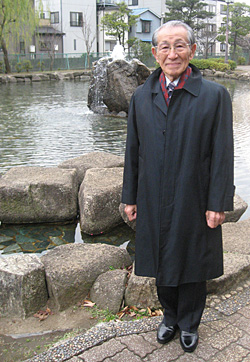 Bonus Onoda Facts:
- When Onoda returned to Japan, he was seen as a hero. He was also given his pay for the last 30 years. Life was much different in Japan now than he remembered, and not at all to his liking. Many of the traditional Japanese virtues he cherished such as patriotism were nearly non-existent in the culture; indeed in his view Japan now cow-towed to the rest of the world and had lost its pride and sense of itself. So he moved to Brazil and used his pay to buy himself a ranch there and eventually married.
- Onoda released an autobiography: No Surrender, My Thirty-Year War in which he details his life as a guerrilla fighter.
- After reading about a Japanese teenager who had murdered his own parents in 1980, Onoda became even more distressed at the state of his country and young people in Japan. He then returned to Japan in 1984, establishing a nature school for young people where he could teach them various survival techniques and teach them to be more independent and better Japanese citizens.
- In May 1996, he returned to the Philippines to the island he had lived for 30 years donating $10,000 to local schools; as you might imagine, he is not too popular with the locals there, despite the donation.
Bonus Onoda Quotes:
- Men should never give up. I never do. I would hate to lose.
- Men should never compete with women. If they do, the guys will always lose. That is because women have a lot more endurance. My mother said that, and she was so right.
- One must always be civic-minded. Every minute of every day, for 30 years, I served my country. I have never even wondered if that was good or bad for me as an individual.
- Parents should raise more independent children. When I was living in Brazil in the 1980s, I read that a 19-year-old Japanese man killed his parents after failing the university entrance exam. I was stunned. Why had he killed his parents instead of moving out? I guess he didn’t have enough confidence. I thought this was a sign that Japanese were getting too weak. I decided to move back to Japan to establish a nature school to give children more power.
- Parents should remember that they are supposed to die before their children. Nobody will help them later on, so the greatest gift parents can give their children is independence.
- Never complain. When I did, my mother said that if I didn’t like my life, I could just give up and die. She reminded me that when I was inside her, I told her that I wanted to be born, so she delivered me, breastfed me and changed my diapers. She said that I had to be brave.
Hiroo Onoda



| Share the Knowledge! |
          |
 |
Wow, that was the single awesome thing I found out today. I really admire Japan and how it was back then. Never surrender. EPIC.
You do know about the Japanese human experimentation and atrocities and the chinese rape right?
You do know that USA tested their atomic weapons on Japanese civilians, right?
the us dropped the bomb and ended the war… different reports give different numbers, but it is estimated that by dropping the bomb that ended the war saved about 500,000 american lives, and about 10 million japanese lives….
Did you know the US didn’t have to drop the bomb, it was clear they lost at that point.
@TheStudent
Wait, I thought that even if the Japanese knew that they are losing, they still wouldn’t give up without giving a fight because Japanese soldiers were known for doing that back in WWII.
I thought that with the atomic bomb, it basically was a weapon of mass terror as it can instantly kill a city or well, do so much damage that the Japanese were afraid that the US had so many that it would be very very logical just to give up as opposed to still having some chance when fighting conventionally?
You know nothing about the black rain atomic bomb and tortured and melted innocent people and continued to kill people even after the war was over because of the severe radiation.
Just a bunch of assumptions, predictions and excuses as if that was the only way and the only answer.
Stupid children making comments about stuff they have no experience of. The fastest way to end the war was to demonstrate the bomb . It only took two bombs to bring the Japanese hawks to their senses. and estimated 30 million people had died fighting the Axis powers in the previous five years, people across the world were sick of war. Had we not used the bomb, it would have entailed a land invasion of the japanese mainland, that would have taken another two years, and another million Allied troops and possibly 10 million japanese would have died. So the death toll from the two bombs, about 100,000 dead, was a cheap price to pay by the japanese to bring it all to and end. Then we get the comments here trying to paint the Allies as the bad guys. Lets just get this clear. The Germans and the Japanese started WW2, and purely to enslave and conquer the world. The Axis power did horrendous things to civilians, from death camps to using them for medical experiments. Another point was to help ensure complete cessation by Russia, it was necessary to demonstrate to Stalin we had the bomb, because the russians were working on the same thing. The credible nuclear deterrent that evolved from the 1945 started the cold war, and prevented all out nuclear war for the next 75 years. Twice in the 20th century America and the UK have been dragged into a world war not of their making and which we did not ask for. And part of the blame for that lies with Japan. They started it, and we finished it, to preserve freedom and democracy.
Did you know the americans testet nuclearweapons on their own soldiers , up to 5o.ooo persons at one time.
I do think the bomb was wrong, but does the fact that the USA did wrong things make Japan’s atrocities any better?
All groups of human beings are pretty messed up.
The Japanese usually would rather fight to the death or kill themselves before they gave up. There is few other countries that are this serious about war. I would rather have dropped a few nuclear bombs than fight that kind of fight all the way to their capital.
Any way you look at it, atrocities were committed everywhere, and still are to this day, maybe not at the same measure, but they are…Nobody wins in war…
You realize they did extensive testing of the bomb and estimates of loss of life based on the current fighting in the Pacific didn’t you? A loss of another 1,000,000 ALLIED lives gone if the war was fought in the conventional way.
It’s funny how the U.S. is supposed to be careful in every way to be SURE not take any more Japanese lives than necessary, according to you, yet you say nothing of Pearl Harbor. Oh, stop it. Geesh.
The bombs was not test. It was meant to destroy those Japanese people and factories who indirectly supporting Japanese troops killing innocent people around World at back end. You should be grateful the bomb was invented and used by US 1st, otherwise you might speak Japanese or German by now.
But, if you do speak Japanese or German then you should feel lucky that US only drop 2 bombs.
One of the single biggest atrocities in human history was America dropping the A bombs on Japan. The amount of unimaginable suffering & death of innocent men, women & children that had no say in the war to begin with was nothing more than a test to see the effects of nuclear devastation on the human populace. There was no excuse for the A bombs to be used & if people think there was then WHY HASN’T IT EVER HAPPENED SINCE. Stop lying to yourselves and everyone & face the truth of murdering innocence, they WERE NOT SOLDIERS, THEY WERE INNOCENT CIVILIANS.
I’m not sure what you use to determine atrocities, but the bombing of Hiroshima and Nagasaki weren’t even the largest death tolls by American bombing in Japan. Indeed, the campaign of fire bombing large cities initiated by General LeMay in early 1945 took the lives of hundreds of thousands of civilians. As far as atrocities, I suggest you study the Japanese wartime occupation of Nanking, China before declaring the worst atrocity.
As American troops got closer to Japan, Japanese defenses stiffened. On Iwo Jima and Okinawa, entire divisions of Japanese troops died without a single surrender. In some cases the Japanese soldier was not “allowed” to die until he had killed at least 4 American soldiers! At this time on the main islands of Japan, every civilian was training and was expected to fight the invading enemy, or die. The Japanese civilian population was completely committed to the war effort, and Japan’s wartime government had rejected all calls for surrender. Some Allied planners estimated that 1 million Allied troops (mostly American) would be lost during the invasion of Japan. Remember, Japan had millions of troops, and thousands of airplanes maintained just for homeland defense. Japan was certainly going to lose the war, but they were going to bleed the Allieds dry doing so.
Obviously, President Truman decided to drop the atomic bombs. A full-scale invasion of Japan would’ve resulted in the loss of 10’s of millions of additional people (military and civilian), the inevitable destruction of Japanese monuments, and quite possibly the end of the Japanese civilization as we know it!
It ain’t always black and white, my friend.
…Is it not obvious why no more nuclear weapons have been used, beyond testing them at uninhabited areas?
Back then, it was probably the largest war ever to be waged by humans. The nuclear bombs were used to stop said war. But, if yet another nuclear weapon were to be launched now, while the world is, for the most part, peaceful, what do you think would happen?
I’ll answer that question for you. What would surely grow to become world war three would start.
Millions would die, once again, but this time, not for the sake of peace, but for the sake of war.
it seems people want to believe what ever they want to but when you think of japan back in those days before giving up to the Americans you need to know that all the major cities of japan were already wiped of the map and there was no communications left so headquarters did not know that the Americans had even dropped the bombs so your assertion that the atom bomb ended the war is wrong – the Japs capitulated because the news that Stalin had jumped there border was what actually ended the war Trueman wanted to show the Ruskies he was the one with the ace up the sleeve and to not screw with the American Gov’t – russia wanted the spoils of japan too – don’t believe me though find out yourself –
As Christopher Titus said: To the Japanese People, I will admit that (we) overreacted, but hey, you started it.
Another was the Holocaust-and there is so much more unbelievable conduct displayed by so-called “humans” everywhere than what any history book reveals.
You do know that Churchill killed 6-7 million Indians via starvation right?
You do know that Churchill committed genocide against a group of Afrikaaners right? All 28,000 of them?
You do know that by the time WW1 ended, Churchill had (directly or indirectly caused the deaths of around 15 million deaths, and the British troops caused 20 – 100 million deaths by spreading the Spanish Flu?
No, I didn’t think so.
The West/Allies/Britain, America, et al were directly responsible for WWII in the first place. It was the ruthless and greedy manner in which they inflicted extraordinary poverty on the German civilian populace following WWI that engendered the Third Reich and insured Hitler’s message of racial supremacy resonated powerfully with the German people.
German children were literally starving on farms! Their families PRODUCED the food but couldn’t afford any of it.
Still, the only people to even come close to the Japanese having performed human vivisection, cannibalism, competitive baby bayonneting, forced prostitution of seniors, and weapons testing on random civilians were the Nazis and we don’t cry for their civilians or the bombing/rape of Berlin. We don’t even talk about that.
The Japanese were animals during that war. I only feel for the Japanese civilians who didn’t have children in the military, children living at home during the bombing – and the civilians tormented the world over on account of that war, really. Filipino children too!! 300 Filipino civilians died to this champion boner who couldn’t tell time?
The bombs should’ve been dropped on military targets – not civilians.
Still, I don’t think there were any victims in that. The war wasn’t about good vs. evil and none of the cast members were good. It was all causality.
I didn’t know Churchill personally took food away from people in India. Were you there to witness this? One man cannot personally starve millions.
You revisionist Historian clown.
Tested? – We “Tested” fire bombs on Tokyo too, Trying to win WW II.
But then Jap civilians who beat and killed GI POWs were only “testing” too
What about the Batman Death March ? That was one hell of a test.
Was Yamamoto just “Testing” bombs on the civilians that were killed in the Pearl Harbor sneak attack?
Supposed you never heard of Gen. Ishi’s “Logs” either.
Compared to the Jap military Hitler’s SS we kindly boy scouts.
You got to be on drugs.
Tell me more about this “Batman Death March”. Did Superman have anything to say about it?
Japanese is Chinese. Same language writing (Kanji means Chinese. Hello, if the word “English” means French, then what is the difference?). Same building(Tang dynasty building code) , same dress , same face. The word Japan itself is invented by the Mandarin.
1. The Chinese word for Japan is 日本 (Rìběn in Pinyin) so you got that wrong.
2. “Japanese is Chinese” – Couldn’t be further from the truth. Their DNA is not in common at all. Also, tell that to the cities of Shanghai and Nanjing…as well as China overall. While true that Japan “stole” many Chinese characters, as they had no writing style of their own, while stealing the characters, in Kanji the meanings and pronunciations of the characters are completely different.
3. “The word English means French”? – What in the hell does that even mean? In Chinese, English is 英文 (Yīngwén in Pinyin) and French is 法语 (Fǎyǔ in Pinyin).
Kanji is just the name of the Chinese characters that they “stole” from the Chinese.
The bombs despite it’s terrible power helped save perhaps millions upon millions of American, their Allies and Japanese people. The dropping of both bombs was not an experiment but meant to end the war and it did. The story of the Japanese soldier who refused to quit fighting is an indication of what would have happened if the Emperor of Japan did tell these dedicated Japanese soldiers would have done to the invaders. They would have fought any invaders to the death.
US Army Veteran station in the Far East
Test nothing….they started a war committing horrible atrocities and we ended it by kicking their ass.
Not true, it was the only way the Japenese would stop killing, and it took 2 to get the message across.
@Lindsay
I hate the self righteous attitude of people who blame everything on the Japanese without ever considering (or reading up) on what the Allies did (read up a bit on events after Germany’s defeat- rape, horrific torture and mutilation, bestiality). Yes, the Japanese committed many atrocities in the war (as did the Allies, but of course we never hear about them because after all, “history is written by the winners”), but why can’t we put that aside for one moment just to praise this man who was only following orders for his dedication and loyalty? Because quite frankly, I think tenacity and dedication is something the youth these days (especially in the USA) are lacking.
you have no ideas to the brutality committed by your military. USA & Japan.
And I guess we never will from your post as all you have in it innuendo. What’s your point and agenda anyway?
What the allies did doesn’t diminish what the Japanese did. No atrocities negate other atrocities.
Japanese women have three lovely tight wet holes – for passing urine, passing stools and making love
I guess you could say he was quite the Hiroo…
Archer anyone!
Michelle:
Great !! You liked Japan the way it was back then! I don’t know how old you are if your young I don’t doubt.
your socialist teachers never told you the Japanese started the war, and the atrocities they committed on American POW’s They marched hundreds of Prisoners during the Battn death march then used them as slave labor not feeding the POW’s just torturing them Pulling their Finger nails out with Pliers the pictures of Prisoners looked exactly like the Jews who were cremated and those who were liberated by US troops looked like Skin and Bones. The Japanese didn’t care about how many civilians they Killed Dec, 7, 1941 !! Do some reading about US Military History Americans were the most Humane warriors in the world.
The bomb was dropped because stupid Imperial Japanese leaders ordered their soldiers to fight to the death
if you admire them I can tell you about several operations I as a Marin was told the same thing in Vietnam!
Don’t make anymore stupid remarks about how Great Japanese soldiers were!
Semper Fi
Capt Ed McCourt
US Marine Corps retired
Recipient of the
Silver Star , two Purple Combat action ribbon with Gold Star
Vietnamese Cross of Gallantry with Gold Palm frown equal to the US Silver Star the third highest
Combat personal decoration 2nd only to the Medal of Honor
PS: My Foster father was a Nisei 2nd Generation Japanese American who’s family were held in detainment camps while he and his Brother Fought in Europe in the Famed 442nd RCT 100th Bn. because the Japanese started the war the 442 RCT 100th BN were the highest decorated Army Unit in WW II while he was off fighting for America where he was born the Govt took his family’ 160 acre strawberry farm and auctioned it off!
you could learn a lot about from Neis’s about how great you thought the Japanese were during WW-II
because they would fight t to the death! Every American Soldier, Sailor Marine Airman and the US Coast Guard
warriors do the same thing! This country is going down the drain because too many socialist teachers
don’t teach don’t know the facts about WW-II WW-i Korea and Or Vietnam our great Punk ASS Democrats lost Vietnam , because they were afraid to win, the rules of engagement for Iraqi / Afghanistan were in favor of our
enemies, by people who never served in the military yet they felt they knew better then our War Fighter Generals,. The Vietnam war could ended in a decisive Victory for the US and South Vietnam , just like the first Gulf War did because, because Bush stayed the hell away from Micro managing the Generals that Cluster Fart was over in 97 hours! I agree with Mike makes me al;sop wonder why you would admirer a Country who started WW II by Bombing Pearl Harbor in a sneak attack I have to give Bush more credit because he didn’t call Hanoi and tell them the Americans Bombers would be bombing certain useless There is Sadly collateral Damage in all wars
if we are that afraid of offending / killing innocent civilians, I suggest we stay the hell out of that WAR in every WAR you either fight to WIN or you don’t WIN!!
Hey Cap
In my book, You Sir are a true Hero.
Ken
former Sgt.USAF
Not you Michelle, but to everybody else in this comment thread:
Shut up and cool off. As an AUSTRALIAN (not American or Japanese, so I’m not being biased), I believe that ALL armies in this world are trash.
An army’s sole purpose is to kill other armies. Killing a person is trash no matter the reason. No one has the right to steal the life of another person. So please, stop arguing about which country was trashier and MOVE ON. Remember the horrible, twisted, and evil events that happened all over the globe throughout those years, and be a better person today.
And yes, I know this comment thread is very old. But my point remains valid. However, I think that with Trump as President, the people commenting might have different views about the matter since the 2000s.
Also, this comment section is PERFECT for writing inspiration. Right now, I’m writing about a racist white guy, and the white-supremacist remarks made here are spot on *insert chef’s kiss*. I do hope my comment gets moderated and published…
And fyi, I’m also Chilean.
(For the people who prefer to stay ignorant about foreign countries that aren’t China or produce anime, Chile is in South America. And no, we do not live in straw huts, and no, I am not a refugee). So me saying that 90% of the people here are racist is a completely valid point, as it is not being said by a confused white girl.
Wait, AM I BECOMING ONE OF THE PEOPLE RANTING IN THE COMMENT SECTIONS???oh, no. I think I am..I literally shut down other people for ranting online… Okay then, I’ll say bye then. Have a nice day 🙂
Why in the hell would you admire Japan during WWII??? The Japanese military murdered thousands of Chinese civilians and Allied servicemen that had been taken prisoner. You ever hear of something called “The Rape of Nanking(sp)”?
Not so nice a bunch of people back then.
What happen to this guyz bringing nonsense issues? We’re just admiring his devotion and loyalty to his mother land in which you’ll see very seldom nowadays or perhaps 1 in a million.. Well you have a right to express your feelings but i hope you’ll put your comments in parallel to this issue.
The Axis and the Allies, an evil Vs an lesser evil, both sides did what they wanted. The Soviets, the ones who took control of Germany first, raped a lot of women in their way to the victory, Stalin wanted to ally with Hitler, but Hitler never responded and then, one week later, he started the invasion of USSR, USA didn’t do experiments with humans in that war, but they used all of those results and scientists for their own good, previous to the WWII, USA was in the middle of a plan of eugenics in their own country, plan started in California, that was to remove people they didn’t want in their society, that inspired the Nazis later.
USA just used the atomic bombs to take total control of Japan, in that way, the Soviets wouldn’t be able to reclaim any part, as they did in Germany. The Soviets were ready to invade Japan.
The Nazis had concentration camps as we all know, so the USA had those, too, they mostly were made for Japanese and Americans who were descendent of a Japanese, they also brought Japanese from other allied countries of the region to put them in those camps, meanwhile, the Italians were treated better than those related to some Japanese.
After the war, the CIA used Nazi criminals for their national missions. The CIA was behind coups and massacres in other countries, Henry Kissinger was one of those involved and the death of thousand of people, well, he didn’t need to kill anybody, they just gave orders.
Prescott Bush helped put Hitler in power. America, being a “Christian” nation, initially supported the Holocaust. Until people heard about it and became outraged. America’s M.O has always changed when popular opinion changes. We put dictators in power (Hussein, Gaddafi, Jimenez, Noriega, Mubarak) , then “liberate” their people when the outcry reaches a fever pitch, or when the puppets stop cooperating. Now it’s far harder to get away with because of the internet and social media, but don’t expect the CIA to stop trying to control foreign governments, especially in the middle East (oil).
Yes the US had concentration camps.
The difference is in our ovens we made pizza.
in the germans ovens they cooked Jews.
that’s really stupid. America is not and has never been perfect. your analogy makes no sense because america has committed horrible atrocities too. we’re not just a pizza-making nation of happy people who never did a bad thing in their life. both world wars weren’t about evil vs. good. It’s not black and white and the way america ended the war was utterly unfair and basically like Japan going through 9/11 twice. war is messy and rah-rah patriots trying to make it out so that America is always on the good side just further the problem, because we’ll never have a better world if people don’t recognize that our world is messed up now. TL;DR: America sucks too, WW2 wasn’t just a perfect situation of “the good people defeat the bad people and everyone’s happy now, yay.”
to mike the allied forces wernt angles them selfs.. so it was ok for america to drop 2 atomic bombs on civilians then????.
Were they Obtuse or acute angles?
Judging from his post, I’d say obtuse.
Their patriotism and dedication was definitely admirable, even if some of their actions were not.
If they didn’t drop the bombs, there would have been more casualties on both sides. Its just basic logic. Also, more people died in the firebombing that preceded the atomic bombs, many of which where civilians. People who usually go crazy about the atomic bombs have a very superficial view of history during that period.
There is nothing commendable about his supposed self-sacrifice, he was a victim of intense pre-war propaganda and his refusal to surrender simply shows the power of his indoctrination. The article is full of references to the inability of the soldiers to think for themselves, to use their own reason, such a handicap is never praiseworthy. He was a victim of a fascist-style government and he in turn victimized innocent people. The lesson here is that blind approval of military culture is incredibly dangerous, a lesson that we Americans used to understand, but seem to have lost.
For the poster of the comment who claimed that the civilian slaughter in Hiroshima and Nagasaki were somehow justified because the US wasn’t forced to invade, you’re the one with the shallow view of history. There are plenty of documents showing that Japan was ready to surrender before the bombs and was very actively trying to surrender after Hiroshima. They had approached the Soviets and asked them to act as intermediaries, but it takes time for an empire to surrender; instead of allowing for the diplomatic wheels to turn we simply slaughtered another city full of civilians.
There are various theories about why we dropped the bombs, from what I’ve read I think it’s most likely that we were attempting to demonstrate our power to the Soviet Union. Under that scenario, dropping the second bomb would be necessary to show that we were able to mass produce the weapons, something thought impossible by many countries at the time.
When the bomb dropped, the Soviets had already declared war on Japan and invaded their holdings in mainland Asia. This was at the behest of the American government, who gave concessions in Europe to ensure Soviet help against Japan. Then, after securing their help and allowing vast swaths of territory to fall under Soviet control and domination, we use nuclear weapons on civilian and end the war without them. The Korean war and the enslavement of the North Korean people is a direct result of that blunder.
The bombings of Hiroshima and Nagasaki were fully justified. Why did the Japanese wait 3 days after the Hiroshima destruction to finally surrender? They knew the horrible power of the first bomb, yet they still did not want to surrender until Hirohito decided it was time to end the war and surrender.
Umm, apparently the whole thing was a misunderstanding/bad translation. The guy on the Japanese side said that they needed time to decide, but the verb they used had an alternate meeting of “no” or something. The translator didn’t clarify/think of a broader context before translating, so us Americans assumed they were being staid/proud Japanese people who were refusing to bow. Of course, there are probably more sides than simply this one, but also more than just “dude, they totally knew there was going to be another bomb”. I mean, you have to realize the benefit of hindsight. At the time, there were probably a shitton of mixed reports, chaos, and terror. Military/government facilities had been bombed/firebombed, people (in important roles) had died, etc. It’s kind of a big thing to tell someone they need to give up their entire way of life, depose a man they considered a living god, and surrender to people they’d been told/said were idiotic, honorless foreigners.
This guy was a cog in the devilish Japanese war machine.The people who ran the unit 731,for example,must have been pretty dedicated to their “cause” too.In my opinion, the US did not have an alternative to dropping atom bombs,atleast not one apparent back then.It is sad that a lot of innocent civilians died,mainly the children,who certainly were not a part of the war,but I do not feel sorry for Japan as a nation state,the fact that there are shrines dedicated to killed war criminals,and seeing how many of the worst are still revered as heroes,makes one wonder about the Japenese national character. Have we ever heard the masses in Japan protest against this?
Thank you for this unbiased comment. I’m always angry when reading these comments. How come I can see the reality clearly and they can’t? Well you summed everything I couldn’t in my head, beautifully I may add. Thanks for this, your arguments are sound and your thinking is logic, this should be the norm.
According to a documentary I watched, we dropped the bombs because Japan was turning their entire island of Japan into a death trap like Iwo Jima, and they were prepared to suicide-bomb their women and children against our troops out of spite.
Congratulations, you have earned a spot on the list of the Most Idiotic Things Uttered in this comment section.
As long as you keep “knowing-seeking” your documentaries off of Fox, you will never know anything other than the indoctrination of the Neo-Cons, and you as well will be a stooge, as so many are in the Industrialized West.
Comments like Geoff’s and Spencer’s clearly demonstrate the difference between a person capable of wisdom and reasoned thinking in stark contrast to the narrow, simple-minded, pablum-like easy answers that Foxites such as Gizzy and yourself are able to achieve.
World-views are shaped everywhere in North America, by a controlled mainstream media propaganda that cherry-picks what is to be shown to us and on a greater scale still, what is never to be shown to us nor allowed to be discussed freely in our mass medias.
I hope, while not really expecting, that you will open your eyes to what your “leaders” are regularly up to, and start to understand the game.
Ok, I have to get to a team training, so don’t have much time, except to partitally apologize to TheKnowerseeker, since I mistakenly inferred from your post that you were of the Trent mentality (Trent July 6, 2010 at 1:00 pm), but then afterward came across another of your posts (TheKnowerseeker January 17, 2014 at 1:45 pm) where you point out that ” … I have to point out that America (specifically the government and corporations) stopped being peace- and democracy-loving shortly after WWII. After WWII, through our foreign policy, we became worldwide tyrants and murderers.”, which shows that you are awake/aware, that you are obviously not properly indoctrinated, and that you have been reading real, recorded history. Let my previous post apply to Gizzy and Trent. My apologies for my mistake TheKnowerseeker.
The estimated casualties for an invasion of the Japanese mainland was 1,000,000 US men wounded or killed! The invasion would have dwarfed the Normandy D-Day landing. Many people think the Japanese had their own nuclear program, and that possibly it was over run by the Russians. If any of the Axis powers had had a nuclear weapon they would have used it. Revisionist history professors have really lied to many students. The Japanese didn’t surrender after the first atomic bomb was dropped, and the second one finally convinced them to surrender. Read, read, read! Don’t rely on biased teachers who spread more lies then Goebbels.
If Japan didn’t attack Pearl Harbor then they wouldn’t have gotten nuked. Simple.
Then i think the allies also had a multitude of reasons for being nuked themselves
https://en.wikipedia.org/wiki/Allied_war_crimes_during_World_War_II#United_States
READ THAT allies werent the only ones that suffered stop making comments on biased info
The allies did not start the war in Europe either. We certainly set up the conditions of course. Woodrow Wilson certainly carries a lot of the blame. However, none of that excuses the rise of Nazi Germany, just as nothing excuses the rise of Trumpism now, even if there are “reasons”.
“If the military had its way, we would have fought until all 80 million Japanese were dead. Only the atomic bomb saved me. Not me alone, but many Japanese, ironically speaking, were saved by the atomic bomb.”
– Japanese history professor who survived the war
Yes. My friends father was trained as a Kamikaze pilot. The war ended right before he was sent to battle. Yet, my friend did not realize that the Atomic Bomb had made it possible for him to be born.
Maybe the U.S. should have dropped the bomb and not made any deals with Russia so the Russian grabbed territory would have anjoyed the economic prosperity that Japan did later on. Oh Well.
The abombs where just a convenient excuse. Stalin had just turned against them too, which really doomed their whole strategy. They where already loosing 20-30 Nagasaki type cities a day at that point. Impressive as it was technically, at that point the US was pummeling them so hard they we would be landing on Japan proper soon, and the Russians would be too via arming the Chinese (who also hated Japan).
Dropping the bombs were not necessary the japanese were going to surrender because they know they’re going to lose. USA bombed japan to show other powerful countries that they’re the most powerful and that they’re untouchable. “we just killed thousand of innocent people, fear us russia!”
Mike and Michelle,
You are both mindless lockstep liberals who have bought the revisionist history taught by schools over the past 30 years.
Michelle,
Japan committed millions of rapes, murders, etc during and before WWII, The rape of Nanking and the Bataan Deathmarch to name a few. Read real histroy from those that experienced WWII and you will discover that Japan was a vicious and disgusting enemy during WWII. The USA and Allies never committed the scores of atrocities the Japanese did. So i dont know why you admire murderous nations.
Mike,
The Allied forces were the angels that saved the world. So with your logic I guess you think the horrors of the Nazis were acceptable too. War is hell, get over the fact that the US won; and you feel guilty because you could never have the courage that the greatest generation did. If you are so ashamed of our proud American peacemaking heritage, LEAVE. I bet there are plenty in the middle east that would be happy to have you.
The firebombings of Dresden and other Nazi cities killed more civilians than the 2 atom bombs did. The Japanese civilians were NOT innocent civilians during WWII. When the US occupied the mainland, they discovered stockpiles of weapons stored in elementary schools. Every civilian was expected to fight the Allies on Japanese soil. Meaning, the civilian populice was an extension of the military. But, with your liberal ideology, I guess you would have been more pleased with 2,000,000 American casualities and millions more Japanese dead with a land invasion of Japan in the Fall of 1945.
LIBERALISM IS A MENTAL DISORDER. Enough said…
The U.S has done numerous bad things, for example,dropping nuclear bombs on Japanese and then putting nuclear attack on their list of bad things they’d NEVER do, or getting republicans to break down the world economy with a government shutdown over obama care [which doesn’t actually work] right before a debt sealing and torturing people for nothing.
That’s debt ceiling not debt sealing. American education at it’s best.
America education at it’s best??? It should be “its best”!
Your exclamation point should be inside the quotation marks.
Congratulations, you said words.
I think you are wrong because the US has done many atrocities. They just cover up their tracks a lot. They try to make loopholes to make it seem like they didn’t do a mistake.
Sounds like a lot of people today. And a lot of countries. Why can’t they clean up their own MAJOR issues before bashing the U.S. ? You can bash away. It won’t make those third world country’s live any better. How about getting them to not back terrorism for a start? Oh, or not do genocide? Or maybe not having young kids shooting neighbors because thugs threaten to shoot the kids unless they do so. Atrocities? Reeaaly? Whether you think the U.S. has done something wrong or not, I believe you are hiding behind whining about the U.S. for another agenda.
Trent. You hit the nail on the head with your comments people should read history from that time before they post misguided comments. Liam.
I totally agree, *except* that I have to point out that America (specifically the government and corporations) stopped being peace- and democracy-loving shortly after WWII. After WWII, through our foreign policy, we became worldwide tyrants and murderers.
read my other comment
enrich ur gk
Not everything is liberal versus conservative. And right wing policies have never been successful anywhere in the world. There’s a reason there are liberal arts schools but but conservative arts. Off the high horse.
I am really admire Onoda and his dedication
The dedication and patriotism of this man is amazing.
In war, there are hero’s on both sides. He is war hero.
They should have hung him in the Philipines. Japan was brutal during WW2. They never ratified the Geneva Convention wartime POW rules/guidelines etc. There butality came back to haunt them as historians estimate that at least 500,000 children were killed during WW2 bombing raids of the Japaneses mainland. what goes around comes around.
He represents everything I loath about a human.
Just a brainwashed manipulated tool.
He’s no different than any other soldier fighting for their country. The side he’s on is the only reason you think so. Did he pillage and rape Chinese villages? Thought not. Is it ok for the Japanese to hate Americans for dropping nuclear bombs on their ancestors? Yes it is. But do they? Most don’t. Take a lesson from them. They didn’t hurt you, you have no reason to hate them. The people responsible aren’t even alive anymore.
As a survivalist, he was very good. But as an intelligence officer, not at all.
Astute observation.
Pfoss.
Now. Today there is an endless wave of surviving Nazi, Imperial, chinese, British, Russian And many more War vets alive. They have seen the world isnt like that today. Imagine, You lived under a corrupt leader, you are giving orderes about Never surrender and as he said. Until we pick you up or an official letter. Imagine not having radios. You are left long from home on a small island. Thinking wthere were thousands of Enemy troops. And in the end. Higher ranked couldnt give a shit more about them. He sure did show loyalty to his country. But in the end. Wasent one of his soldier buddies surrendering? What happend to him. Or were they all killed except Onoda.
He was just… Twenty 29 years later when he realized it.
Woudlnt you feel bad to hang a Nazi today from back then. As they say.
Blame the leaders. Blame the persons he get is into the war. But never blame the soldiers. Because they fighting what they think is right.
Nicklas,
But when a Nazi comes out and hiding, usually Israel’s Massod isn’t too far behind. Their 5000+ old civilization has a long memory…
He sounds like the Japanese real-life version of Rambo, and his story is sad yet amazing. But we all should give him props for trying to make some type of amends to the people he wronged…to me that there is the bright light of Honor that his people at times so brightly shine with.
The story of japanes soldiers abandoned and still fighting “the war” isn’t new to me, but I thought of it as some kind of myth, until this article.
I admire the man for his loyalty. Whatever the ideology he was fighting for.
@Nicklas: blaming the leaders is too easy. If there is a blame, it is on the shoulders of the people that allowed these leaders to become leaders.
Kinda like the people who voted for Trump will be responsible for WW3?
Really? And how is that so Bob?
This past spring I was substitute teaching at a Phoenix, Arizona high school. We had no lesson plan, so I was just talking to the class full of seniors, getting ready to graduate. We got on the subject of serial killers, which led me to compare Hitler, Mussolini and Hirohito to having the mindset of serial killers but it’s really more like mass murderers. Two girls shouted me down, defending Hirohito and Japan. The class got into a debate and I asked the girls where did they learn their history? They were not backing down from their Anti-American views and accused Americans of killing innocent Japanese and accusing me of being racist against all Asians. Considering there is over 50 countries and cultures in Asia, I’m not which Asians I am racist against. I actually thought the issue was dead but on the way home I received a call from the young, never been anywhere or done anything for this country vice principal, telling me the two girls filed a complaint stating I was a racist and they were somewhat traumatized. Well, I am a 60 year old Vietnam Infantry Veteran, that almost died from injuries suffered the day before my 19th birthday. My father and uncles all fought for America in the Pacific Islands but I was told I could never earn any money at that school because I was banned from subbing there.Not for telling lies, what I said was true, but because these two 17-18 year old girls were too young to hear the truth! How about that? Only in America!One more incident report and I will be fired from the school district. Arizona is ranked 49th in education in America, can you imagine that?
That’s so sad to hear Mike.
I agree. That’s why I gave up on my dreams of becoming a teacher, and I will not put my kids in public school.
Chris–epic!
Mike–that’s terrible. Teens are often overconfident which can lead to some horrible things. Being overconfident while uneducated is even worse.
Amazing article,this man is a true hero,unlike the other japanese back then.
O_o
Trent:
Lol, US won the world war?
You really believe in captain america?
America captains *your* ship, swabbie.
I Heard This Story Several Years Ago, But Your Full Account Is Very Enlightening And It Shows What A Person Can Do When They Have A Sense Of Purpose And A Belief In Themselves.
Regardless Of What He Did, We Can All Learn From Is Story About Honor And Respect – Something Many Today Have totally Forgotten.
A fantastic example of how the strict, semi-respectable disciplinary culture of the Japanese can degrade to the equivalent of brainwashing. What a mindless tool that guy was.
You never hear about the rape and murder the Allied forces did. War is written by the victor.
For those who justify the dropping of the atomic bombs by saying that prevented the killing of more people, please, dont make me laugh… if you really wanted to prevent more killing why didnt you just surrender? doing that would have ended the war without any more casualties, huh? but no, you wanted to end the war and WIN it too, so dont be hypocrite. You yanks are the worst murders in HUMAN HISTORY and the only villains in EVERY war you have been in.
Quite possibly the stupidest thing I’ve ever read.
Cain, your comment has to be the most idiotic peace of human thinking i have ever read.You should be the poster child for human ignorance.
I doesn’t matter what you think the justification for dropping the bombs really was,Whether we were right or wrong doesn’t matter any more.The simple fact is that we did, and if you were capable of intelligent thought you would know that if we hadn’t created and used those bombs to end the war, Hitler would have used the same technology to kill billions upon billions of people and if you knew anything at all you would know this.
The sad fact is that war was,is,and will always be apart of human history,and innocent people will die.War is evil created to destroy the will of another,and to make people and governments rich.But at times a necessary evil.So go back into the hole you crawled out of Cain, and leave the thinking to the adults.
Extreme ignorance and blind obedience; what a swell guy!
After reading through all these comments it saddens me to see how easily we judge this man from the comfort our beds, houses, cars, offices, where ever we read this article. By stripping away the names of countries and governments and just actually reading the story for what it is about, a mans strong belief in something, the story becomes clear. Onoda believed in something to the very core of his being. How many people now a days can actually say that they know something for sure. We are a society plagued with doubt and insecurities. Its easy to give up, much more difficult to continue on a path you didn’t even choose yourself.
I’m not saying that I forgive Onoda for his actions or that he was a very good at gathering intelligence information. I’m just saying read the story the man has to tell and don’t judge him, but rather listen to his message for what it is…a message.
You are right Gina
This man was a great soldier but he should not have been an intelligence officer.
“No Surrender” is an excellent book. I recommend it highly
Stumbled across this on Veterans Day 2011. I am a 21 year veteran myself, and although my 21 years weren’t spent isolated and clueless on an Island, Military men and women all over are often asked to do things that most people that have commented here would never understand. And if they did understand they wouldn’t do them, because they would come up with reasons or excuses why they shouldn’t be done that way, or it is to hard…..etc
To Mike: Keep telling it like it is, and hopefully when the teens that you talked to get older they will realize….hopefully…
To the Japanese cross between Chuck Norris, Rambo, and Jack Bauer: Mission Accomplished. To move back to Japan after learning that the kids are weak, and spoiled, and try and do something about it…. Above and beyond the call of duty.
To all Veterans Past and Future: Happy Veterans Day, Thank you your service. You are welcome for mine.
Paul
Japan was most certainly not admirable during world war 2. They killed our grandparents parents and great grandparents brothers.
@Rex: In fairness, we Americans killed many of them too (who were brothers / parents / etc). And, given that at that time America’s entrance into the war was pretty well inevitable with the President pushing so hard for it, their preemptive strike was smart. Save bad timing on their part, they’d have destroyed enough of the U.S.’s naval arsenal in the Pacific to basically have free reign. The U.S. also ended it by killing thousands of their civilians, so we also were also did things that weren’t “admirable”. In that respect, though there was good reason for the U.S. to do what we did too. So, basically, war sucks, few behave admirably in it, and we should all stop doing that. We’re all human after all.
Wow! You people are idiots. Soldiers obey orders and do horrible things. No denying it. Glorifying mindless obedience gets us to Nuremberg and “just following orders”. Condemning America and its conduct in wars is basic stupidity, Viet Nam era bash the U.S.A. liberal guilt nonsense. War is hell. Had we let the germans of the Japanese win their war they would have come after us and enslaved all of us. Instead we won the war, denazified germany, stopped the spread of militarism in Japan and mostly made the world a better place. Those of you who wish to can condemn as American imperialism. Which would you rather have had – America leading the world or germany or Japan or even Britain or France doing it? You don’t have to love everything America has done to see that we’re all a lot better off with the U.S.A. in the driver’s seat instead of the others. If you don’t like it here, if you don’t like what we have here, move and see if you can persuade an Assad or a Saddam Hussein if they can soften their approach and be kind to small animals and nuns. You fools have managed to elect an obama and he’s getting us to where you want to be. Fasten your safety belts because we’ve another chamberlain, an appeaser, running the free world. Wow are we in trouble. Come on November 2012. Come on Republicans/Tea Party, get us out of this mess.
A pity Onoda didn’t read Thurber’s fable ‘The Patient Bloodhound’, published in 1940 before the war with Japan. The moral at the end of the tale is:
The Paths Of Glory At Least Lead To The Grave, But The Paths Of Duty May Not Get You Any Where.
Thirty Filipino civilians would have lived if he had heeded the message.
It might be the case about the Nazi’s but you know what? we had camp’s to. My grandpa was a soldier in one and he has photo’s that tell that is the truth. and also this story show’s in time of stress and loyalty and hardship there are people who still are good nature and will do anything. Also this just inspires me when i’,m old enough to join my country. and guess what i can come up with this at 13.
Trent (and others),
I have just finished taking a College Asian History course. There is arather disturbing fact about Japan’s actions during WW2: they learned it from us! The United States used to routinely shell japanese shores killing thousands of civialians, when the Japanese refused to submit to imperial unjust treaties from the US. This was during the late 1800’s or so. Japan saw the brits and the US, and the French slaughter thousands of civilians in China so that they could have better trade agreements and extraterritoriality. What did they take from this? Be dtrong, crush all other nations in order to survive and be stronger. They applied this to their way of Bushido and this led to severe military fanaticism. Are their actions just? Certainly NOT; but don’t go pointing fingers and think we shoot rays of sunshine out our ass, cus we don’t. You simply don’t read about US atrocities during our imperial reign of the mid 1800’s-the 1900s because we don’t like to talk about it, just as the brits hide their numerous atrocities from their empire (ie-the british instigated opium war). In war no one is clean, even the side that is fighting for the greater good breaks the laws of humanity. I love the USA, and I would gladly serve her, but i’m not delusional to think we’re always so clean.
Dead on Matt. I totally agree. I love our beautiful nation BUT am not blind to the fact of all the crappy things we (and ALL nations) have done. I understand the lies and cover ups do exist. History is truly written by dominance. But it could be worse and we could be in a much worse position. Many say the civilians in Japan were bad for fighting in their country BUT if we have enemy’s invading our country, killing, and terrorizing everyone you’d better believe our civilians would fight, and be damn good at it too.
Reminds me of the Hunger Games…
that takes true dedication im surprised that his will never broke what an amazing person just surviving out there in the jungle for years on end im surprised he didn’t go crazy and kill himself
this guy a hero? i feel sorry for him yes. buy calling him a hero? BULLSHIT! you people don’t know what this japanese did to the philippines! they raped our women and killed our people! you all think this is a heroic act? fuck you all!
Yeah like how america calls their ass clown marines heros when they rape little girls in third world countries. American ignorance is bliss.
Buying his book 🙂
As a Chinese whose family was shattered by the bombing of Nanjing (Nanking), I have no hatred towards this man and his beliefs. After all, everyone on the planet is brainwashed to believe in serving their leaders and slave away like cows and pay for their taxes, even when the country ultimately deceives you with false flag events and robs your children of their innocence and future. Faith and endurance is perhaps the best message from this fella, even if you must die trying. However, if you foolishly believe what is sold to you as virtuosity , you waste your time and purpose as a human being on this planet. (He must had survived on SPAM, since Hawaiian Japanese love making sushi out of spam and they last for eons)
Eddie.
That is the most sensible comment here.
Thank you.
I laughed at the thought that this fact was not put in history books when revealed. Loyalty and other qualities are sometimes forgotten today. I am glad to hear of a tale of loyalty but I have to think that the sad part is that he lost thirty years of his life to a war that was over.
Onoda was a hero a hero because he lived true to himself never giving up. So sad he did not know the war was over and so many had to die. I know by his moral standards he has very deep regrets for that.
But to have never given up for his country living in such harsh ways for 30 years no one else could do what he did. I would very much like to meet him and shake his hand and be taught by him. The youth that are taught by him will have the best teachings of inner morals and strenth. He even showed how much he feels so much guilt for killing innocent people by donating to the Flillipeans.
Every party of the war, no matter the race or nationality, are never innocent. Humans, at one point of time, are barbarians. There is no use defending or arguing. Let’s just learn from the past and not let war happen again.
He should be featured in Discovery Channel. Bear Grylls has found his match.
Japanese are loyal people, right??
Some of the comments here are really stupid and hilarious.
Firstly, we’re talking about an individual japanese soldier, and yes, just him and his acts as an individual. No one forgets what the Japanese Imperial Army had done during the second world war…the horrendous rape of nanking etc.
Pls be clear about what you are reading and what you are commenting about. As an individual, Mr Onoda is indeed a patriotic guy for his country. Nothing’s wrong about that. Here in this article, we’re talking and “showcasing” his loyalty and patriotism to his nation. The article is not about praising the acts of the entire Japanese army during world war 2. So please get the facts about this article right before you comment, complain or even flame, if not it really does make you look like a bull-shitter.
The Japanese has already learnt their lesson. Whatever has been done is history. History has thought us, the people of the current generation and also many generation to come, the importance of peace and not waging war. For the Japanese, the lesson has been a very very painful which has haunted them for many decades, which to us, it feels like days, but for them it feels like millions of centuries. The war that they waged and participated in was for the cause of expanding their kingdom and putting in the idea of improving their economy. They have been punished for their wrong-doings and sins with a screwed up economic system now which seems eternal and impossible to recover. Inhumane acts they had done in the world war 2 are purely an act with military authorization, not by the civilians themselves. If you have read up and done your research, the Japanese civillians, like those from the rest of the world, are strongly against such inhumane acts and the acts of war.
If you hated Japan and Japanese so much, you should have let them die, perish and extinct during the earthquake and tsunami at Fukushima last year by not donating, not sending condolences, deny them of humanitarian help.
History has taught us so much and its time to bury the hatchet and look for progress.
Battles bring nothing, but endless battles, u morons.
I think he came back to the Philippines to take some of their hidden stolen loots or treasures.
A great deal of dedication & respect to the orders he has received from his Major.
29 years is a longtime for us, but for Hiroo it seems short, given the fact that he is now working on his country youth and children to imbibe his courage in them.
Hiroo! shed some of those of your courage and discipline on our country too! We people need plenty of them
@morseman and Trent
Typical conservatives.
Blame everything on the other parties that aren’t with it, the parties could be liberals, socialist, or nothing having to do with the left wing. Morseman please learn better fucking grammar, what the hell is a “an Obama?” I started to stop stereotyping but I guess after reading your comments I have more evidence to believe all conservatives are raised in swamps in the southern US and never go to school.
People need to realize that the US won the war in the Pacific not Europe. If it wasn’t for the USSR all euros would be nazi, if it wasn’t for the USA east Asia would be controlled by Japan.
All I got from those comments are that republicans are war hungry fools that don’t give a shit about pacifism. Yeah sure pacifism is not always the answer and we need war or else the crazy dudes like Hitler, Bush, Bin Laden would take over the world.
Four more things
1. Morseman you do fucking realize that Britain and France are our allies dumbass
2.No country is better off running the world every country is horrible in some way.
3.The US president is not the leader of the free world. I’m tired of conservatives calling him that, there are other free countries out there.
4.Trent Civilians are innocent. That’s like saying all the japs were horrible monsters.
I know this won’t help because a conservative skull is thick as lead.
@TrollyPonah
I thought this might actually be an intelligent comment, until you lumped Bush in with Hitler and Bin Laden. As an American, I find it offensive. As a Jew, it’s reprehensible.
If you want to be a grammarian, learn to use a comma, “dumbass”!
It’s not a great surprise that a Jew got offended at something. You are the only people to have suffered atrocities during a war. Get over yourself.
Do you actually know anything about Bush and Bin Laden e.g. family ties between the two and who financed Osama in the first place? How about the Nazi source for the original Bush oil fortunes?
You are most likely just another loud mouthed New Yorker. Get educated on the topics that seem to cause you such indignation.
I respect this man’s show of loyalty to his cause; even if it can be called brainwashing for some. I respect this man’s ability to survive, especially for 30 years in a harsh environment such as a tropical jungle compared to his comfortable climate of Japan; I respect the donations to the various communities this man made.
However, the other comments on this page (specifically ones fighting over US politics) are ridiculous. It wasn’t brainwashing as much as your ‘democratic values’ and political/patriotic values. US shouldn’t be in the metaphorical driver’s seat for the Western world and it is not; I would appreciate having American taxes not spent on bribing my already vaguely-corrupt government. The majority of your Government officials is corrupt and the Western world surely doesn’t want to follow your lead. China’s got your nose by a lead now anyway with all your debt to them. What is now? Trillions?
The dropping of the atomic bombs had a very specific aim: to announce to Russia that the US had atomic weapons, and to stop the Russians from invading Japan and setting it up as a communist client state. The Russians were mobilizing faster than the US. Their invasion of Japan was imminent. So yes, the US did not have to drop atomic bombs on Japan to get them to surrender. The Japanese were on the verge of surrender. The US had to drop the atomic bombs to keep Japan from falling into Russian hands.
Please read historical texts. History is fascinating.
“The Japanese were on the verge of surrender.”
Which doesn’t count for a damned thing. How many people were being killed by the military that was “on the verge of surrender.”
After Potsdam and the ultimatum given, Japan should have immediately gone from “on the verge” to “surrendering.”
No apologies.
I am a Chinese and I really admire the guy because of his guts, I have read all the comments up there and what I have to say is stop being so closed minded, be open minded and think two ways. I’ve come to realize that many Americans are racist and think that they are the best out there, america itself is a very colonial minded country,making other countries at their mercy, i’m just a high school-er but having a broad array of this subject matter, i believe that in war, everyone is ruthless, winning is the only way and the only way to achieve it is being savage. Here in Philippines, people are very ignorant, they believe anything they hear and they worship Americans like they are gods, they believe that anything from the west is good and they blame the government every single minute when it is them who voted for the officials of the said government, most of them don’t even know the BIG debt of every citizen of Phil. to the oh so mighty states that came from bell trade act, i just can’t stop myself from posting this comment >.<
Denise, what you have to realize is there are are dickheads all over the world. For instance, look in the mirror.
What a comment.. look at the mirror..
You don’t know what you’re saying. Go research first, before you do that. Don’t generalize people you only see. I wonder if you watch TV news in the Philippines and I’m surprise you’re still in this country. And I wonder if you’re praising extremist/terrorist Muslims also like that. Stupid Chinese
@eh? Don’t generalize people you only see
I’m a Chinese but its not like I agree with what Denise said.
Back to the main topic, this is a great article! Life during WWII was difficult. Its very impressive for Onoda to be able to survive in a jungle for that many years. He might not be a hero in everyone’s eye but he is certainly worth to be called a hero.
I like Onoda’s quotes very much,especially “Men should never compete with women. If they do, the guys will always lose. That is because women have a lot more endurance. My mother said that, and she was so right.” ^^
Thanks for the great article again.
Sorry if there is any mistake in my English.
ChCY your english is fine but i disagree with his comment on how “men should never compete with women”I think he should have said”Men should never argue with a women because that’s a battle we can’t win” and i know plenty of men with more endurance then women.
I don’t think Hero is the right word to describe this man Dedicated,loyal,willful,resourceful,A little ignorant even but hero No.But everybody’s definition of “Hero” is different.
Hi Denise, I’m Filipino and I agree with you in most of what you said. Been to America several times, you can encounter a good bunch and the ignorant rotten ones as well. On time on a plane, I saw this group of Americans who were acting like everyone else in that flight are ‘enemies’ and the American couple sitting beside me has this hostile look (though they managed a half-baked, superficial smile when I made the initiative). I was thinking some of them probably are blaming the ‘brown, yellow, black, pink or violet race’ for the deep shit they are in. I can understand that.
However, I could see that lots of Americans are now becoming liberal in their thinking. They are now challenging the long held beliefs and values. They have to otherwise, the whole world is against them. The world needs more people who can speak out and morally challenge things that have been done in the name of “PATRIOTISM”.
On another note, China is on the road to greatness. To me, it’s just claiming it’s former glory centuries ago. There is a big BUT…. this time it’s different. CHINA has now the opportunity to show the world that it can lead us in the right way. CHINA needs to understand that hegemony will only ruin its chances in getting the trust of the global community. CHINA and the next generation Chinese have now the opportunity to “GET IT RIGHT” to be the next “USA” but a better one. Hope China uses the same wisdom that Confucius had.
I’m tired of hearing how every body hates America Did I personally have anything to do with why everybody hates us.People have to understand that just because i’m an American Doesn’t mean i agree with what my government is doing.Muslims Say all Americans must die. Why? what the hell did i do to them? I’m not trying to push my beliefs on them.I don’t try to tell them how to live their lives.American government is full of corruption and greed.Has anybody Heard of the saying “Absolute power corrupts absolutely” It’s not our beliefs and values that have changed it’s the beliefs and values of the people in power that have changed.”PATRIOTISM” has nothing to do with why people hate america.They hate us because our government can’t keep it’s nose out of other peoples business.Especially when there’s money to be made.But at the same time other country’s shouldn’t be crying for our help because our government is like social services once their called in to help, you can’t get rid of them.But you can’t hate every American because their government sucks
You misspelled kowtowed.
The article is riddled with writing errors. Sentence fragments are everywhere, as well.
Thanks for the story. I was stationed on Okinawa, Japan as a U.S. Army JAGC Captain when Hiroo Onoda, San finally came out of the jungle in the Philippines. He was looked upon by my Japanese acquaintances as a hero as well as something of a dinosaur in his beliefs of loyalty and fidelity to his orders from his commander to never surrender or even to die voluntarily. But I never heard anybody, Japanese, Okinawan or American call him a fool.
Interestingly, the newspaper articles of that time mentioned that he and his fellow holdouts had come to within sight of Clark Airbase where they saw the Americans loading bombs onto B-52s and other U.S War planes. This was during the Vietnam War; but to them it was further proof that WWII was still raging and Japan had not surrendered.
There was another Japanese soldier on Guam who surrendered after Hiroo Onoda, San did, as I recall. This was also in 1974, I think.
In fact, an American soldier came”home” shortly thereafter. He had been part of General Douglas MacArthur’s 1944 retaking of the Philippines. He was wounded and suffered from amnesia. He was cared for by a village mayor and his family near Manila. It took a long time for him to regain his memory. By that time he had married a local lady and had a family. He went on to be an elected representative of the village.
In 1974 he came into the U.S. Army liaison office at the U.S. Embassy in Manila. A friend of mine was sent there to act as his attorney in an Army administrative board action to determine what to do with him. He had been in Singapore when the Japanese invaded and overran that British protectorate in 1941. He volunteered to stay behind and destroy oil tanks and other facilities of strategic importance. This was a true suicide mission. He and a few others including British and Australian soldiers escaped. They made their way south into the Malaysian island chain. Along the way he and others saved many lives of civilian and allied troops also escaping through enemy patrolled areas. He eventually ended up in a military hospital in Australia where he was awarded several metals for gallantry and being wounded. He told his appointed JAGC defense counsel of these events. Unfortunately, his Army records had been destroyed in a fire at the facility.
Our JAGC office on Okinawa was able to assist him to obtain Australian records and newspaper articles and photos of his story and his metals being awarded. I think there was a newspaper photo of Gen MacArthur at his bedside pinning a metal on him. At any rate when the General asked for volunteers to retake the Philippines he raised his hand despite his wounds. The Army review board decided to give him an honorable discharge or a general discharge under honorable conditions thus preserving his VA Benefits as a wartime veteran.
Several of his metals had been Money metals. He also was due earned pay at least until he was missing.
As I recall he came from Oklahoma where I think he still had a surviving sister at that time. The last I heard about him was that he and his wife and maybe even his children visited her. I am sorry I do not remember his name. .
A man with a mission. A man of a great courage. A one-man-show man. A never-go-back man. A responsible man. A man full of thoughts. A man full of devotion. A man with strategic mind…. So the man with a great mission got nothing in the end but a thoughtful life to mend the lives of others who hate their lives.
Very cool story!
I admire this man and his dedication. I grieve for the deaths and injuries, as I grieve for every death as a result of war. This man, however, spent his life dedicated to his country and his people. How many can say they would have such dedication?
A Veterans Day treasure, the true, first-person account of a captured World War II soldiers incredible escape and courageous journey home, discovered after more than fifty years. Of all the heroic stories to come out of World War II, few are so extraordinary as that of Major Rocky Gause, who was captured by the Japanese, escaped from the infamous Bataan Death March, and, with a fellow soldier, endured a harrowing voyage across the enemy-held Pacific in a leaky, hand-crafted boat. In the battered notebook he kept throughout his journey and later converted to a thrilling narrative, Gause traced his steps from the besieged city of Manila on New Years Eve, 1941, to his safe landing on the Australian coast ten months later.
Good story. Well done. @ Ted: it’s “medals” not “metals”
I would have told him… While you where fooling around in the jungle we went to the moon……
I like the fascinating, objective information this article provides, but the last two paragraphs are ridiculous. Onoda deluded himself into thinking that he was in danger for most of those years, despite much evidence to the contrary, and the danger of getting killed became real due to his willful, destructive courses of action. He had the same paranoid mindset as apocalyptic-type preppers, hypocritical anti-authority fanatics, and mass shooting perpetrators.
Comments praising him as a dedicated, heroic, loyal, moral, courageous, patriotic survivalist are misguided at best considering he was a well-armed soldier hiding in a sparsely populated mountain jungle surrounded mainly by poor, civilian peasants, many of whom he murdered, injured, or stole from. It’s good to emulate heroes, right? But if more people were like this “hero”, the world would be a worse place.
Like they say, history is written by the winners. In reality history is written in blood, by blood thirty men, and most of us have the genetics of the most vicious and voracious people out there. Ghenghis Khan has 16 million people alive today who are his great great great great great great etc. grand children. So of course there is a side of every human being that appreciates a dedication to a cause whether it was right or wrong.
In my neck of the woods one man has kept to his creed and climbed to the top of his bloody empire. Whitey Bulger who has hurt almost as many people as that Japanese soldier if not more. But he also has managed to parlay and connive his way to the top of the criminal pyramid. He was the Ghenghis Khan of Boston for years and we reward him with books and movies. Like I said before most of us are descended from people like this, because these were the people that tended to breed the most for the longest time…
WE DID NOT FORGET. DON’T YOU DARE TRY TO MAKE A HERO OUT OF THIS GUY. GUYS LIKE THAT KILLED US. GUYS LIKE THAT RAPED US. THEY TOOK EVERYTHING WE HAD AND DIDN’T EVEN APOLOGIZE.
IF YOU ARE SEEING THIS GUY AS A HERO, YOU SHOULD DO THE SAME FOR HITLER.
Yeahh…ummm the Japanese saw him as a hero because he was determined…so the Germans of Hitler’s time period saw him as a hero as well, he made the economy better and provided a lot of jobs. Sure he was a total docuehbag, but he was still a hero to some people. Also he had no idea the war was over. And youre most likely just a bad troll…. so yeaaahhhh
As another Asian whose country faced Japanese invasion I have nothing but respect for this man. It’s ppl like this that build nations and embody patriotism that is so lacking in the majority of us. As for those that raped and killed, generalisations like this don’t work. There were atrocities committed by both sides. Not every Japanese war veteran is a murderer and rapist.
As far as being deluded is concerned let’s keep in mind the guy had no access to Wi-Fi in the jungle. They played part in a world war where every effort was made to destabilise and sabotage an enemy’s morale. No stops pulled. If he were deluded he wouldn’t have been able to look at the futility of.the 30 years that quickly or even attempt at making a donation to the locals he had harassed.
you should be saying that to Asian,american,canidian{etc.} soldiers to,then.
My country was among those occupied by the Japanese but I can’t blame this man. Probably, the only flaw that he had was his blind and fanatic patriotism. But he could easily be my grandfather or grand uncle if tables are turned.
For all the wars that had happened, I can only put most of the blame on THOSE WHO ARE IN CHARGE. The leaders, the politicians, the generals and their masters, the elite rich. They are the source of great evils in this world. They are all flawed human beings but because of their wealth and influence, those flaws are magnified at global scale.
To me, for humanity to advance, we each should learn to have a sense of self-importance and be able to question any leader, and not just blindly follow them. I think this is the root cause of the problem.
American Patriotism? I think that at one point in history, this was all-important. However, as the world has changed, it no longer serves it purpose. In fact, this is causing so much suffering in the world now and is being exploited by those people who are “too smart” and profiting from it.
Every soldier should now learn to ask the morality of what he is being asked to do. And for future generations, we should teach our children to do the same. Regardless of what their jobs will be when they grow up.
How should one view this amazing story? Is he a hero? If an American, Brit or other westerner had endured the same predicament, with history reversed, and survived, armed and active in the jungle until 1974, the press would have had a field day. After the initial reconciliation with family, presented in emotional gushes that the press just can’t resist, there would have then been interest stories documenting one of his typical days and opinion pieces discussing his dilemna. His ‘crimes’ against villages would have been, quite rightly, minimised in these articles. Overall, there would have been incredible respect, as is due anyone who has lived in the jungle for 30 years, albeit under false assumptions. The word hero may have been used, but that word, worn out by so many Hollywood war movies, would have been avoided by most good journalists. A good writer would have concentrated on the following: First, his initial devotion to duty – a quality which was not lacking in the second world war on either side of the conflict, with the objectives for either side abundantly clear, but absolutely admirable and praiseworthy under the circumstances. Secondly, the dilemna – that all they saw was a ruse – civilian clothes, leaflets, even Japanese newspapers – all ‘tricks’ by the enemy. Parallels exist with anyone who has ever tried to get a family member out of a cult – whatever one does or says is interpreted suspiciously. Thirdly, within his isolated company of only four, then three, two and finally one, and with the accretion of years and actions performed, his false view that the war was continuing must only have been solidified over time, not undermined.
With great respect to Hiroo Onoda, it is the mix of the above three that tragically led to the ‘crushing blow’ – missing the love of his family for thirty years.
You know Angry Asian, it’s a war, it is inevitable. Sometimes you must do things that must be done, isalute that japanese man giving his whole life for the mission, what else would be great as to die as a soldier serving your country. You dont know nothing because your ain’t a soldier.
My father was born and raised in Lubang Island (the one where Onoda lived). He was friends with some of the people Onoda killed.
It is disgusting that Onoda is praised as a hero and his victims’ names are not even mentioned. Far more disgusting is how another visitor from China (Denise in the first comment) even insults us for thinking of Onoda as a murderer.
Just flip over the situation and imagine if a Filipino did the same thing in China or Japan or the US. We’d probably be nuked the next day.
So much hypocrisy. Yes, you Denise!
This man is a really really soldier.. He must finished his mission no matter what if to take his life.. That’s a true soldier.. N the problem is there is nothing wrong in both side couse the filipino side assume the japanese soldier is terrorist, n the japanese soldier assume war isn’t over.. For the japanese soldier, he must kill the enemy before they kill him.. That soldier do, same with the fillipino patrol, they think the japanese soldier is terrorist, therefore the fillipino take a battle with the japanese soldier to protect his country, same with the japanese soldier too, he must do that for his country. This is a misconception for the soldier n the fillipino…
Truly a great man, greater than most generals or presidents, a true hero.
I recall when this happened, I was working at a Defense Contractor. As we discussed the story of Onoda’s eventual surrender, a friend of mine humorously observed that perhaps Onoda could not believe Japan had lost the war because they came for him in Toyota trucks, took his picture and recorded his voice with Panasonic and Sony equipment, and planned to fly him home in a Mitsubishi airliner 🙂
The way the article was written try to portray him as a hero. It is true maybe in the perception of Japanese or some people, but I personally dont find the conclusion convincing. I do however find him to have very strong beliefs and values, which makes him a very extraordinary man if not in a context of war.
japan lost but onoda won. a great soldier !!
They taught him everything but they didn’t tell him that when there are no gunshots heard for a few years, it means the war has ended.
The man deserves consideration for his dedication and his survival skills. He was raised with traditional Japanese virtues and his efforts to follow orders to harass the enemy and gather intelligence was what drove him to survive. I cannot imagine why it took so long, or such special effort to convince him the war was finished, but it did and I don’t find fault with Onoda-san. He has tried to be a good citizen since his surrender and I can find little fault with his actions, if in fact he truly thought the war continued.
That all said…America, specifically Theodore Roosevelt, by playing secret international politics, set the whole war in the Pacific in action long before Pearl Harbor. It was American meddling and greed that instigated the invasion of Korea and China by the Japanese, and why the Japanese felt compelled to launch into WWII. Read your history (A good book that lays this and more out is “The Imperial Cruise”). Don’t be too quick to judge.
Just calm down with the politics. Okay, to people of the Phillipines: You’re right. WW2 was terrible to your people and a whole lot of other people. I wish we could fix this. We can’t. My message: Sad as it is this guy was cool and loyal, but yeah, he was messed up. He was a patriot, but he also killed 30 civilians, so let’s put him there with paranoid soldier with an incredible story who deserves respect, but not admiration. To people like Trent: Like I said! Japan sucked, but um… So did the Allies. But we got the advantage , so we got to say we were heroes with unquestionable morals and the ability to save the world, which we helped, but we did do our fair share of screwing people over.
To Liberals: Yeah, the U.S. also sucks, but not that much. We screwed up but we’re doing our best. This government stuff is hard, which is where we screw up. Just like other countries. And to everyone: This man isn’t even in the same park as Hitler. He’s also not some godly version of Japanese morals. He messed up, but he was only doing it cause he was told to. There’s plenty of blame to go around. Let’s share the blame shall we? And the pride, maybe. At least a bit of it,
Japan has invaded neighboring countries for several hundred years, killing and taking women there.
Someone might say “War”, only remembering WWII.
I say the Japans have pillaged every village, islands, & countries they passed on their route, long before starting the WWII.
Plundering and looting is in their blood, and in the nature. You might want to say “Is it anybody’s human nature?”
He was one of the looters, and he is a slave of his King.
Japan only started WWII for the US. HITLER started world war II. You American fuck. The world doesn’t revolve around only you. The war started in 1939 with the invasion of Poland. For America it started in 1941. So yeah, read about history or at least choose your words better.
the story of onoda is remarkable ,one man vs the world .it would seem that Japan has moved on but the outward serenity of that nation is a veneer .If the Chinese want to keep taunting the Japanese then the veneer will dissolve and Japanese soldiers will unleash such a halaucost on China that the rest of the world will shrink away with fear and not dare to interfere lest the same thing happens to them
First of all I am a conservative but don’t agree on all matters with other conservatives, to classify all of us as thick skulled is a prejudicial statement . Just as I’m sure you would be offended if I referred to all liberals as being lazy, brainwashed and only relying on emotions for their belief systems.
Case is point I am horrified my country has the distinction of being the ONLY country in history to have used atomic weapons on civilians. I also condem the brutal firebombing of civilian targets in Europe and Japan. It’s bloody murder.
I disagree the atomic bombing saved millions of lives. That statement is conjecture as the Invasion Olympic never occurred. Take in consideration the following alternative realities that might have occurred instead of Hiroshima and Nagasaki:
1. We dropped a nuke as a demonstration on Mt Fuji or a relatively isolated military target. The Japanese still surrender with harsh terms and the war ends the same minus 300,000 dead women, babies and old men.
2. We offer a negotiated peace with unfavorable but acceptable terms ( such as respecting the emperor and some concessions to a limited defense force of the home Islands). The war also ends similarly to # 1 and with much less expense to the US taxpayer.
3. We ( gasp) offer mutually beneficial terms to the Japanese who readily accept. They give up remaining offensive Naval forces and territorial gains in the pacific to the Allies, pay damages, surrender over war criminals and agree to an organized but gradual withdrawal from mainland Asia. In return they are allowed to keep control of their Economy, army, Air Force and limited coast guard. Also in return they become our armed allies.
Consider the immense historical favorable impact that #3 would have had:
A. Mao Tse Tung is defeated. Caught between the US supplied Chaing Kai Shek armies and The Japanese Army of the Kwangtung Mao Tse Tung is defeated and China becomes a billion strong ALLY of the US. 50 million freedom loving Chinese are not murdered by the commies.
B. The Korean War and Vietnamese never occur. A couple of hundred thousand American boys never die or are wounded.
C. Russia having to watch their “back door” never becomes agressive in Central Europe. Cuba remains free. The Cold War never happens.
D. The Soviet Union implodes earlier, more millions of freedom loving people prosper
E. The US is not as universally hated as we seem to be now.
Unlikely…perhaps. What is just as unlikely is the statement that the atomic bombing saved lives and made the world a better place.
It made it better for Japan. One might argue that not using it might have stopped China and Russia from knowing it even existed though. Would you want the US to be the only one with Nukes? Idk. Seems like a scary thought, because then they could become corrupt and subjugate the rest of the world and no one could stop them for fear of annihilation.
The reason we don’t have as corrupt leaders anymore is because U.S keeps a close eye on everyone
and i think thats a good idea but they should stop taking care of other countries before there own
Honestly what is there to say? There are too many ridiculous comments for me to respond to. Most of the comments here are posted either by trolls/liars or extremely biased people with no conception of history. True the things Onoda did were bad but no-one here is praising him for that, people are respecting him because after 29 years he kept doing what he thought he had too, which is probably 29 years longer than most of you could even handle. Also his reasoning that the pamphlets were fake was in its own way smart. Would you surrender a war because a pamphlet told you too? Those who say we could have prevented the atomic bombs by having the allies surrender is ridiculous, the loss of life would have been much higher had we surrendered to Hitler not even including the fact the Jewish population and religion would have been wiped out along with anyone else Hitler had a whim to kill. I am not saying the allies were innocent, I’m just saying they were much better than the alternative.
Spot on.
The Japanese were perhaps the most brutal people to EVER wage war. They were like robots who could kill with no feelings.
you’re confused with German Nazi’s
have you read up unit 731 and the rape of nanking? it is worse than nazi
this disscussion is so offensive.
obviously the Japanese were terrible and wrong but its HISTORY its not like they`re still doing it! and i bet it`s not like the Japanese are proud of doing it and yeah the US probablly made the worst judgement ever but it was during war and now thanks to them we know what would happen if atomic bombs are dropped and that`s why there aren`t any being dropped eventhough we could and no one today is still acting like how the people did during the time war so dont judge
This is a soldier, not a politician. Lets talk about him as a soldier, and stop blaming him for everything bad that’s happened. I have seen and read and talked to former Axis soldiers of WWII and I tell you, they’re not slack people, they’re real men, they would do anything to help a comrade, a family, a friend, I’ve seen them sacrifice so much just to make people happy after WWII regardless of the fact that no one bats an eye for them, they are worth more than you will ever be.
War is War ,
We humans Fight for No reason ! Accept it or not!
All these wars was intentional for a purpose ..people are expendable ..Death is like for a purpose !
We are Animals accept it when u fight ! u r no less than Animal ..
War and Stories will always remain a reminder of what we really are!
He fought for 30 years just to follow his simple instructions for country and his people !
Dont blame him ..
US/UK they were the one who started all these..British took over the world sold drugs … created a world of war and terror ..for a purpose to kill and do business in name of what ever u can call it ..
Any Person away from home in an UNKNOWN land turn in to an Animal !.. rapes are common as far it goes in war .
Can’t we accept that this is not black and white?
Persistance & determination: extraordinary
Jungle survival skills: extraordinary
Rational evaluation of evidence: weak
Brainwashing: lots – unable to conceive the Japan could possibly lose and therefore irrational
Was he a murderer of civilians? yes; even if the war had NOT ended, he should have known that most of the filipino’s he killed over the years were not soldiers
Was he performing heroism? not in the sense of voluntarily risking himself for others (except in the way that all soldiers are heroic). The wartime indoctrination of Japanese soldiers was that they would be killed, perhaps in ugly ways, if they surrendered, so his not surrendering was motivated by self preservation. Of course if you think that any exhibition of extraordinary talent, skill or effort is “heroism” them you might include his jungle craft and endurance in that category, so it depends on what you consider heroism.
In some ways I’m more impressed by his post-war decision to return to Japan to try to help kids mature better through connection to nature – that was not based on indoctrination and paranoia but on individual thought and concern for society (which I respect more than robotlike endurance).
It’s interesting how people evaluate the effect of dropping the atomic bombs. Those who are very sure that Japan would have surrendered anyway should read the details of the internal struggle over whether to surrender even AFTER the bombs – if it was such a close call which faction would win out even with two bombs and the threat of more and with Russia entering the war, how can you think it would have been a slam-dunk without the bombs, or with only a demo? And of course one big issue was that the Allies were demanding “unconditional surrender” which would allow them to unseat the militarist government to avoid repeated wars – just as they had done in Europe. Japan would have more easily accepted a truce with US & the UK which allowed them to continue the war in China etc and continue the Co-prosperity sphere with some limitations, and kept the military in totalitarian control of their society. Would that have led to a better and more peaceful next half century, than the unconditional surrender?
We whipped their asses fair and square. We got to pick the terms of their surrender. HTF do you know that “Japan would have more easily accepted a truce with US & the UK which allowed them to continue the war in China etc and continue the Co-prosperity sphere with some limitations”? You don’t.
You sound to me like a pampered undergrad with too much time on your hands and an inflated sense of your own self-importance, so just bugger off.
BTW; I’ve actually been in a war, unlike you. So, how dare you lecture veretans like me with your cheap pablum?
Hmmm, judge people much? Let’s see, your belief that Zeph has no idea what he/she is talking about, your description of Zeph’s “lecture” as trite, and your belief that only “veretans” are capable of having any real knowledge about war. For goodness sakes, Zeph had an opinion, thus, decided to add a comment here. Just like everyone else who wanted to add their opinion, including you. Why not simply ask Zeph where he or she found the info that “Japan would have more easily accepted a truce with US & the UK…”, instead of accusing him or her of writing a statement that you think he or she could not possibly know? Just because you are a “veretans” does not give you the right to think only you and other “veretans” have the right to an opinion or have more knowledge about a subject, exclusively because you are a “veretans”. Have you been able to focus and understand your idiotic spelling of veteran(s) yet? As for describing Zeph’s comment “as cheap pablum”, the fact you can’t even spell veteran(s) correctly gives one pause to think “Why would I take anything you say as correct?” and “I think this dude should have stayed in school rather than join the military!” LOL!!!!
If not the military force, it was the will of the Japanese soldiers of that time that was truly a forced to be reckoned with. They had such immense loyalty and dedication and some of these elements can be apparent in modern day Japan with the stereotypical Japanese salaryman being an immense workaholic with no time for family.
Even if this man can be considered a fool for refusing to believe that his country had lost the war for 29 years, his lengthly service was proof of his pride in his own country (refusing to believe it could loose even after such a time), loyalty and honor and for that I respect him a great deal. After all, how few soldiers would spend such a massive part of their life in a jungle fighting an already ended war without deserting?
So, it’s possible that a soldier can can put his (or her) whole heart and soul into doing his job, and that it can actually be counterproductive? That all of your dead companions have wasted their lives, and your country is less safe?
Don’t tell that to the brave and well-intentioned men and women who have served in Iraq only to see hatred of, and attempted violence towards, the United States blossom worldwide.
wow, just wow. there is something noble and tragic in this story. such devotion to duty is amazing. such dedication is something we should emulate.
and dont start hating on me cuz said it. im talking about emotions here, not action.
To end it all, the Japanese murdered thousands of Am/Phil. Soldiers, if neither of you know The Death March you should read about it. Hiding for 30 years was epic but not heroic and he is a murderer too, there’s no way he’s a hero but just somebody that’s so dedicated to their job
All soldiers are murderers. It doesn’t matter whether you’re at war or not, if your job is to potentially kill others, then you’re a murderer, so it is pointless to single this particular guy out, as he was just doing what all soldiers do.
That’s not entirely accurate, I think you mean to say that all soldiers are killers. Murder isn’t the same as killing. Murder is killing without cause and against innocent people. Killing is for a cause and whether right or wrong not always against people who are innocent.
Well — there IS this large group of people who DO kill innocent people. It goes like this: If you do not believe what they do you are “guilty” in their brainwashed eyes. Even if you merely pay taxes that the law requires, and ANY of that money finances an army that fights these zealots – you are … “guilty”! That is precisely HOW they “justify” blowing up innocent people and are doing so daily..
Murder is a legal term
Guys, war is war, you cant have a war without casualties and there will always be bad things that occur in war. You guys say Americans were so bad for killing Japanese people with the A-Bombs and say that there were peace talks going on already, but by dropping those bombs America eliminated the possibility that the war would start up again. This isn’t the only case either where the Japanese were brainwashed and carried on their duties log after the war was over. What about all those POW camps that lasted well after the war ended.
The poor, the ordinary people, the masses… we are always the cannon fodder during wars. As for the aristocrats, the elite, the politicians, rarely do they suffer the consequences, a few exceptions maybe. Most likely they are all part of a “big boys” club and they just settle a war in a table with papers while those under their command are spilling blood needlessly.
I would hope to live and see the day that all soldiers would morally question each and every mission he is going to.
I don’t think you will see that day. That sounds kinda Marxist to me.
“we”? How many wars have you fought in?
Oh Lord have mercy on my soul, that I have to comment again on this guy who has wholeheartedly shown he is an ignoramus and a narcissist. Ok, read carefully Mr.Trump wannabe. When RiffRider writes “The poor, the ordinary people, the masses… we are always the cannon fodder during wars” he(I am assuming it is a he bc the name he has denotes male gender) is just associating with or describing himself as one or all the 3 adjectives he uses to describe the kind of people who are used as “…cannon fodder during wars.” Generally, though there are exceptions, he is correct about that concept. He is not saying anything about being a veteran or about being personally involved in any war in whatever fashion. Nor does he need to when he states “we”. He is simply using the word “we” to associate himself as belonging to that specific class of people that are seen as unimportant and expendable. Understand??? Stop being so narcissistic about being a veteran and stop questioning someone else’s comments should they not be a veteran, then I’ll stop hounding you on your idiotic comments. However, I would also like to say “Thank you for serving in the military for the protection and benefit of all U.S. citizens!”
i wouldve done the same thing
I think that the bombings were not justified as the power to surrender was not completely in hands of the emperor as it was unacceptable by the proud Japanese people to accept surrender. At least the the second bomb and the terra bombing of Tokyo were an act of cruelty.
If so why did they not surrender after the first bomb? They had three days. It seems like to me they wouldn’t surrender with just one.
Does anyone really believe that a country full of people like this guy would ever surrender? The people on islands occupied by the Japanese were so brainwashed that women jumped of cliffs with their babies in their arms because the were so afraid of the allies armies, the Japanese people were ready to all die, including little kids, If you think they would have welcomed a surrender you are in a dreamworld. The A bombs was the safest way to deal with a country that attacked us first.
Well the goes for the atom bomb as well. Especially since the firebombings were just as devastating.
You are a fool if you think Japan was full of people like this guy. You would be a fool to think that any country is full of one type of person.
As for the A-Bomb, a number of people have argued that it was, to some extent, less effective than when we fire-bombed their cities. This is because most of their structures at the time were made of wood. So dropping fire-bombs would wipe out cities and countryside and do so slowly enough to draw in more people to fight the fires, only to have them overwhelmed by the fire.
Regardless of that, there were many signs pointing to them already discussing surrendering prior to the first A-Bomb being dropped.
And honestly, to suggest that the best way to deal with a people is to commit mass murder that is completely indiscriminate of who the victims are (soldiers, civilians, CHILDREN) is completely inhuman and disgusting. Tell you what, I don’t like you and yours, so I am going to drop a nuclear bomb on your house when you have your next family reunion. How do you feel about that?
Although I think the determination of the Japanese people and their honor is respectable, can’t we just say nothing is justified in the war? War causes messed up propaganda and brainwashes citizens to take brutish actions. The atomic bomb just killed innocent brainwashed citizens.
You guys know that Japanese people now hate war right? The text book from elementary schools contain war stories that teach them the tragetic stories during the war. When I was in elementary school in the U.S., I only remember reading how the U.S. grew together with the victory in the war.
BTW someone above talked about the shrines in Japan that worship the dead soldiers who fought in war, but all my Japanese friends tell me that the shrine’s purpose is for just praying the deads who worked hard to make the country Japan, but NOT thanking about the war.
d
“praying the deads”?
Yeah, sort of like how Westeners visit funerals and Christians hold prayers for the dead, especially in funeral.
Everybody’s a critic. people berate Japan for the things they did during the war but they forget one important detail. ALL IS FAIR IN LOVE AND WAR
Did you know that there is a 1981 album (remember them?) by British prog rock group Camel about Hiroo Onoda and his story? It’s called Nude and is still available on CD/download. Not a brilliant listen, but it adds to the story.
This article, along with the majority of the comments, shows today’s poor education in proper grammar and punctuation. The article is interesting, but reads as if written by a 10 year old.
The comments are clearly full of delusional people, but the article was in no way unprofessional. What grammar mistakes?
Oh are you kidding me? The sentence fragments alone are horrible.
I love this guy! This is one of the coolest things I have read in a long time. Thanks for this.
Japanese fading values of honour and patriotism are an inspiration, in my opinion.
I’ll just take this story as an analogue to our faith, or religion in fact.
This story has nothing to do with that.
I think what he did, being dedicated to the cause. Even being gravely misguided ! We are to learn from our history. To not make the same mistakes. I feel the biggest mistakes we make are to keep digging up the past! Make the best of today. Live with the wonders of today. By all means be mindful of evil, but make the utmost of the good of today. Stop all this blame bashing. We were all at fault for all the misguided things of the past. We’ve learned now lets move on, lets try to make the world a better place. God Bless Us All !
What I want to know is, did Suzuki find the Abominable Snowman eventually too?
I just wonder, how many of these negative comments about the USA are made by people living under the freedoms provided by the victory over Japan and Germany. If I remember right the USA was staying out of the war until Japan attacked us. The U.S. is always blamed for so many horrific things and is always being told to stay out of other countries affairs well it should also be known that the U.S. gives so much to other countries not just monetary means of support but also protection, guidance, and on and on and on. The U.S. is a great nation yes we do have our problems we have made many mistakes but please please I beg everyone who has a negative comment about the U.S. to show me a country which is perfect and hasn’t ever done any wrong. The dropping off the atomic bombs worked they did what they were supposed to do, they ended the war against Japan who by the way made the first blow after lying to us in the peace talks, but whatever, chances are every negative comment on here are made by people who live in a country that has been helped by the U.S. BUT AS THE OLD SAYING GOES IGNORANCE IS BLISS
Fighting, level: Asian.
This guy is just a brainwashed imperial killing machine that takes orders from his master WITHOUT human conscience. He is a cold blooded robot commanded by warmongers. He is no hero.
I already knew this story, Japanese are very attached to their country and to a sense of duty. I am not surprised by what he did.
🙂
The Japanese were horrible murderers during W.W. II. They butchered, tortured, and raped thousands of innocent civilians, men, women and children. You can hold this POS up as a hero if that’s what you think, but try reading a bit of the history of Japan to gain some knowledge of the race.
Today they have come to accept and be accepted by the rest of the world. This is good. But their past can not be covered up with flowery sentimental phrases of praise for their bravery. They were what they were and nobody can change that.
Every race has committed atrocities, singling out the Japanese is dumb because it isn’t like they’re the only ones to do anything bad, I mean, take a look at what Americans have done, or Syrians, or the British to name a few. No race is pure and innocent, humans have always been corrupt.
That’s nonsense. They weren’t saints, but every army in WW II butchered, tortured, and raped thousands of people. Japanese war crimes should be condemned, but let us not forget that they aren’t the only ones who committed crimes against humanity, and they weren’t the last to do it. At least dropping the A bombs fundamentally changed Japan for the better. They likely would never have surrendered if all of them were this dedicated. It’s sad that it would come to such a terrible choice though. But I suppose in the long run it has changed the country for the better, mostly due to American occupation and changing their country to be more democratic and basically saying they will forever give up the right to be aggressive and that they can only defend themselves not attack others. If only other countries were like that, the world would likely be a lot less war torn. Not to say it would be peaceful persay as it’d just be violence in each country instead of against different countries. Also, America did some pretty fucked up shit during Vietnam. Looking at the horrible way it’s affected the veterans. So many of them came back with PTSD and barely could function. The problem with being a soldier like that is that you get to a point where you can’t stop going back to war because home doesn’t feel like home anymore. At least that’s what I’ve heard and seen from veterans and movies and tv. America treats its veterans like shit too despite them doing so much in the name of their country. I mean it’s fucking wrong that they would make you do such terrible things and not even try and help you deal with it. War is hell. Seems like too me there’s two types of soldiers. Psychopaths who enjoy killing and get a thrill out of it, and the people who can’t handle it and become wrecked by the atrocities and horrors they saw and had to do.
“Men should never compete with women. If they do, the guys will always lose. That is because women have a lot more endurance. My mother said that, and she was so right.”
😀
Really, Onoda San?
Then, let female rugby union players compete against their male counterparts.
We’ll see who really has more endurance.
Ohhhhh snap!!!
What the US did to Japan with those bombs was a great thing, as was the mass rape, torture and genocide by Japanese of millions of Chinese and other Asian peoples.
I also fully agree with the atrocities at Pearl Harbor, the mass internment of Japanese American citizens, the industrial genocide by the Nazis of Jews, homosexuals, Esperantists, Romani, Slavs, and others, as well as the bombing campaigns over both London and German cities.
Finally, I praise Mr Onoda for his self-made war, but am unimpressed by his willingness to stop killing. 30 was not enough.
We get it, you’re too good at being a troll.
It’s amazing how many idiots turn this into an about the bomb story, instead of what it should be about. Also the person who wrote this story is an idiot as well, Hiroo Onoda was not a fool, the author seems to forget earlier in tis very article there was 3 others, and they agreed to keep fighting thinking it was a ploy. Onoda was last man standing, and after 30 years he didn’t know anything else.
Maybe work on your grammar before calling someone an idiot?
This doesn’t make me look at him like an idiot or a hero. It actually just makes me terribly, terribly distressed and extremely sad. It’s amazing what propaganda and programming can do. He basically fell into a mental state of paranoia.
What the hell is a cow-tow? Is that when a cow pulls along a disabled vehicle? Surely you mean “kowtow.” What’s with all the awful writing and errors on this site? A proofreader and editor are sorely needed.
Okay, I think you are stretching this story a little bit too far when you start to paint the picture of this guy or people like him as a dedicated hero. If he were really that intelligent as a true hero should be, he would have figured out the war was over when it happened. There’s no excuse on that. Besides, everything you mentioned was all completely imaginary. There was no o ne after him or trying to kill him, so there was nothing to fight. Everything he continued to do was out of destructive stupidity & by no means was it heroic in any way. Now, the things he may have done after the fact, like donating $ to his victims- now that might be considered a little more heroic in my book, but not by far does it make up for his mistakes. A Hero doesn’t live in imagination – one lives in reality & truth of humanity – not a fantasy world made up in their head of a fake battle that they were/were NOT fighting. This is illusion / Disillusion.
Praise his conviction and fortitude? What the hell?
This is not something to praise. This is a human being warped, brain washed and corrupted to fulfill a violent purpose.
This is the saddest shit.
I would like to know if Onoda ever met with Akatsu again after he returned to Japan?
He is a killer in my eyes.
World War Two
After ww1 the germans were depressed about their loss and declared war against all in war to become all mighty and powerful. They made Hitler there leader.
The Beggining
The Germans set of to concer other lands and rule them. They got the Netherlands, Belgium, Luxembourg, France, Denmark, Yugoslavia, Greece, Norway and Western Poland. It started from western poland in 1939, september 1st.
The Blitz
German(Nazis) attacked britain as what we call england in 1940. Britain stopped Germans low forces and they took for the sky and started bombing britain with tonnes of 500 bombs.
PearlHarbour
The attack on Pearl Harbor was a surprise military strike by the Imperial Japanese Navy Air Service against the United States naval base at Pearl Harbor, Hawaii Territory, on the morning of December 7, 1941.
The Gain
Britain sided with France, USA, Russia even Poland and Canada and much more! While Germany got Italy, Japan and much more.
D-Day(Doom Day)
The Normandy landings were the landing operations on Tuesday, 6 June 1944 of the Allied invasion of Normandy in Operation Overlord during World War II.
Germany Surrenders Hitlers Death
Hitler killed himself and so did his wife when the whole of Germany found out they surrendered.
Atomic BOMB!!!
America launched a atomic bomb on Japan(Hiroshima) and the bomb erased nearly everyone there and thats when they gave up.
Stories of ww2!
There was a japanese man who didnt give up until 1974 his name was (Hiroo Onoda) he had the courage to stand up and carry on even though his people were killed by a bomb usa launched. He was a brave man.Hiroo Onoda is a Japanese citizen that originally worked at a Chinese trading company. When he was 20 years old, he was called to join the Japanese army. He promptly quit his job and headed off to training in Japan. At a certain point in his training, he was chosen to be trained at Nakano School as an Imperial Army Intelligence Officer. In this specialized military intelligence training, he was specifically taught methods of gathering intelligence and how to conduct guerrilla warfare. He was being groomed to go in behind enemy lines and be left with small pockets of soldiers to make life miserable for Japan’s enemies and gather intelligence in the process.
Story 2
the black rain atomic bomb tortured and melted innocent people and continued to kill people even after the war was over because of the severe radiation.
Don’t Ask Me How I know this 😐 nah , my great grandfather was in the war! he told me everything he knows
ask me if you want to know more talk to me on gmail
Wow! It’s amazing how much traction this story is still getting after all this time. It goes to show how frail we are as a species, and how easily we stand up to point out who is right and who is wrong in (war) events that make losers out of all of us. I’d love to see Clint Eastwood turn this into a human character story on the big screen. It would be a great opportunity to teach many about how unnecessary and irrelevant our petty differences are, certainly not important enough to kill anyone over.
Honestly, this story just shows the danger of intractable integrity and the evil of nationalist propaganda. Being absolutely true to what you believe can be horrible if you are not open to believing something new. This man killed many innocent civilians (literally a mass murderer/ serial killer) and wasted his own life simply because he was so thoroughly brainwashed by his country that he could not accept the evidence of his own eyes and his own experience. He had to wait thirty years to be personally told a new truth by one of his original indoctrinators (good thing the man had not been killed in the war or died of old age first). He literally gave his mind up to another person/governement.
THIS IS NOT A GOOD OR COMMENDABLE THING! It is just sad.
Wow… 10 years later this article is still being commented on.
Ford and through a process called “automatic typing” recorded Ford’s experience in the afterlife from the point of Ford’s physical passing in a book titled “A World Beyond”. Jane Roberts, a more contemporary psych