Category Archives: Articles

What Does Rx Mean and Where Did It Come From?

K. Jones asks: Where does the symbol “Rx” come from? The phenomenon of ubiquitous prescription drugs (retail sales in recent years have topped $200 billion in the U.S. alone) is a relatively new experience in human history. However, its common abbreviation, ℞, has deep roots in the relatively distant (and some even claim ancient) past. Recipe for Wellness While there […]

Read more

Weekly Wrap Volume 41

This is a weekly wrap of our Daily Knowledge Newsletter. You can get that newsletter for free here. What Causes the Smell After Rain There are three primary sources of smells that commonly occur after rain. The first, the “clean” smell, in particular after a heavy thunderstorm, is caused by ozone.  Ozone (scientifically known as trioxygen due to the fact […]

Read more

The Slave Who Helped Assemble the Famous “Freedom Statue” in Washington D.C.

The Statue of Freedom sitting atop the dome of the U.S. Capitol building in Washing D.C. has more alternate names than the obscure half of the Wu Tang Clan. Over the years, the names attributed to it have ranged from things like “Freedom Triumphant in War and Peace” to the far simpler, “Armed Freedom“. However, the one, common thread is […]

Read more

How One Man’s Attempt to Create the Philosopher’s Stone Out of Human Urine Led to the First Element Discovered Since Ancient Times

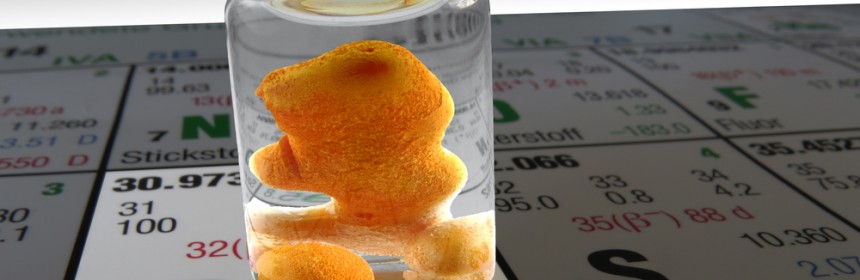
Phosphorus is an essential element for life. Forms of it are found in DNA, RNA, and all living cell membranes. It is the sixth most abundant element in any living organism. Phosphorus can also be highly poisonous and combustible (white phosphorus is used in many destructive weapons, such as napalm). It was also the first element discovered since ancient times. […]

Read more

The Origin of the Phrase “Coin a Phrase”

Shannon asks: Where did the phrase “coin a phrase” come from? Thanks! For those unfamiliar, “to coin a phrase” traditionally means “to create a new phrase.” These days, “coin a phrase” has also taken on a new meaning, first documented around the mid-twentieth century: “to introduce a cliché sentiment.” Funny enough, we have no idea who first coined the phrase […]

Read more

The Mountain Meadows Massacre of 1857

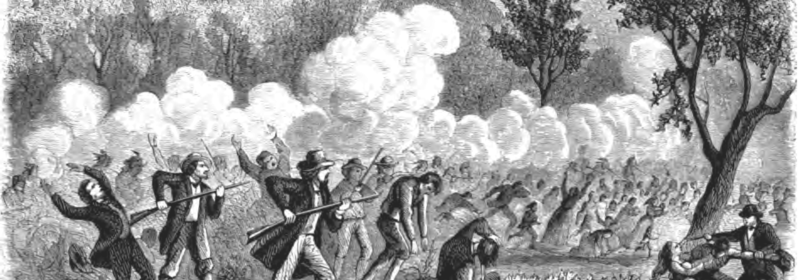
On September 11, 1857, the Baker-Fancher emigrant wagon train was rolling through Mountain Meadows, Utah, about 35 miles southwest of Cedar City. The train was made up of several smaller parties that joined together on their journey northwest from Arkansas. Some of the emigrants were on their way to settle permanently in California; others were simply searching for greener pastures, […]

Read more

Weekly Wrap Volume 40

This is a weekly wrap of our Daily Knowledge Newsletter. You can get that newsletter for free here. When Doctors Literally “Blew Smoke Up Your Arse” When someone is “blowing smoke up your arse” today, it is a figure of speech that means that one person is complimenting another, insincerely most of the time, in order to inflate the ego […]

Read more

Origin of the Phrase “Dead Ringer”

Dustin asks: Where did the expression “dead ringer” come from? You have probably heard the often-repeated story about how the original “dead ringer” was a person believed to be dead who was then buried alive. For various reasons, there is a good amount of evidence that being buried alive wasn’t the most uncommon thing in the world until relatively recently […]

Read more
1 106 107 108 109 110 188