
The Origin of “Port” and “Starboard”
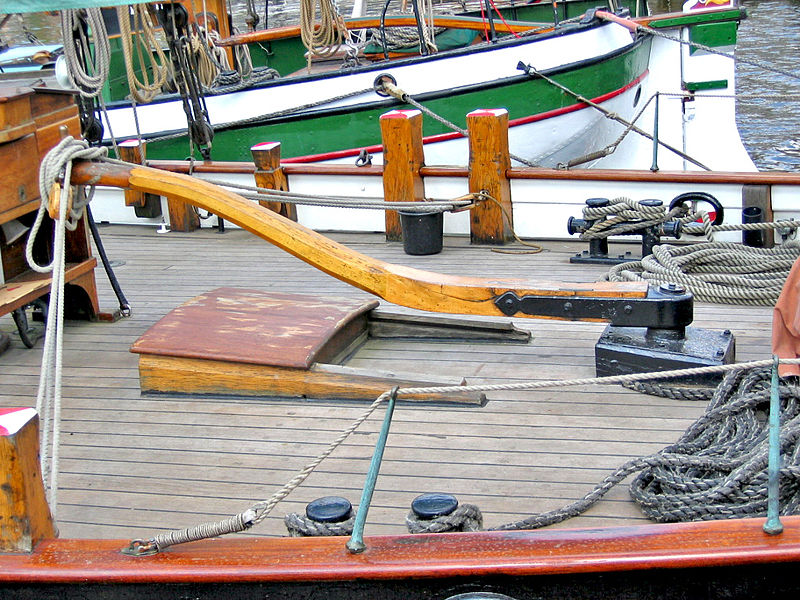 Today I found out how “port” and “starboard” became the commonly used terms for “left” (port) and “right” (starboard) on a ship.
We’ve all been there. You step on a ship and everything suddenly becomes nautical, despite the fact that most on the boat probably have to resort to mnemonics to remember which side of the ship is port and which side is starboard- usually translating port/starboard to left/right and then mentally orienting oneself to which side of the ship that would be if facing the front of the boat. When around landlubbers, this sort of mental gymnastics could be rendered much simpler by saying the universally understood “left/right side of the boat”.
Of course, in emergency situations, it can be potentially hazardous for someone to get turned around and use their left instead of the boat’s left or the like. This is supposedly the reason why terms like “port” and “starboard”, referring to one side of the ship or other, were originally used. Although, in the early days, seamen needn’t have thought of it as the “left or right” side of the boat- “starboard” referred to a very visible and prominent feature of the boat itself, so no chance of confusion.
Specifically, “starboard” is referencing the old practice of having a steering oar on one side of the ship, rather than a centrally placed rudder. This was basically just a modified oar generally attached in a vertical attitude to the right side of the ship near the back (with the right side thought to have been chosen simply because most people are right handed).
As to the name itself, “starboard”, this comes from the Anglo-Saxon name for this side steering oar, “steorbord”, which literally means “the side on which a vessel is steered”. The fact that the rudder was oriented this way gave a very convenient and completely unconfusing word for sailors, without any mental gymnastics, to know which side of the ship was being referenced; it’s just the side the steering oar is on.
The original name for the left side of the ship was not “port”, but rather the Old English “bæcbord”. This was probably referencing the fact that on larger boats the helmsman would often have to hold the steering oar with both hands, so his back would be to the left side of the ship.
After “bæcbord” came “laddebord”- “laden” meaning “to load” and “board” meaning “ship’s side”, referencing the side of the ship where loading and unloading was done. This gave rise to “larboard” in the 16th century, rhyming with “starboard”, and again just meaning the side of the ship that faced the dock or shore (to minimize chance of damaging the steering oar and make it easier to load and unload without the steering oar in the way).
“Port” also popped up in the 16th century with the origin similar to why the left side of the ship was called “larboard”, when you docked or moored a ship with the rudder affixed to the right side, it was always done with the left side of the boat facing the harbor or dock.
Presumably the fact that “port” and “larboard” first popped up around the 16th century is no coincidence. Once “laddebord” was slurred down to “larboard”, to rhyme with “starboard”, a problem was introduced with the words sounding so similar. There was now a good chance of people mishearing which direction was given, particularly in stormy settings or in a battle or the like. As such, around the early to mid-19th century, “port” popularly replaced “larboard” for this reason. At first many just made the switch on their own, but by 1844 the change from “larboard” to “port” was made official in the British navy and two years later in the U.S. Navy and has pretty much become ubiquitous since.
Bonus Facts:
- Somewhat confusingly (depending on your frame of reference), on many boats until the 1930s when someone said something like “hard to starboard” or the like, the helmsmen would understand that to mean to turn the ship to the left (port), rather than starboard. Why? Because for a time the standard was to go by the tiller direction (or the bottom of the wheel if there was one) rather than the way the ship will go. Thus, if you want the ship to turn to port, you’d move the tiller to starboard (or turn the wheel such that the bottom of the wheel’s turn direction goes to starboard). A famous example of where you can see this is in some depictions of the Titanic wreck where First Officer William Murdoch gives a “hard to starboard” command and the ship then turns to port. This was not a mistake. The helmsmen did exactly as he should have when the order was given.
- When it is dark, it is customary to have a red light on the port side of a boat or plane and a green light on the starboard side.
- An easy way to remember which side of the ship is port or starboard (besides just remembering that “starboard” came from the steering oar placed on the right side of a ship because most people are right handed) is just to remember that a ship at sea has “left” port. Another one is “Star light, star bright, starboard is on the right”.
- The word “port” comes from the Latin “portus” meaning “port/harbor”, which before that meant “entrance, passage”. This in turn comes from the Proto-Indo-European “*prtu”, meaning “a passage”.



| Share the Knowledge! |
          |
 |
I found the easiest way to remember which is which is that ‘port’ has 4 letters, as does ‘left’.
Re Bonus II: Coast Guard/Navy mnemonic for remembering which side is red (and therefore which side is green) “Port is red, as red wine is”
And alphabetic- P before S, L before R.
The green and red are on the sides they are because right of way (as with cars) belongs to the ship coming from the right. So a ship coming from the right will see a green light, meaning “go.” The ship on the left will see a red light, meaning “stop.” (Again, the same as on land.) There are other lights- white ones- placed to help for the same purpose.
Airplanes (and even Star Trek’s starships) have red and green lights on the same sides, but that’s mostly symbolic.
The red and green lights on aircraft serve the same purpose as on watercraft – to visually indicate the orientation of the craft to an observer.
Former Boatswains’ Mate and Master Helmsman here. Easiest way to remember that never fails:
Each of these words: right, starboard, green
…are longer than their counterpart words: left, port, red
As a young Midshipman learning the ropes, I was taught by the old salts to remember that the red light was “port” by associating it with “port wine”, which is, of course, red. Further, port, like left, has 4 letters. And finally, “red light returning” reminded you that if you saw a red and a green running light, and the red was on the right, you potentially had a problem to solve.
“you potentially had a problem to solve”
Depending on the ship sizes involved that sure is putting it mildly!
Thank you for all your wonderful work but I need to add something to this recent reference.
This is separate to the fact that some ship’s wheels were placed in reverse, the helmsman facing the REAR of the ship so that he could watch the wake.
The more important aspect is that the helm only moves the rear of the ship to the left or the right, making the pivot point the “sharp end.”
The more swiftly the rear of the ship can be swung, the sooner the change of direction with subsequent loss of headway and since this is costly, it may also be undesirable. So right hand down or left hand may achieve a suitable
response depending on which side of the wheel the operator is standing.
You’re all over-complicating it, with word lengths, etc.! The way I learned it – ‘Red port, left on the shelf..’ Easy peasy, and I haven’t had a problem yet!
Another navigational aid with red lights is that channel marking lights are set up such that as you come into port the red lights are on the right side of the channel so the mnemonic is ‘red right returning’.
Port, then, obviously is to, or on the right. Why, therefore, does the skipper on HMS Titanic shout ‘hard a-starboard’ and the ship turns left, just before glancing the iceberg?
First entry above in “Bonus Facts.”
I’d learned that this was slang used by sailors from europe sailing around africa. Port came from the fact that most of the journey was either spent sailing south down the western coast of africa, or north up the eastern coast. In either case, any port you would approach would be to your left. To your right, however, would be nothing but sea and stars. Whether this is historically accurate or just a mnemonic someone created is, of course, entirely open to debate.
What I have learned about it in child hood was something like this .U believe it it or not but comment. Port & star board term were first used by Vasco-da-gama & his team of 170 crew members while their journey from Purtgal to India way back in 1497-98. They followed the route from Europe to to India Via western coast of Africa to south of Africa Then To eastern coast of Africa and lastly after 11 months of voyage they reached at Calicut. During this long journey they always found Port towards their left side only. Whenever they needed to rest there journey for whatsoever reason they used term “Lets sail towards Port”. and they always found PORT to there Left. Similarly to their right hand side they could found only seawater & at night sky full of STARS from top to extreme right touching to water. Hence they called it BOARD studded with full of STARS i.e. Star Board side.
Thank you, Daven Hiskey. This was a very informative article, and I hope more people actually read it before commenting.
We used to remember this by “Is there any Red Port Left in the bottle?”
dtc has it right. My husband, a marine engineer, taught me an easy way. Port and left have less letters.
Right and starboard have more letters.
“Red on Right when Returning” is a good one that I’ve always used.
Why the complications? Just memorize port is left and starboard is right. It worked for me and I still remember it 50 years later, although, I stopped sailing and flying many years ago.
Red right returning is the most dangerous navigation crutch I have ever known. Is that red light a ICW mark or a entrance mark? Look at the chart and figure where the red and green belong.
‘Red Right Returning’ also only works for Region B under the IALA Maritime Buoyage system — North and South America, Japan, Korea, and the Philippines; the remainder of the world is Region A, where red can buoys mark the _port_ side of the channel.
For me it’s just a lot easier to remember that starboard wine is green or to simply remember which is which. It’s not that hard.
USMC ’67-’71
USS Ogden (LPD-5) 1969
USS Terrebone Parish (LST-1156) 1970
The term Port and Starboard date back. To the pyramid building days. Work crews of approximately 2000 men were broken down into groups of 500 each group had a name of a different part of a boat, Great or (Starboard) Asiatic or (Port) the Green. Or (Prow) the. little or (Stern) and the last was Good was most likely the Helmsman
Easiest way: don’t go in a ship when they don’t know the meaning of left and right 😛
I. am not. Count. von Count … ah Ha Ha Ha Ha Haaaaaaa…
“Starboard wine is green” … it’s simple bizarreness makes it the most memorable mnemonic containing no actual information. a “deck level two” mnemonic, so to speak.
Port wine may be red and delicious but i personally find it best left in the bottle onboard, to keep me aboveboard. Best just to not be thinking salubriously whether starboard or bæcbord.
BARKEEP! … GREEN ME!! … amirite?
Old sea dogs would always say this.
“There is no PORT LEFT in the bottle”
When you are sailing at night it is completely dark. You can’t see anything usually. You can only see other vessels by their lights. Because of the two colors of the lights, starboard green or right side and port red or left side you can tell which way the vessel is heading to avoid collisions.
any of u geniuses know why starboard tack (on a sailboat) has right-of-way? (I didn’t think so.)
It has to do with the original position of the rudder on the starboard side. A boat on a starboard tack was less maneuverable than the boat on a port tack..
Yes, that’s right. But you didn’t say why.
For gods sake!! The boats healed over to port and the rudder (back when the “steering board” was on the right) is farther out of the water (thus less maneuverable).. As compared to a boat on a port tack (healed over on the starboard side and having it’s steering board farther in the water. Happy?
I keep in mind my heart is red and in left side of the chest, so is the port side… In portuguese it is “bombordo”, that is like a bomba (the same word for pump in portuguese)… It was the good (BOM – portuguese) board (bordo – that is also edge) because the portuguese ships sail to south maintaining their good boards or good hopes (the safe land) in their lefts in the coasts of Africa… And starbord, or steer board is the side the old rudder was (so it is also today in little amateur boats)… We have to remember that that words are from the navigation era – so, who were the masters of that time? Portuguese!
ps: Hugs from a Amateur Skipper from Brazil!
Most people are right handed. Thus it was quite convenient to have the tiller/outside rudder fitted on the right side of the ship. I agree with our Portugese fellow. The “red” hart is located to the left side. No problem.
This knowledge kept me out of trouble as a ferry master engaged in cross channel passages!
Long ago I remember an old steamer where the rudder indicator on the steering pedestal pointed the “wrong way”. It was said that once upon the time when the (mud)pilot ordered port helm he actually wanted the vessel to swing to starboard. (Please remember the movement of the tiller.) Thus the steering mechanism must have responded the other way once, i.e. when the wheel was spun anticlockwise the rudder swung to the right looking foreward. Spinning the wheel clockwise the rudder turned the other way. Confusing? Yes!
Gott it????
If you need to work out how to remember it, it’s too late to avoid the collision.
I’ve only sailed the small boat I owned on a little lake in North America. I remembered the port and starboard by holding my hands before myself and placing my forefinger to my thumb… The side that made the “P” was my port side. –That was clear enough for me, as a child. 🙂
My guess regarding “port” is that English gentlemen of the period possessed the convention that after a meal, the decanter of port must always be passed to the left. If a person to one’s right asked for the port, it was passed entirely around the table rather than to the right.