
Origin of the Chinese Fire Drill
 Today I found out the origin of the Chinese Fire Drill.
In World War I, British soldiers came up with the phrase “Chinese Landing” to describe a clumsy or bad landing. It should be noted that this wasn’t originally meant to imply Chinese citizens couldn’t land a plane well or anything of the sort; rather, it came from the fact that, in a bad landing, the soldiers would often use the phrase “one wing low” to described this. When said quickly, this somewhat resembled the Chinese language in sound to the British soldiers, hence, “Chinese Landing”. This later evolved into describing any clumsy or inept landing. Eventually, this spread to other phrases where anything done clumsily or ineptly was called a “Chinese X” where X is whatever the act was.
This phrasing also came to mean anything done in a confused or disorganized way. The origins of this are thought to be from the stark contrast between British and Chinese cultures where the British viewed many things the Chinese did as confusing and hard to understand from their cultural perspective. Thus, around the time of World War I, any fire drill that was done in a disorganized or confused manner was called a “Chinese Fire Drill” by British soldiers.
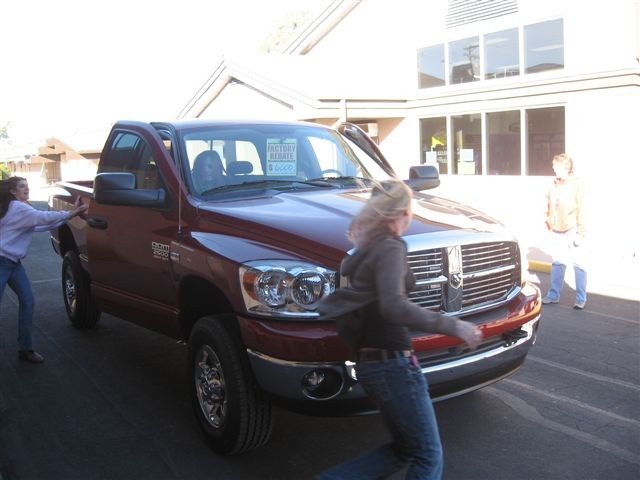
In terms of the car game, where everyone jumps out of the car like the car is on fire when it is at a stop; then runs around chaotically; and then hops back in, it is unknown when and where exactly this game became common. The first documented reference to this game, with the name “Chinese Fire Drill”, is from the early 1970s. There are, however, accounts from people who lived as far back as the 1940s who say this game and with the name “Chinese Fire Drill” was around back then. It is thought from this, considering there have been no accounts of the game with that name being around before the 1940s, that the name was brought back to America by soldiers fighting in WWII, who picked it up from British soldiers and at some point it got assigned to the car game, which was probably already around at that point, but either lacked a name or was under a different name.
Needless to say, this phraseology typically doesn’t sit well with Chinese citizens for obvious reasons and, for political correctness sake, most of these “Chinese X” phrases have disappeared, though some are still somewhat common in Britain.
Bonus Politically Incorrect Phrases:
- Dutch Courage (also called “liquid courage”): This is courage derived from becoming intoxicated from alcohol. The first documented case of this idiom was in Edmund Waller’s Instructions to a Painter in 1665. “The Dutch their wine, and all their brandy lose, Disarm’d of that from which their courage grows.” The origins of this term come from a Dutch doctor by the name of Franciscus Sylvius, who invented gin and prescribed it as a form of medication to British soldiers fighting in the 30 year war, particularly using it to calm the soldiers directly before battle. When they returned to England, the soldiers brought back gin with them and the phrase “Dutch Courage”.
- Indian Summer: This one has a few distinct meanings. Most common is a period after the first frost or when the weather has turned cold, in late autumn, where the weather warms back up for a time before once again turning cold; second is the hottest period of summer, typically in July or August; third, is where something blooms uncharacteristically later in the summer.
- Chinese Whispers (also known as Telephone when played as a game): Where someone tells one person something, then that person tells another person, and so on, with the story getting distorted as it goes along.
- There an urban legend that states that the first usage of the phrase “Chinese Fire Drill” was during a British naval engine room fire drill. In this drill, British officers and Chinese officers were both part of the drill (why Chinese officers were serving aboard a British vessel is a mystery, but these sorts of urban legends can’t be bound by logic). In any event, soldiers were to form two bucket lines, one on the starboard side and one on the port side. The starboard side was to fill their buckets and pass them along to the engine room, where they would be dumped on the fire. The port side was then to fill their buckets with the water accumulating in the engine room from the starboard side line. Due to confusion in language between the Chinese soldiers and British soldiers, what actually supposedly ended up happening was that the crew from the starboard side would draw the water and then run over to the port side and dump it back into the ocean. At that point, everybody started running around doing this. <sarcasm>I don’t know about you, but to me, that story sounds extremely plausible and is very likely to have been the true origin of the “Chinese Fire Drill” phrase.</sarcasm>



| Share the Knowledge! |
          |
 |
I’m surprised you didn’t mention more about the meaning of “Indian Summer”. The word “Indian” in this phrase means “False”, just like “Indian Giver”. In order to wipe-out the American indian a masive campain was started to make them seem dishonest, this was part of that campain.
(Exagerated a little, from “Uncle Tom’s Bathroom Reader”)
-Matt
Indian giver refers to the trail of tears and is supposed to describe america. Was it andrew jackson that performed that ridiculous faux pas?
The Yangtze River Patrol was the U.S. Navy and U.S. Marines that patrolled Chinese and other interests in the Far East in the 1920s and 30s. Marines spent time trying to train the Chinese population in emergency procedures but efforts proved fruitless. Language communicating was hopeless. A fire drill (or any such exercise) was complete chaos and resulted in people being smashing together and nothing could be accomplished. Hence, the term “Chinese fire Drill” was used by Marines and the Navy. The term was not picked up generally until after WW 2.
I was just a kid (teen) after the war but my brother worked with an ex-marine who served on the YRP in the 20s and 30s and had many tales to tell. Al (marine–nine island battles) often used the fire drill expression when things were SNAFU and he would elaborate about times “on the river”.
I don’t think that many Chinese were flying many airplanes at the time of WW1. Maybe WW2 or later.
I hope that this helps.
“Indian giver” refers to a clash of cultures. Indians did not understand that people did not own things. They could “give” something to a person but the transfer of ownership was something that they was not in their culture. When wanted back, it was taken. “Give” was not define in the culture.
Many clashes over this misunderstanding resulted in much bloodshed, mutual animosity, and long standing hatred.
I read once that “Indian Summer” got its name when early settlers experienced the first hard frost of the fall and began frantic preparations for a severe winter. The local Native Americans told them that there was no need to rush, that there would be several more weeks of mild, late summer weather before winter set in for real. Thereafter, they called that stretch of warm weather “Indian Summer” as if it were a gift from the Native Americans.
Hong Kong was a British colony, hence Chinese sailors on a British ship.
The Chinese sailors were agile and when engaged in a fire drill — they treated it seriously. The one fire drill that apocryphally provided the name involved an extended bucket brigade and by some accounts became even more confused than usual.
During and post WWII the Chinese were U.S. and British allies. But in times of war racial terms are common for friend and foe. Some British soldiers didn’t like being called Brits and Limeys, and some Americans didn’t like being tagged as Yanks. Germans were Krauts.