
The Words “Blond” and “Blonde” are Not Wholly Synonymous
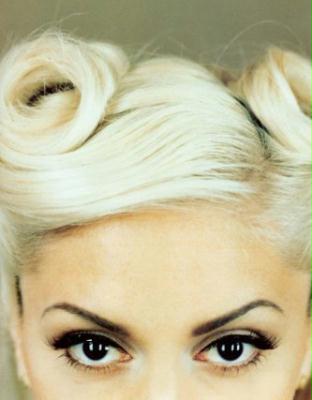 Today I found out the words “blond” and “blonde” are not wholly synonymous. So what’s the difference between the words “blond” and “blonde”? (besides the obvious extra ‘e’) 😉
The difference is simply in what gender the word is referring. When referring to a woman with yellow hair, you should use the feminine spelling “blonde”. When referring to a male with yellow hair, you should use the spelling “blond”.
This then is one of the few cases of an adjective in English that uses distinct masculine and feminine forms.
Bonus Facts:
- The word blond derives from the Old French word “blund”, meaning literally “a color midway between golden and light chestnut”. “Blund” then is typically thought to have come from the Latin word “blundus”, which was a vulgar pronunciation of the Latin “flavus”, which means “yellow”. The French origin of the word “blond” is how we get the added “e” on the end when using the feminine form.
- Another oft’ misused spelling of a word is fiancé vs. fiancée. The former is a male engaged to be married; the latter, with the extra ‘e’, is a woman engaged to be married.
- “Blond” first appeared in English around 1481 and was later reintroduced in the 17th century; and has since gradually replaced the term “fair”, in English, to describe yellow hair.
- “Blond” isn’t the only hair color that has alternate spellings based on whether it refers to male or female hair. The word “brunet” also shares that distinction. The spelling is “brunet” when referring to a man’s hair and “brunette” when referring to a woman’s hair.
- Alfred Hitchcock liked to cast blonde women for main characters in his films as he believed people would suspect them least, hence the term “Hitchcock blonde”.
- A person with a typical full blond head of hair will have about 120,000 hairs on their head; brunets average about 100,000 hairs on their heads while red heads generally only average around 80,000 hairs.
- Hair does not grow faster or longer the more you cut it.
- While the previous “old wives’ tale”, that hair grows faster/longer the more it is cut, has been proven false; another such long held adage, that stress contributes in making your hair go gray faster, has been proven true. This is because the same effects of stress in your body that do damage to DNA also deplete the melanocyte stem cells in hair follicles. These MSCs are responsible for making pigment producing cells.



| Share the Knowledge! |
          |
 |
You should know the word factoid usually means something that’s incorrect, but sounds plausible.
“something resembling a fact; unverified (often invented) information that is given credibility because it appeared in print”
wordnetweb.princeton.edu/perl/webwn
@Isto: Please see this: The Difference Between a Fact and a Factoid
To sum it up (if you don’t want to click the link and read my article on this very topic) ;-), Merriam-Webster disagrees with wordnetweb.princeton.edu
What I got was “a brief and usually unimportant fact”.
http://www.merriam-webster.com/dictionary/factoid
This is only half of the story, according to my dictionary… “blond” is more commonly used as an adjective, while “blonde” is most often used as a noun (referring to a blond woman). Also, blond is considered gender-neutral in English and the gender-specific “blonde” has fallen out of favor because use of the noun risks offense.
The world had gone in the wrong direction on this (not the first time). Actress (for example) tells the reader more in fewer words and should be preferred. If the reader has a problem that is not the writer’s problem. I agree that these words seem to all be falling out of favor.
Male and female nouns would be OK if there were a standard reference of them. But the terms are in dispute, so you can’t bank on a gender.
“Actress” may mean female only. But “actor” isn’t restricted to the males. Other languages use gender-specific nouns more rigorously.
It’s an unresolved issue, and if you have a suggested improvement for the language in this regard, you may get it to stick. https://www.washingtonpost.com/posteverything/wp/2014/11/12/you-should-stop-using-gendered-pronouns-immediately/?utm_term=.502ad0d42c14
It is far more likely that “blonde” has fallen out of usage not because it risks offense, but because as is true with many other words in the English – and more specifically, American English – language, people in general are too lazy to learn correct usage and spelling, and educators in general are too lazy to teach it.
Hey, if someone is lazy, first of all, it’s gonna be WAY more left out than just a silly “e” or things like that. Here in America, we spell things differently. :T just because we spell it different in our English than the rest of the world does doesn’t us “lazy” or whatever it is you said (man, my comment sounds mean so far; I’m not angry, it just sounds that way) so don’t go insulting people like that. I could say your people are rude because you’re always talking about us and that you are helping with that stereotype. I could also say you’re too stubborn to accept that English has more than one way of being written or spoken. Of course, I don’t actually think that at all(well the second one I believe to be honest, with all do respect), but I’m just proving a point here. BOTH ways of spelling in English are correct. Yours is, ours is. And, it isn’t changing :T English speakers are the rudest(dunno if that’s a word, but oh well) to eachother when it comes to language differences. I speak Japanese as well naturally, and Japanese people never fight like this and insult eachother unless it’s a joke, same with Spanish people sometimes. But Japanese people sometimes say people from America and England always insult them for not using English properly and that is not fair. Especially when English Speakers expect respect whenever WE learn a second language. Gosh…we English Speakers all need to chill. Anyways, that’s all I wanted to say. I know your comment is like four years old but still. I just felt like responding to you is all.
I agree with you. Language evolves all the time, think of how different the English language was just a couple hundred years ago. Back when “blund” evolved to become “blond” in France, their was probably a similar person to the above poster that was wagging their finger and pointing out how lazy people were to not be using the proper grammar.
*there (I wish there was an edit function!)
No you don’t. You were right the first time. Unless that was the point: you evolving the language and all.
Yikes! Now I’m the one who wishes there was an edit function. The “their” you referred to wasn’t there, it was the other there. My bad. The first one was indeed incorrect, the second irrelevant.
It isn’t that the people are trying to say that we’re lazy because we’re American; the fact is that that really is the way the word is meant to be used (blond for males, blonde for females). As an American who grew up on the American learning system, I can agree that many teachers here either do not teach concepts like this the way they should be taught, or just do not teach it at all. I’ve seen this a lot in school, along with many other mistakes regarding grammar and spelling (don’t even mention the “I versus me” rule that nobody seems to know). The truth is that, as much as it bothers grammar nazis such as myself, the true purpose of language is to communicate with another person, and as long as the person gets his/her point across, nothing else in the grammar world is extremely important.
Part of the problem is that while the old grammar rules are still around, they are now considered to be DEscriptive rather than PREscriptive. In our current time there are no rules, no Truth only “your truth” or “my truth”. In language – at least in the American “education” system – pretty much anything goes.
*due respect
Also, as a last note (well two):
First: people actually ARE mean about Japanese, but it’s usually other native English speakers who learn the language and then make “holier than thou” remarks to other English speakers who haven’t fully learned the language yet and are still learning. That scares people away from learning our language.
Second: No one owes anybody anything. Even if someone was using English all wrong on the internet, they don’t have to have a “reason” or an “excuse” for anything. They can spell how they want. Even if thye maik misstakes laike this. Because now you’re (just realized that your is wrong but so?) whole day is not messed up because someone didn’t spell right, and what’s more: they’re not even thinking about you. So it’s so much easier to just not be angry at it (it takes time, trust me it’s a way better feeling than being irritated by the smallest stuff.
Ah, hopefully neither of my comments make you angry. It’ll either make you see things from a different perspective or make you angry. My intention want to make you angry though. I speak very frankly so it comes off as harsh, especially since this is the internet. And, I’m probably never ever going to run into you again (if I did we wouldn’t know who eachother were) so yes…
Is it socially acceptable to say someone has yellow hair? or is the politically correct term “blond(e)”? I have an impression that in US culture, saying someone has yellow hair would be considered derogatory.
Hey, Doug! Yellow hair isn’t blond. You should say yellow about yellow, and use the term “blond” to describe blond colored hair. Even though blond includes a great variaty of shades it must be of the blond color to be blond…
But what the heck. why not let the yellow haired honeys have fun and be bimbos to…
I find your “bonus factoids” interesting and almost could be dubbed a “Why Do You Know That Random Fact?” section. As far as the blonde vs. blond debate goes, I would suggest calling people with this physical attribute “fair-haired” as opposed to “yellow-haired.”
I was surprised to learn this! I can tell you that in British English people generally use ‘blonde’ as it is thought, however mistakenly, that ‘blond’ is a lazy Americanism, as Awgie has said. Also, ‘fair’ or ‘fair-haired’ are used synonymously and interchangeably in the UK, with equal frequency.
Related question: Is ‘ash blonde’ the same as ‘dirty blonde’? Ash blonde means fair hair that is slightly duller in colour – less yellow than white/grey; what I would think of as Nordic hair. I’ve only ever heard ‘dirty blonde’ on telly.
No, dirty blonde is not the same as ash blonde. Dirty blonde is more like a brown/blonde, like when a child is blonde but her hair is turning more brown as she gets older, at least in CA where I live.
Actually, I’ve never seen any English person write ‘blonde’ as ‘blond’. The spelling of ‘blond’ just looks odd and unfinished to me, as I’m English and have always written blonde as blonde. We get made fun of if we call anybody ‘blond’, and get annoyed by people saying that we are ‘wannabe Americans’.
Personally, I’m British and proud to be, and that includes keeping up with our traditional spellings.
It’s the same in Australia – blond and brunet do not exist. I used to be amused reading old detective novels where people smoked ‘cigarets’.
If I’m referring to a woman’s hair, should I call it “blonde hair” or “blond hair”?
Um…seriously?
Vulgar Latin “blundus” is not a corruption of Classical “flavus”. The sound “fl” did not become “bl” in Vulgar Latin, or any Romance language I know of, nor did “v” become “nd”. The word was probably borrowed from Frankish, which replaced the word “flavus”, but the article seems to be implying the word “flavus” itself became “blundus”, which can’t be true.
An aside–I’ve never used the word “brunet” (or brunette) to describe a man. Ladies are brunettes, but men just have brown hair.
I’m American and I always spell “blonde” with an -e. Though I don’t find myself talking or writing about blondes very often….
Given the nature of the English language (eg. the in-progress dying off of distinctions like who/whom which provide nothing beyond what is inferred from context), I’m sure one variant or the other will die off eventually.
Given the blond/blonde American/British difference in preferred form and the tug-of-war between clean, simple spelling and our tendency to take the feminine forms of gendered words we received during the Norman conquest of 1066 (eg. matinee, active, naive, etc.), it’ll be very interesting to see which way this one falls.
It’s not as if it’s fiancé/fiancée. There, “fiancee” will obviously win for the same reason the feminine form won in words like “matinee” and “divorcee”: We’ve dropped the diacritic from the é, so we now rely on the doubled “e” of the feminine form to indicate that it’s pronounced fee-on-say rather than rhyming with “finance”.
(I think typewriters and computers are largely to blame for maintaining that trend. Here on Linux, there’s a little-known trick to redefine a key as Compose so you can write naïve by typing i” but, on Windows, it requires a utility which stopped getting updates in the Windows XP era.)
P.S. It’s a darn shame naïve and coöperate aren’t recognized as valid spellings by standard spell check dictionaries. How is anyone supposed to even have a chance of encouraging distinctions like “naive” (knive) vs. naïve (na-eev) and cooperate (coop-er-ate) vs. coöoperate (co-operate) when the diacritic to tell dipthongs from vowel shifts is refused by the spell checker?
Just a comment about spell checker – you can teach a spell checker to accept words it doesn’t know. I must do it all the time, especially on my phone, because I talk about things that aren’t quite as common, like chicken breeds such as Silkie and Marans and Cochin (and many others) that often aren’t recognized, and if on auto-correct, are changed into completely different words. You can either right-click an underlined word to accept it into the dictionary (on a PC/laptop) or click on what you actually spelled on the line where accpeted words are listed on your phone to teach your phone that it’s what you intended to type. Once you teach your spellchecker the word, you don’t have to worry about it later on. Well, unless you teach it so many that it seems to forget earlier ones – I have run across that upon occasion. *shrug*
Interesting. Notice the female descriptions blonde, brunette, etc. are all longer than the male counterpart.
As for factoid; My understanding, as I was taught, was that factoid was a small fact or a smaller piece of information taken a larger body of info or condensed from a larger infobod. Its veracity was not in question. So a factoid taken from or condensed from info of suspect origin should probably be considered suspect as well. Conversely,factoids lifted from genuine statements would be thought of as “factual”. ?