
Why Chocolate is Bad for Dogs
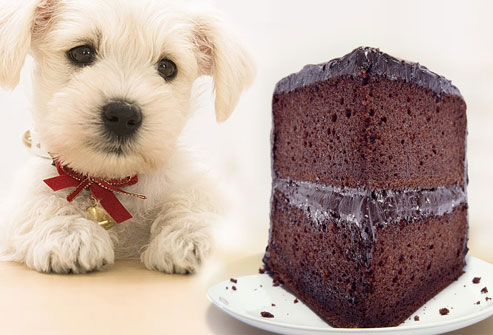 Today I found out why chocolate is bad for dogs.
Chocolate contains an alkaloid called “theobromine”. Theobromine is in the same family as caffeine and is a type of stimulant (they both are mythylxanines). Theobromine stimulates the central nervous system, cardiovascular system, and causes a slightly increases blood pressure.
Dogs and certain other animals, such as horses and cats, cannot metabolize theobromine as quickly as humans can; this causes the above effects to be much more severe than is the case with humans. The specific notable side effects of toxic levels of theobromine in dogs includes: diarrhea; vomiting; increased urination; muscle twitching; excessive panting; hyperactive behavior; whining; dehydration; digestive problems; seizures; and rapid heart rate. Some of these symptoms, like the rapid heart rate, can ultimately be fatal to the dog.
So how much chocolate is too much for a dog? That depends on the size and age of the dog, as well as what type of chocolate was consumed. The larger the dog, the more theobromine they can handle without dying and older dogs tend to have more problems with the side effects, as noted above.
As far as the chocolate itself, cocoa powder contains about sixteen times as much theobromine per ounce over milk chocolate, with most popular forms of chocolate falling somewhere between those two, excepting white chocolate, which contains insignificant amounts of theobromine per ounce, making it extremely unlikely to be able to be consumed in sufficient quantities to harm a dog.
For more specific figures, here are the approximate amounts of theobromine per ounce of chocolate:
- Cocoa powder: 800 mg/oz
- Baker’s chocolate (unsweetened): 450 mg/oz
- Dark chocolate: 150 mg/oz
- Milk chocolate: 50 mg/oz
So, the general rules for the amount of chocolate that will be toxic for a dog:
- Milk chocolate: one ounce per pound of body weight (so, without intervention, a 16 pound dog (7.2 kg) would likely die from eating one pound of milk chocolate)
- Dark chocolate: 1/3 of an ounce per pound of body weight (around 5 ounces of dark chocolate for that same 16 pound dog)
- Baker’s chocolate: 1/9 of an ounce per pound of body weight (around 1.8 ounces of baker’s chocolate for a 16 pound dog)
- Cocoa powder: 1/16 of an ounce per pound of dog (around 1 ounce of cocoa powder to kill a 16 pound dog)
On the other extreme end, it would take about 200 pounds of white chocolate consumed within a 17 hour period to reach toxic levels of theobromine for a 16 pound dog. The low quantity of theobromine here is because white chocolate is made from cocoa butter, sugar, and milk, but no cocoa solids.
How to Treat a Dog That Has Eaten Chocolate
There is little that can be done for the dog, particularly at home, to treat the theobromine poisoning once it’s in the dog’s bloodstream. Thus, the general methods of treatment tend to be ways to try to stop the consumed theobromine from reaching the bloodstream. These include:
- Inducing vomiting in the dog immediately, which helps remove much of the chocolate.
- After that, try to get the dog to eat a small amount of activated charcoal, which binds to the theobromine and keeps it from entering the bloodstream.
- Try to get the dog to consume as much water as possible to keep them hydrated.
- At the vet, certain drugs can be used to help the dog survive, such as anti-convulsants, which can help if the dog is having seizures.
In order to induce vomiting, the easiest way, aside from sticking your finger down their throat or the like, which isn’t at all recommended, is to get the dog to eat something like 1-2 tsp of hydrogen peroxide, which should shortly induce vomiting and can be repeated a few times every 15 minutes, if it does not. Alternatively, 2-3 tsp of Syrup of Ipecac should do the trick, though this one should NOT be repeated, even if it doesn’t work the first time.
For the activated charcoal, about 1-2 tsp of activated charcoal mixed thoroughly with water should be fed to the dog. This also works well for certain other types of toxins that dogs and cats can sometimes consume, such as: carbamate insecticides, herbicides, and rodenticides.
Bonus Facts:
- Once the theobromine is in the dog’s bloodstream, the half-life is around 17.5 hours, so 24 hours or so after the dog has consumed the chocolate, if it is still alive, it’s probably going to make it.
- Cats also are particularly susceptible to poisoning from chocolate for the same reason dogs are. However, unlike dogs, cats generally aren’t particularly inclined to eat chocolate, having no “sweet” taste receptors.
- Horses can consume much more theobromine than dogs, despite how toxic it is for them oz/kg, due to their much higher weight. Theobromine has been used in the past to boost a horse’s performance, which is why it is banned in horse racing.
- Theobromine can also be found in the leaves of the tea plant and the cola nut.
- Human’s metabolize theobromine much faster than dogs, but sufficient quantities of this compound over a short enough time span can also induce similar toxic effects as can be found in dogs, though this is rare as the quantities required are much higher. However, theobromine poisoning can sometimes be observed in elderly people who eat excessive amounts of chocolate on a daily basis.
- Human’s consuming caffeine will introduce theobromine into the body due to the fact that caffeine is metabolized in the liver into about 10% theobromine.
- The earliest documented case of the cacao tree being cultivated is around 1100 BC in South and Central America.
- It isn’t entirely known where the word “chocolate” came from, though it was introduced in English via Spanish. The popular theory, though not without credible competition, is that it was introduced to Spanish from the Nahuatl word “chocolātl”. Nahuatl was the language of the Aztecs. This word, in turn, derives from the Nahuatl “xocolātl” from “xococ”, which means “sour or bitter”, and “ātl”, meaning “water or drink”. The Aztecs particularly were known to make a “bitter drink” from cocao beans, which is where the above name came from.
- Around 50 million people in the world depend on cocoa as their source of livelihood.
- Around 2/3 of the world’s cocoa is produced in West Africa, largely by child labor.



| Share the Knowledge! |
          |
 |
i am an animal nutritionist. i have been for 13 years. i phone 11 vets and the nebraska university medical center. as suspected, no new studies have been shown to theobromine (a common sodium based food ingredient used to keep vegetable oils from drying or hardening) causes any such symptoms even in enormous quantities. also, chocolate liquer used in expensive chocolates cause liver damage to dogs in the long term. short term, chocolate has no effect on dogs. hersheys, chocolate flavorings such as coco powder (no, its not real chocolate) has no effect whatsoever. i would appreciate it, if before you started spreading blatant lies to pay back whoever it was your upset at that feeds dogs chocolate and condones it, site your sources, give an option for others to contact, cause most of us know this is a total lie, and above all else, fact check. thanks.
@Tony S: And your sources for these statements are? I only wonder because when you research why chocolate is bad for dogs, every single reputable source out there says it’s because of the theobromine. And yes, if you look above I did cite my sources, unlike you, but here are some more for your viewing pleasure: one from a vet; another one from a vet; yet another one from a vet; here’s one that you say doesn’t exist (one that is a paper showing the effects of theobromine on a dog); here’s one from the Merck Veterinary Manual; here’s one from the American Veterinary Medical Association… I could go on and on and on.
I’m perfectly willing to admit when I’m wrong and change things accordingly. I take the content of this site, in terms of the factual nature of everything said on it, extremely seriously and I have a significant background in research, so I generally do a pretty good job at making sure nothing you read here is going to be false (when there is even a question, I simply don’t do that article once I see that). The very few times I’ve been wrong on some point or another (so far I’ve never been wrong on the main point of the article *knock on wood*), I’m very interested in changing it to make sure I don’t spread any misiniformation, which is the opposite of what this site is about.
In any event, given all these sources (and many, many more out there), in order to convince me that all these professionals are wrong, you’re going to have to do better than just saying you’re an animal nutritionist. Though, from the tone of your comment and the lack of sources, I suspect you’re actually just a comment troll. But I also can’t have comment troll’s spreading misinformation on my site, so I included the above additional sources.
I have a source: my family has fed our dogs chocolate and an occassional treat for generations. We roll our eyes ate this myth of chocolate being harmful to animals. It’s baloney of the highest order. I have 4 dogs all large breed. Tje youngest one is 14 and has eaten chocolate any time I or someone in my family has some. All 4 dogs have long outlived tje normal lifespan of their breads, by at minimum 2 years or more.
Obviously we do not feed them peices of cake, and fudge daily, but it is roitine for each of them to get at least a whole Hershey’s bar once per week.
And this has been nornal for every dog I have owned, since the 1970’s.
Maybe you should consider YOUR sources and stop parroting old woves tales from people who stand to profit from such myths.
One of my dog a standard poodle died approximately thirty minutes after consuming three Hershey Kisses that my youngest brother fed him. My poodle was two years old and in excellent health. So tell me about how chocolate is harmless to dogs.
Two other dogs I owned became extremely ill from consuming small amounts of chocolate but due to prompt and extensive emergency treatment by a veterinarian.
Tony, if you want to feed a dog chocolate, go right ahead. But, I can assure you that you will have a dead dog on your hands. I think it’s safe to say that you don’t own a dog,and that you don’t care that much about dogs, or any other animal for that matter. You are one sick and disgusting individual.
i have alaways shared my cadbury dark choclate bar with my furry son without any issues he passed @18 y/o not bad for a pom my scottie lived till a very ripe age of 20 she ate it a bar at a time 8 oz never sick my 2 girls ages 3 and 1 have been enjoying they were 6 month of age chocolate ice cream also i guess if you feed them a pound maybe something but during easter my kids feed those girl as much as they chose to eat never ever sick
“you will have a dead dog?” Are you serious? I have owned 4 dogs and have had friends or associates that had them to probably number near 100. Not only have any of them had a dog that died from chocolate but I have never heard of any dog they knew of die from chocolate. Do the math, that is a lot of damn dogs. Just because theoretically it might/could happen does not mean crap…you ARE spreading false information!
Actually, I did talk to a vet and she did say that giving chocolate to dogs is harmful. I mean she’s a vet you guys aren’t. And she most likely worked with pets longer then you.
My two year old standard poodle that was in excellent health died approximately thirty minutes after consuming three Hershey Kisses that my youngest brother fed him. So tell me about how chocolate is harmless to dogs.
Two of my my dogs became extremely seriously ill due to consuming small amounts of chocolate. The only reason they survived was prompt and extensive emergency treatment by a veterinarian.
My now almost 4 year old Chihuahua has been eating chocolate since she was a little baby dog. Currently her favorite treat is sharing a peanutbutter snickers (crunchy) with my wife…she can be in another room and as soon as she heres the wrapper she comes running.
She eats 1 to 2 squares a few times a week..the only thing I have noticed is her ” soft serve ” bowl movements
Bullshit. I did an animal course not so long ago and one of the first things they told us is that dogs should NOT eat chocolate.
Who lies about giving dogs chocolate so its safe right
Yeah, Daven, he’s most likely a troll. he can’t spell for crap. also, theobromine is found in chocolate, so it can’t be sodium-based. But if he really thinks he’s right, let’s feed chocolate to his dog and do a study on it, just so there’ll be a recent one.
Daven, your patience and restraint are commendable. Not a few webmasters faced with a “comment” like that from Tony S. would have verbally eviscerated the commenter, humiliated him beyond redemption, and blocked him from ever commenting again.
Actually, though-out history only three dogs have ever died from theobromine. FYI, my small-ish dog (25 lbs) has eaten lots of chocolate at once and wasn’t even slightly sick. The compound is also found in coffee, cola and tea. I have given entire bowls of coffee to a larger dog and they loved it. This whole thing is BS made by someone who doesn’t want their status symbol to be enjoyed by ‘beasts’ as well as them. They thought the same of ‘blacks’ in earlier ages (also thought of as ‘beasts’) as well as ‘lower’ classes.
As you can see, the theobromine issue is the same as global warming. One person started it and had enough money to have the results say what they wanted.
P.S. they also say the same thing about garlic and onions for the SAME compound. Amazingly, another dog of mine (a lab mix, approx 50 lbs) ate half a basket(1′ diameter) of onions and had no side effects whatsoever.
Experience bests ‘studies’ since they are all biased to one way or the other anymore. Either way, I KNOW that theobromine is safe for dogs. Of course if your little poodle gets into a pound of chocolate, of course its going to get sick. So will a four year old.
@Reki
Dogs can also be hit by cars and survive. Heck, dogs could have large wounds and still survive.
Does that mean you should hit your dog with your car? No.
I would stop feeding your dog chocolate and coffee. Even if it doesnt kill them, it’s not good for them. And if you keep feeding it to them, they might actually die.
Just curious, but WHY would you give these items to your pet? They don’t need coffee or chocolate. Also I would like to point out all of you that have proudly announced that you gave your pet something potentially dangerous, it was milk chocolate not as dangerous as dark or bakers chocolate.
Your comment only three dogs have died from eating chocolate is plainly and obviously false. My two year old standard poodle who was in excellent health died approximately thirty minutes after consuming three Hershey Kisses that my youngest brother fed him. In addition four of my friends and family members have had dogs that died due to the consumption of small amounts of chocolate. As more evidence that chocolate is harmful to dogs two of my other dogs became extremely seriously ill due to the consumption of small amounts of chocolate. The only reason they survived was prompt and extensive emergency treatment by a veterinarian. In addition several of my friends and family members dogs have become extremely seriously ill due to the consumption of small amounts of chocolate. So tell again how chocolate is harmless to dogs. So you know more about what is harmful for dogs than the American Veterinary Association and the Merck’s Manual of Veterinary Medicine?
@Daven
I also forgot to mention, EVERY site I read that said that ‘fact’ cited the EXACT SAME site that did the study, furthering my findings.
Tony’s post is scary. I am a veterinarian and I have definitely seen dogs die from theobromine toxicity. If you’re looking for studies, here’s a whole bunch of them: http://scholar.google.ca/scholar?hl=en&q=theobromine+toxicity+dog&btnG=Search&as_sdt=0%2C5&as_ylo=&as_vis=0
By the way, this is a great article that you have written. I have a chocolate toxicity calculator for dogs that would be a great addition if you’d like to add it: http://www.askavetquestion.com/chocolate_toxicity.php
I have a few vetrinarians that are friends and I have a hard time believing you are telling the truth. I feel like you are the troll here. Why would you just cite more pages when you said you are a vet and have seen dogs die? You could name the situation since you are the original source? How could readers get a better example than that?
I KNOW this comment is extremely late coming, but I would hazard that she cited research instead of anecdotal evidence because she’s a medical professional. One person’s individual experience is, by definition, anecdotal and does not carry as much weight as published research. Perhaps she did see a dog die who had ingested chocolate. Perhaps the chocolate is what killed the poor animal. However, there is the possibility that there was another cause for the death of the animal, and it was improperly diagnosed. By falling back on published and hopefully peer reviewed research, the body of knowledge grows, and we can close in on a level of certainty about the effects of the compound that we could not if we relied only on individual reports.
I am an original source my standard poodle who was two years old and in excellent health died approximately thirty minutes after consuming three Hershey Kisses that my youngest brother fed him. Two of my other dogs became extremely seriously ill due to the consumption of small amounts of and survived due solely to prompt and extensive emergency treatment by a veterinarian. In addition four of my friends and family members have had dogs die due to the consumption of small amounts of chocolate. Several of my friends and family members have had dogs become extremely seriously ill due to the consumption of small amounts of chocolate. So you know you know more about what is harmful to dogs than the American Veterinary Medical Association and the Merck’s Manual of Veterinary Medicine?
Dr Marie, I know this is a really old post but would love to hear your opinion. My 15 year old Rottweiler absolutely loves chocolate. He’s only had it maybe two times, both accidentally. Both times we rushed him to the vet & were lucky he had no obvious problems or symptoms. He can hear a candy bar or anything that leads him to believe it could be chocolate, opening from the other side of the house. Last week he was diagnosed with bone cancer. He has about 2 or 3 months left. Next week he turns 16 and we are having him one last birthday bash with all his favourite treats. Do you think it would be ok to give him just a little chocolate since he has so little time left? Could it be fatal due to his ill health? He has been the most incredible dog!
The LD50 for theobromine for humans is 3.33 times the LD50 for dogs. So to figure out how much chocolate it takes to kill your dog, figure out how much chocolate you would have to eat to kill yourself (per kilogram), then divide that by 3.33 and multiply by the weight of your dog in kilograms. Then don’t feed your dog that much chocolate. 😉
@Reki
Only 3 dogs in history that have died from chocolate toxicity? We have had more than that at the animal hospital I work for.
Onions not bad for dogs? Tell that to the Springer we did multiple blood transfusions on.
Stop spreading false information just because you had one incident that turned out for the best.
D. Spencer, CVT (that’s CERTIFIED VETERINARY TECHINICIAN)
Do other animals have different blood types, like humans, and could that be why some animals react differently to chocolate??
So my 3.75 lb morkie ingested much of a tiny “tube” of mini m&m’s at some point today, and we aren’t sure when it was. The boys left it on their floor. I called our vet. She said to give him 5 ml of hydrogen peroxide to make him throw up. We did, and he did – about four times. Emptied everything in his stomach. Didn’t find evidence of a single m&m, which means he possibly ate it earlier today? No symptoms yet (other than that he’s really mad at us for making him throw up). I’ve looked at all kinds of sites. When would he start having symptoms? I love my puppy, but I am sick as a dog, exhausted, and have to teach tomorrow. I cannot possibly stay up all night and watch him. Is there anything I could do for him if he DOES start having symptoms? Tks!
I’m sorry but I’ve given chocolate to my dogs once or twice a month (sometimes more) their entire lives. They are 12 and they have none of these symptoms. They also get chicken, rice, veggies, pizza, steak, burgers and other people food regularly. Today they had bacon cheesburgers from BK some chicken.
These creatures are little lives and little consciousness. They are no different than you or me other than the fact that they cannot communicate with us. They feel the same, they crave the same and they have the same taste buds. It’s cruel to let your dog smell all of the great things that are cooking and not let them have any, not the other way around.
They had heartworms about 5 years ago and it was treated with nosodes, veggies, chicken and rice. 6 months later, no worms at all. 5 years later, still not worms.
They get medicinal marijuana to relax, sometimes a bit of pot brownies and filtered water. Why would you consider giving your animals anything less than you would ingest yourself? THAT is cruel.
There’s so many idiots in these comments. Conspiracy theorist, anti big pharma nut jobs.
Actually,what you are doing is CRUEL. Feeding them something that can kill them is very heart-breaking. I consider you talk to a vet and ask them if they are allowed to consume that stuff.
by the way. Dr. Marie’s comment is a perfect example of the “repeater” society we live in. These “doctors” have no experience what so ever and instead rely on medical books written by drug companies to treat their patients. They are barred from performing original research or thinking outside of the big pharma box because if they do they’ll have their license taken away.
Go with your gut. Your baby will tell you what is good for him/her and what is not. They are conscious beings who can communicate if you just listen.
Thank you for this info. ‘coz I’ve been giving my dogies chocolates. I feel happy watching my dogs licking chocolates for they seem to enjoying. I don;t know about it;s ill effect, now it’s a NO! NO!. If you have other healthy tips, please keep me inform. I love my dogies so much.
I have been a dog owner for ten years now and my pet has never consumed chocolate until now. I have heard that chocolate can be fatal to dogs and i would appreciate it if i got the correct response. My dog is 8 years old and she is a poodle toy mix. She shows no signs of discomfort after she ingested the chocolate (which was about the size of a nickle or quarter) but i did see her do a motion as if trying to vomit. She did not. So please, can someone tell me what i should do and if i need to take her to the veterinarian !
Hi Ivania,
The best thing you could do is to ring up your vet and ask for advice.a tiny amount should cause no lasting harm,but best to get the opinion of a professional.
My dog ate a bag of hersheys easter milk chocolate eggs . i thought she was going to die and i started crying. My dog must have a very strong imune system because she never got sick. she was acting normal. she is still healthy to this day
@analvarez
Because it was MILK chocolate. Read the article again and you will understand why.
Call me crazy, but the mere fact of chocolate possibly being dangerous for my pet is enough for me not to feed it.
I had a Dalmation once who stole a box of belain choclates and had no ill efects
but this was probley due to his size
I had herd it said that it was bad for dogs but did not realize it could kill I have had dogs all my life
and did not know how many others are there that dont know this I must have been really lucky
I don,t let my small dog have any even though it is hard to say no
I’m with Jess on this one, why risk it? My dog is my baby, why would I give him something that could be so harmful to him. Don’t get me wrong, I’m not a food nazi, he gets his treats and a special plate made for him on special occassions. I love him like a child so he receives like he’s my child, I would NEVER give my child something they could be allergic to, or could harm them in any way. This just proves how stupid people can be, not just the context of some of these comments, but the gammer, GO BACK TO SCHOOL AND LEARN PROPER ENGLISH!!!!!
Considering the “grammar” comment, I love all you run-on sentences! 🙂
Hello, My name is David A. Ploetz. I have recieved a doctorate in Animal Medical Sciences, though the statements above are exaggerated to a point, chocolate is indeed a toxic substance for most quadrepedal mammals. So just keep it away from your pets.
interesting. I know some people who own a dog that can eat chocolate. . . is that just lucky>
My dog got into my brothers easter basket with chocolate eggs, chocolate bunnies, and ate the entire thing. He was puking all over my house after that.
To all the people who give their dogs chocolate, do your research! It’s dangerous.
And the trolls on this page are ridiculous… No one should follow their advice and feed their dogs chocolate!
And the person who said that the only difference between dogs and humans is their ability to communicate obviously knows nothing about dogs and humans. They need different nutrition than us. Their bodies aren’t the same as ours and they need different things in order to survive.
Giving your dog human food instead of healthy dog food will give your dogs problems later in life. We fed my previous dog table food constantly and he had so many huge lumps and bumps because of it!!
When you get a dog, know how to take care of the dog! Don’t assume you can feed it what we eat. Your dog is NOT a human!
My thing with the healthy dog food is dogs were never fed so called healthy dog food until the big companies figured out gullable pet owners made this a multi billion dollar a year business. Dogs are carnivorous and in nature would have a diet of mainly meat and fish if available. They do however occassionally eat berries. In a natural environment they do not eat soybean, corn meal, corn gluten and all the other fillers found in so called healthy dog food. These so called healthy foods are harder for them to digest. I agree that a lot of the foods we eat are not healthy for us much less our dogs. But their systems arent made to digest all of the crap that is put in so called healthy dog foods which all to often contain chemicals due to lack of regulation if the ingredients. A rule of thumb i have lived by is if i wouldnt feed it to my kids i dont feed it to my dogs. Its amazing if you dissolve dry dog food you find ground up feathers and hair and other things you cannot identify. As far as the chocolate issue i do not feed my dogs chocolate to be on the safe side but in years past have had dogs eat large quantities without getting sick. So im not completely convinced but to keep them safe i personalky dont let them have it.
I think chocolate being bad for dogs is a rumor made up by cats
Funny! Very Bill Murray of you.
What is wrong with you people saying chocolate is not toxic to dogs? I’ve seen it first-hand. My chihuahua mix has gotten into chocolate twice (roommates forget and leave food laying around, and he’ll eat anything). Both times were very scary, he was panting a lot, laying on his side on hard floor (which he never does, only carpet), excessively hyper-active, drinking a LOT, and peeing and vomiting a LOT. It was not a pretty sight. He’s gotten into small amounts of chocolate on other occasions, however these were the two times he ate large quantities. Don’t give your dogs chocolate! It’s just not worth it.
I’m far from a so called animal expert, however i currently have Burt, a 7 year old boxer breed that eats everything including choc. His health is tip fuckin top. Before him I had his dad…chance, a white boxer that lived until he was 15 years old, and he was the daddy choccy muncher. Before him I had a small cross whippet. Ate choc regular. So fuck off with your bullshit so called facts. Oh and all of my dogs smoke too
Why would any of you trolls come to a fully-cited fact- & research-based website that has the explicit intent to educate the inquisitve and argue with your ridiculously foolish anecdotal ‘evidence?!’ Anecdotes are not fact. Simply because someone has the inexplicable good fortune of smoking all of their lives without contracting emphysema does not prove that smoking does not cause emphysema. The trend of ‘big-pharma’ conspiracies & naive distrust of research studies coupled with the seemingly-rampant growth of arrogant opinion over fact astounds and frightens me. From the resistance to inoculate our children to the denial of anthropogenic climate change, if we don’t restore our faith in peer-reviewed studies, research, and education itself, there will be dire consequences for the ENTIRETY of the human race for generations to come.
My German shepherd ate a huge tolberone bard (i believe it was a 750g don’t quote me) and she never had any symptoms
Umm…… oh I know chocolate is like a very bad thing to eat for dogs lol,my cousin’s dog actually ate 5 size king crunch bars and she had to go to the hospital omg thx God that she was all A OK!
I remember I had left a King sized crunch bar on the table and left to the bathroom and when I came back i had noticed my dog had eaten the WHOLE thing and he is fairly old though and hes been okay but he started vomiting after a while, I didn’t know what to do so i took him out and let him drink lots of water and he’s ok (>^-^)>
Anyone who thinks chocolate is alright for dogs needs to see what came out my dogs butt hole about an hour ago.
there’s only one troll. Look at the spelling, the run-on sentences, the same basic information except for name and dog/food ingested choices. silly troll…go find other less intelligent people to bother.
I’m a dog owner and under NO CIRCUMSTANCES would I give her chocolate ever !! No more than you would give drugs to a five year old child. A responsible dog owner learns how to control his or her dog !! Not the other way round. A dog I had many years ago, because I loved her so much I used to give her chocolate, I guess because I liked to spoil her a bit. She had serious health problems as a result. At the time I knew no better. Now I do. Dog owners are of course entitled to feed their pet pooches as they wish. If they love their dogs, then by rights they should be firm with them as they would with their children, when it comes to feeding time. Good food in, and bad food out !! No should mean no. Sometimes we have to be ‘cruel’ to be kind. You wouldn’t give vodka to some one with a cirrhotic liver. You wouldn’t give chips soaked in lard to some one with coronary artery disease. You wouldn’t encourage your children to eat un-healthy junk food, which can cause serious health problems for them later on in life. Neither should you give chocolate to a dog.
I’m not sure who’s right? Is it right to feed your dog a bunch
of chocolate? More then likely no. But going thru the different
comments, I’d say it must depends on the type of dog maybe? I have given my baby boys chocolate lots of times. Also fed them spaghetti with garlic in it. Let them drink coke from my glass and all 3 are just fine! I have an 11yo boxer/pitbull and 2 mini doxies that are 8yo. Did they get sick? No. Overweight at one point yes! As with our own bodies is moderation the key? Thanks for letting me put in my $1.25
Hi Everyone, I recently come across this website because my dogs been acting like an excited kid everytime chocolate is around and I wanted to see how harmfull it is for him as he has had bits of chocolate now and then mostly when someone has left it and gone out the room and he decides its hes and eats it the cheeky thing! But still I am worried for hes health as ive started seeing grey hairs on him and want to keep him as healthy and happy for as long as I can. He is a blue staffordshire bull terrier and is very healthy and happy, he has had nothing wrong (thank god)with him apart from he does not like other dogs so he has to be walked with a mussel outside just incase but we have a huge garden so he has hes freedom too. He eats hes dog food, drinks plenty of water and also has human food i.e chicken, fish, steak, pork, beef mainly meat and fish as I feel that its good for him as well as how could I cook meat, let him smell it and not let him have it? He gets dentastix everyday for hes teeth and gums and has checks every month. I was wondering weather theres any substitute for chocolate? He has had no side effects yet but I dont want to risk it I love him to much! Also thank you for some of this information especially what I can do if I catch him at it again.
you can buy doggie chocolate.from pet shop.
If you ask me I think this is somewhat exaggerated. I seen dogs that were fed chocolate every once in a while and lived beyond the average dog life expectancy without an issue. Also the cause of death for the dogs I seen was not related to the overall health. One was hit by a car and the other caught a very bad tick which caused it to fall ill and died of the illness caused by the tick. Another dog I seen was frequently fed chocolate and cake and it also lived beyond the average dog life expectancy.
Seriously how hard is it to just keep your dog away from chocolate? This entire debate could be diverted if you just dont do it. Some of you are like determined to feed your dog chocolate – ha, like is it some huge inconvience to just feed it normal dog chow? Like haha it’d be funny if your weird stubborn quirks weren’t hurting animals. What’s next? “I fed my grandmother bleach and she lived. Only 3 grandmothers in history have died from bleach poisoning, I give it to her everyday and she’s still super healthy.” Let’s be unsafe and sorry – then you’ll know who’s the winner.. (uh, but the dog probably won’t be.)
News Flash!!! The earth is round and almost every last
Municipality in the WORLD puts bleach (chlorine) in the water supply. Granny drinks it all day and bathes in it, so it must be good for her.
I too have seen many dogs who seem to be able to eat a fair amount of chocolate. Perhaps it is like alcohol toxicity in humans and a resistance can be built up?
Still not really worth the risk is it? And just because you can’t see any ill effects, who knows what could be happening inside your dog. It’s like in humans where just taking a small overdose of paracetamol can cause permanent liver damage and scarring.
I’m sorry if this offends. Why are you people feeding innocent animals who don’t know there ingesting things that are harmful to them when we as humans shouldn’t even be eating these foods…. Burger King, seriously why do you even own a dog….. I have never been so disgusted life. Feeding your dog fast food… Wtf!?!?
Humans are truly poison to the earth.
I agree with the people who say don’t risk it, but if your dog decides to lick up some crumbs to your chocolate cake or brownies, odds are they will be fine. I believe that’s why they gave us the formula above to calculate how much is too much. I think both sides of this argument are majorly over exaggerating, unlike the author of this article. It’s our job to take care of and defend our pets. If you give your dog a tiny bite of milk chocolate, or even a burger from BK you’re not a horrible person. If you’re giving your dog copious amounts of any junk food you’re not fulfilling your responsibility as an owner and you probably shouldn’t have a dog. As the author states, steer clear of nore concentrated chocolate like cocoa powder and bakers chocolate, and large quantities of any junk food is bad for your dog, and you. Remember just because your dog looks and seems healthy, doesn’t always mean somethings not in the beginning stages of going wrong inside. And let’s for kicks pretend it is a huge conspiracy, and maybe dogs could eat chocolate, why chance it? There are plenty of other things dogs enjoy alot more than chocolate and burger king, like some fresh meat. Anyways guys please ignore my bad grammar, I’ve never been really good with it. I hope you all have a blessed day, and that all your pets remain happy and healthy.
I do slip the occasional piece of chocolate to my Australian Sheppard. Never large amounts just small bites. I always tell him chocolate is bad for dogs. So if he still decides to take it, its on him. I warned him. He hasn’t died yet and never got sick so I guess small amounts once in a great while wont hurt. I do however have a larger breed of dog. It probably isn’t good at all for small dogs.
I have owned mainly chihuahua sized dogs over the last 70 years. All have had minor amounts of chocolate. They have been the most robustly healthy dogs in the neighborhood and lived beyond the typical lifespan of their breeds unless cut off prematurely by violence. My current 4 lb. chihuahua gets 1/2 of a single Mounds bar nearly every day and is robustly healthy despite having survived parvo as a young pup, being a hand-nursed runt at birth, and having a cleft palate. Know your dog. Be observant of its health and idiosyncrasies. And trust your judgment.
So my dogs ate an entire bag of aero bubbles and they are aged 6 and 3.
They can have a little chocolate. Just like people can have a little alcohol. Dont go nuts with it and its fine.
“Methylxanthine” is the correct spelling. How did none of you posters look up his “methylxanine” in the first place?!?! Am i just a spelling whore? Tell me so. I’ve probably ruined many potential internet friendships this was :/…
“Mythylxanine”* (incorrect)
“friendships this way.”*
… Yeah
I came to this site to see if I could find out if my beloved Labrador, who we just lost could possibly have been harmed due her obsession with chocolate as a puppy. She died from either kidney or liver failure. All this silly bickering has made me very cross! For goodness sake, we are given the responsibility of taking care of our doggie friends, the best friends we’ll EVER have! For goodness sake why risk your faithful friend’s life by feeding her/him something which could be poisonous! Would you feed your child arsenic if some stupid person told you it was safe in small doses! My baby has to be put to sleep because she couldn’t function any more and if I could turn back the clock, I would make sure she never ate chocolate! If you love your dog, don’t risk it, please!
Here’s another good article that lays out the amounts that could be deadly in varying size dogs. The upshot of the scientific and anecdotal evidence is that a little milk chocolate given to your German Shepherd is not going to harm the dog. A big slab of baker’s chocolate, or a helping of cocoa powder, could kill your little Maltese terrier. There is no build up of theobromine in the system, it’s just processed slower in dogs than humans – if you fed your St. Bernard half a snickers bar every day, it doesn’t appear that would affect his health or life expectancy at all. However, because it’s difficult to ascertain exactly how much theobromine you are putting in your dog’s system, and because each dog is different, it’s probably best to keep it away from your dog. My large dog gets an occasional dropped cookie or bit of candy, with zero ill effects. But I don’t intentionally feed him chocolate.
so sorry karen.The best thing you can now do is try and educate other owners about the dangers of giving their dog chocolate.
My Pug got into a pouch of mocha powder that was in a box in the closet- the door wasnt closed right and she ferretted it out. She almost died…vomitting, discomfort, whining, agitation—by the time i realized what was going on the stuff had permeate her bloodstream…had to wait it out.
***COCOA POWDER IS EXTREMELY POISONOUS TO DOGS! @@ ***
I am 60 and have had dogs all my life. They ate chocolate plenty of times and never got sick . My friends went to church on Easter and when they came home. There German Shepherd ate all the chocolate bunnies 6 big solid chocolate bunnies and never got sick and definitely didn’t die. I also had a friend who gave his dog a milky way bar every day and never a problem. So I don’t believe the bull they put out there. Just like the drugs they try to get you to take just the side effects alone you would have to be crazy to take them. I only use natural stuff. I guess that’s why I haven’t been to the doctor in 35 years and everybody who see’s me with my son thinks were brothers. My point is don’t believe the stuff the medical community and society tell you.
My dog (Jack Russell) has, more than once ate entire dark chocolate (70% cocoa) bars. And not the small ones. I’m talking about the 3″ x 6″ bars. And she has never once displayed a bit of discomfort. You would never know she ate anything if you didn’t find the empty wrapper. But give her chicken or rice and she has a bad reaction. I have the strangest dog alive.
eh. when my scottish/russle terrier? was younger he ate a whole choclate on choclate cake. i may be over entitleing whole, the was a quartuer left. that was about 4 years ago. about 2 years ago or 1 he downed a whole rib bone on accedient. he had a cone of shame on, so he couldnt really help it. and he eats grapes every time we get grapes out. and since we got another dog we feed then even more. beef, beans, grapes, cookies, m&ms from the trail mix. wow i just relized how unhealthy our dogs are haha. but other than fleas, nothings wrong with them.
I give my dog hard liquor all the time he loves the fire water.
I grew up in an era prior to even a suspicion that chocolate could be dangerous to dogs. My grandfather ran a soda fountain/candy store and I was a spoiled little shit who could have whatever he wanted for free. I was(am) a chocoholic, and far be it from me to deprive my dogs of the same pleasure. My dog ate a LOT of chocolate for a period of years, up until I was told that it’s bad for them, when I quite feeding them chocolate, even though I seriously doubted (and still do). My friends also gave their dogs chocolate treats and I have never heard of a problem. I’ve a friend who is a veterinarian. I asked him and he assured me that it is indeed poisonous. I asked him how many dogs he has treated for chocolate poisoning… “None, but it really is bad for them.” The sad part about all this is that my dogs go crazy when I’m eating chocolate, almost as bad as when I’m eaten bacon. It breaks my heart and sometimes I break down… No hint of a problem… 60 years surrounded by dogs and dog lovers, never once even heard of a chocolate caused problem.
Sitting here right now eating a cherry/chocolate/bacon malt and Alice (my dog) is trying to reassure me that sharing with her would be fine…
If chocolate is bad for dogs why is my neighbours dog still alive? he is 6 yrs old and he is a chocolate lab . arnt they made of chocolate?
I don’t know who started this BS about dogs and chocolate but it’s just that: Bull Shit. I’ve owned several dogs thru the last 50 or so years and everyone has been chocolate and ALL lived to be a ripe old age. Sounds like a scam started by the Vets to drum up more business. Folks who believe this also believe Elvis is still alive and we never sent a man to the moon. Granny Clampett thinking.
Ok,Ok. I know many many people think it’s good to feed your dog chocolate,candy,cheeseburger,fries,cheese,and chicken. But really? I mean, seriously have you even like asked a vet. They have worked with animals way longer then you have. You might have had a dog for a long time, but the vet has WORKED with a dog for a long time. I would never put my dog at risk. And have you seen how much websites there are for”why dogs should not eat chocolate” ? Yeah and how much for dogs can eat chocolate….. hardly any. And my best friend actually had a dog. I told her chocolate is bad for a dog. She said ” I don’t think so. Let’s just try and see” And guess what? A week later he died from kidney failure. Oh there was side effects like vomiting and stuff. She knew I was right. So like i’m not a vet but I have a dog and when I go to the vet I ask the lady and she said exactly what I said. So anyone with a dog, if you want to feed them just give them DOG treats and DOG food. Oh, here’s a list of fruits you could give to dogs: Strawberry,apples with NO seeds,melon, and blueberries. But, those are just some…
Just report the ratio between chocolate and body weight:
milk chocolate 1:16
dark chocolate 1:50
baker’s chocolate 1:140
cocoa powder 1:250
No units required.
Wow – your dogs are eating better than I do as I am now totally sleep deprived and economically failing due to all the people around me with their precious ‘mini’ ‘humans’ who think I should be happy to listen to constant, day in and out barking – coming through my adjoined walls from 3 dogs – and from two other houses on either side of me – as I have attempted to and failed to work from home.
Any beautiful day here – ruined – by those of you who park your dogs outside and don’t give a hoot about anyone but yourselves.
Health – ruined – from years of getting woke – at 10 pm, 2 am, 6 pm – by idiots giving dogs a walk in the middle of the night – and setting off the yapping in the other houses.
YEARS of this – dog people are selfish insane assholes – that deserve no chocolate.
If you can afford to feed your dog chocolate – maybe you need to reassess your spending priorities.
Dog people make me sick – make me want to eat 75000 mgs to escape from dog owning idiots.
YOU NEED A DOG??? MOVE TO THE FUCKING COUNTRY – STOP TORTURING YOUR NEIGHBORS
Omg this I only read it for the comedy. As a nurse I will tell you that eating 200lbs of chocolate is going to make anyone sick dog human horse. The whole chocolate will kill a dog is an old wives tale. Most likely stemming from some obscure ritual in some misunderstood religion centuries ago where they would feed their animals something sweet as a last gift before they died a natural death. The chemicals you are talking about are found in many types of foods. There are human disorders or medications that prevents people from eating chocolate. Just like You should avoid grapefruit when taking benzodiazepines. I was enjoying reading this until I realized that you actually believe that it is true.