
The Incredible Soviet Probe Space Heist
 Just before we get into today’s topic on America’s attempt to steal a Soviet spacecraft, wanted to shout out the author of this script, Gilles Messier, also made a phenomenal shirt related to this topic. For those interested, you can check it out here. Now let’s get into it.
On October 4, 1957 at 7:28 PM Greenwich Mean Time, a massive R7 Semyorka rocket roared off the launch pad at Baikonur Cosmodrome in Kazakhstan and soared into the night sky. The following morning, the world awoke to the stunning news: the Soviet Union had launched Sputnik 1, the world’s first artificial satellite, into earth orbit. In Washington, DC, American politicians and military officials flew into a panic. Not only had the supposedly backwards Soviets achieved spaceflight years ahead of Western predictions, but the same R7 rocket which had placed Sputnik in orbit could also place a nuclear warhead anywhere in the Continental United States with less than 30 minutes’ warning. Worse still, unlike a manned strategic bomber, such intercontinental ballistic missiles could not be intercepted or shot down. Overnight, outer space became a new battlefield in the escalating Cold War. As the American government and aerospace industry geared up to compete in this newly-declared Space Race, intelligence agencies like the CIA sought to learn all they could about Soviet space technology. This proved a daunting task, for the closed nature of Soviet society made it all but impossible to infiltrate using human agents. As a result, analysts were forced to glean what little they could from grainy spy plane and satellite photographs and intercepted telemetry signals. But then, in late 1959, an unlikely opportunity suddenly presented itself: a chance to “kidnap” and examine a genuine Soviet space probe. This is the audacious story of the Great Lunik Heist.
As covered in our previous video ‘Kaputnik’: America’s largely Forgotten Disastrous First Attempt to Launch a Satellite, early American efforts to respond to Sputnik 1 were less than successful, with the first attempted launch of an American satellite, Vanguard TV-3, embarrassingly blowing up on the launch pad on live television. This allowed the Soviets to steal a march with an impressive string of space firsts. On November 3, 1957, just one month after Sputnik 1, the Soviets launched the first living creature – a dog named Laika – into earth orbit aboard Sputnik 2. This was followed on May 15, 1958 by Sputnik 3, a more sophisticated satellite loaded with scientific instruments for measuring micrometeorites, cosmic rays, and other space phenomena. Significantly, the onboard tape recorder designed to collect and transmit data to earth failed during the flight, preventing Sputnik 3 from discovering the Van Allen Radiation Belts circling the earth. That discovery was instead made by the first American satellite, Explorer 1, launched on February 1st of that year.
In 1959, the Soviets achieved an even more spectacular cosmic hat trick with the Luna series of probes, the first spacecraft to visit another celestial body. The first of these was Luna 1, launched on January 2. Designed to impact the lunar surface, the small 361 kilogram or 797 pound spherical craft was powered by mercury-oxide batteries and was fitted with a radio tracking and telemetry transmitter and various instruments including magnetometers, micrometeorite detectors, Geiger counters, scintillation counters, and ion traps to study the local environment as it careened suicidally towards the lunar surface. Also carried aboard the probe and the carrier rocket were a pair of small hollow titanium “pennants” resembling soccer balls, each divided into 72 pentagonal sections engraved with the Soviet coat of arms, the letters CCCP, and the words SEPTEMBER 1959. These were fitted with a small explosive charges designed to shatter the sphere and scatter the sections over the lunar surface just before impact, effectively “planting the flag” on the moon. Unfortunately, a delayed signal from the ground-based control system resulted in the upper Blok E rocket stage burning for longer than expected, causing Luna 1 to miss the moon entirely and enter a heliocentric order. Though no longer transmitting, it remains in space to this day, orbiting between the earth and Mars.
Nine months later on September 12, the Soviets launched the nearly-identical Luna 2, which after a flight lasting 2 days, 14 hours, and 22 minutes, successfully impacted the lunar surface near the crater Archimedes, becoming the first manmade object to reach another celestial body. The mission was a major propaganda coup for the Soviets. At the time, the closest the American space program had come to the moon was around 60,000 kilometres or 37,000 miles with the Pioneer 4 probe, launched on March 3, 1959. It was widely believed that while the Soviets had more powerful rockets, American guidance systems were more sophisticated and accurate; however, Luna 2’s successful rendezvous with the lunar surface challenged this assumption. Indeed, so proud were the Soviets of this achievement that when Premier Nikita Khrushchev made his first and only state visit to the United States between September 15 and 27, 1959, he presented U.S. President Dwight D. Eisenhower with replicas of the titanium pennants carried aboard Luna 2.
But more impressive feats were still to come. On October 4, the second anniversary of Sputnik 1, the Soviets launched Luna 3 towards the moon. Two days later it became the first manmade object to enter a translunar trajectory. More sophisticated than any probe that had come before, Luna 3 featured solar panels to recharge its batteries; gas thrusters, solar sensors, and gyroscopes to maintain its orientation in space; and a complex yet ingenious system known as Yenisey-2 for taking and transmitting images back to earth. In this system, images were captured on regular photographic film, which was immediately developed in an onboard darkroom before being scanned by a television tube, encoded, and transmitted via radio. On October 7, as Luna 3 swung around the far side of the moon, the Yenisey-2 system captured 29 images of the lunar surface. The following day, as the probe swung back towards the earth, 17 of these images were successfully transmitted to earth, giving humanity its first-ever glimpses of this mysterious, hitherto unseen hemisphere. Amusingly, while the probe itself was Russian, the heat-and-radiation-proof photographic film it carried was American, having been recovered from a U.S. Air Force Genetrix spy balloon that crash-landed in the Soviet Union.
Before we continue with our story, it should be noted here that while the early Soviet space programme gave the impression of an unbroken string of successes, the reality was far different. Indeed, every successful mission was usually accompanied by several failures whose existence were kept top-secret for propaganda purposes. For example, the successful launch of Sputnik 3 on May 15, 1958 was preceded by a catastrophic rocket failure on April 27, while three attempts to launch a lunar probe on September 23, October 11, and December 4, 1958 ended in failure before the successful launch of Luna 1.
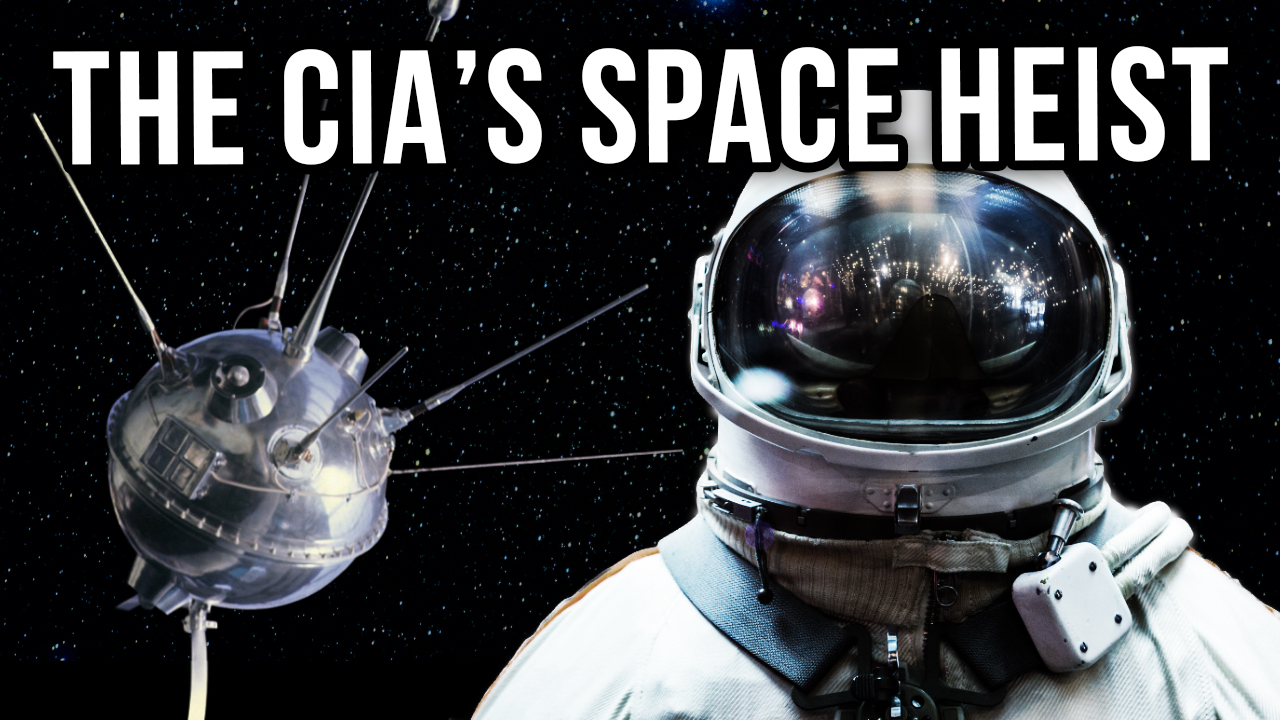
In any event, in late 1959 the Soviets, flush with victory, organized a touring international exhibition to show off the products of their great Communist economic system. Amid the usual displays of agricultural equipment and scale models of nuclear power plants were the crown jewels of the exhibition: full-scale models of Sputnik 1 and Luna 1, the latter encased in its upper rocket stage with glass-covered windows cut in its outer skin to show off the probe within. At least, everyone assumed they were models. But when some undercover CIA agents snuck into an exhibition after hours and examined the spacecraft closely, they became convinced that the Luna probe on display was, in fact, a genuine piece of space hardware. While the agents measured, sketched, and photographed every detail of the spacecraft’s interior, a more detailed examination in the exhibition hall was impossible. Immediately recognizing the opportunity to score a massive intelligence coup, the CIA thus hatched a daring plan to “kidnap” the Luna spacecraft.
It would not be easy. While on display the spacecraft was guarded round-the-clock by Soviet soldiers, while for transport between exhibition sites it was packed in a large wooden crate measuring 6 by 3.4 by 4.3 metres or 20 by 11 by 14 feet and shipped by rail and two sets of trucks. However, the operation was not entirely airtight; there were several weak points in the transport chain that the CIA could exploit. For example, while travelling by train the spacecraft was given no dedicated escort. And while Soviet agents were posted at the receiving train stations, communication with the exhibit organizers was poor and the agents were often unaware of what shipments to expect and when. They also did not inspect the crates’ contents when they arrived. These gaps in security allowed the CIA to pinpoint a few precious hours in which to secretly “borrow” the spacecraft – more commonly known in American circles by the pseudo-Russian moniker “Lunik.”
Sometime in late 1959 or early 1960 – the exact date remains classified – a crack team of four CIA agents from the Joint Factory Markings Centre left Langley, Virginia for Mexico City, where the Lunik had just finished being exhibited at the Auditorio Nacional. Under the cover of darkness, they stopped the truck carrying the spacecraft to the railway station, escorted the driver to a nearby hotel, and parked the truck in a nearby salvage yard, whose high walls concealed the agents from prying eyes. Meanwhile, CIA agents monitoring the railway station watched as the Soviet agents on duty returned home to their hotel rooms, apparently not realizing that a key piece of hardware had failed to arrive. The greatest heist in spaceflight history was on.
Back in the salvage yard, the agents set upon the massive crate with nail pullers, ropes, and crowbars. At first, the CIA worried that their forced entry would be easily spotted by the Soviets, but closer examination revealed the crate to be in rough condition from constant handling, allaying their fears. However, they soon discovered that the crate’s sides and ends were bolted together from the inside, leaving the top lid as the only viable access point. This meant that the spacecraft could not feasibly be removed from the crate for study; the agents would have to work inside the crate itself.
The agents thus pried off the lid and, wearing only socks on their feet so as not to scratch the spacecraft’s delicate skin, used rope ladders to climb down inside. There, they immediately encountered another unexpected obstacle: covering the single nut that secured the nosecone to the rocket stage was a small plastic seal bearing the Soviet coat of arms, which had to be broken in order to access the interior of the spacecraft. While this should have derailed the operation before it had even begun, thankfully the CIA had an ace up their sleeve: a local contact who could manufacture a replica seal overnight. This brief scare out of the way, the agents, armed with hammers, screwdrivers, cameras, flashlights, and – most importantly – metric wrenches, set about meticulously disassembling, measuring, and photographing every square inch – or rather, centimetre – of the Lunik.
This proved more challenging than anticipated, the awkward design of the rocket stage making it difficult to disassemble and inspect. For example, The rear bulkhead, the only means of accessing the engine compartment, was held in place by no fewer than 130 bolts! But working carefully and methodically the agents made steady progress. While much of the vital engine hardware and electronic equipment had been stripped from the vehicle, the agents were still able to photograph, measure, and weigh mounting brackets, propellant tanks, and other hardware to determine important parameters like propellant volumes, launch weights, and design stresses. This, in turn, would give clues as to the capabilities of Soviet launch vehicles. The agents also recorded the manufacturing marks on each component, allowing the manufacturing and supply chain of the Soviet space program to be better understood. Finally, several electrical connectors had been left in the stage; assuming that Soviet engineers and intelligence officers had intended to remove all electrical equipment, the CIA agents removed these components and brought them back to the United States for further analysis.
The agents worked from 7:30 PM to 4:00 AM the following morning, whereupon they set about carefully reassembling the spacecraft. This, too, proved more challenging than anticipated, as a 1967 CIA report reveals:
“The first job, re-securing the orb in its basket, proved to be the most ticklish and time consuming part of the whole night’s work. We spent almost an hour on this, one man in the cramped nose section trying to get the orb into precisely the right position and one in the engine compartment trying to engage the threads on the end of a rod he couldn’t see. After a number of futile attempts and many anxious moments, the connection was finally made, and we all sighed with relief.”
Finally their work complete, the agents installed the replica seal, nailed the crate shut, and reunited the truck with its driver. At 7 AM, the CIA agents monitoring the railway station watched as the truck arrived and the Soviet agents returned from their hotel, supervised the transfer of the Lunik crate onto a waiting train, and left without a trace of suspicion. The plan had gone off without a hitch: for more than eight hours, the CIA had succeeded in “kidnapping” and examining a sensitive piece of high-tech space hardware right under the Soviets’ noses.
The Soviets never found out about the daring heist. Indeed, even within the CIA the incident remained largely obscure until 1967, when employee Sydney Finer wrote a sanitized account of the caper titled The Kidnapping of the Lunik for the agency journal Studies in Intelligence. Outside the agency, the operation remained completely unknown until 1996, when American space historian Dwayne Day stumbled upon it in a batch of recently-declassified CIA documents and published an account in the British Interplanetary Society magazine Spaceflight. However, full details of the plot, including Finer’s 1967 article, were not officially declassified until 2019.
While the exhibition version of the Lunik had been stripped of its most sensitive components, the CIA’s brief eight-hour examination still yielded a wealth of valuable intelligence. As Sydney Finer’s 1967 article concludes:
“The results of analysis…included probably identification of the producer of this Lunik stage, the fact that it was the fifth one produced, identification of three electrical producers who supplied components, and revelation of the system for numbering parts that was used here and conceivably for other Soviet space hardware.”
By assessing the current state of the art of Soviet rocket technology, the United States was able to determine what the Soviet space program could and could not achieve without dramatic improvements in capability. This, in turn, allowed the U.S. space program to more effectively set its own goals and timelines and ultimately overtake the Soviets in the Space Race. The Lunik plot also dramatically showcased the CIA’s flexibility, ingenuity, and intelligence-gathering capabilities:
“But perhaps more important in the long term than these positive intelligence results was the experience and example of fine cooperation on a job between covert operators and essentially overt collectors.”
The Soviet Luna project carried on for another decade and a half, with fifteen missions being successfully flown between 1959 and 1976. Several of these missions achieved important spaceflight firsts. For example, on February 3, 1966, Luna 9 became the first spacecraft to soft-land on the moon and return images of its surface. Two months later on April 3, Luna 10 became the first spacecraft to enter orbit around the moon. On September 24, 1970, Luna 16 touched down on the lunar surface, collected soil samples, and returned them successfully to the earth, while on November 17 of that year Luna 17 successfully deployed Lunokhod 1, history’s first robotic planetary rover. By this time, however, the United States had already landed three manned missions on the moon – Apollo 11, 12, and 14 – completely eclipsing the Soviet achievements. Indeed, in a forgotten and rather pathetic incident, on July 21, 1969, mere hours before Apollo 11 astronauts Neil Armstrong and Buzz Aldrin ended their historic mission, the unmanned Luna 15 probe lost control and crashed into the lunar surface. Whoopsie-doodle!
Despite the Soviets’ early successes, soon a number of factors including a flagging economy, a string of failed launches, and the untimely death of chief designer Sergei Korolev allowed the U.S. space program to pull ahead, and by the late 1960s it became clear that the Americans had won the Space Race. In the early 1970s the Soviets cancelled their own manned lunar program and switched their focus to long-duration orbital spaceflight and the construction of permanent manned space stations, starting with Salyut 1 in 1971.
While today the U.S victory in the Space Race appears like a foregone conclusion, at the time this was far from the case – hence why the CIA was so keen to learn anything it could about Luna 1 and other Soviet Space hardware. Indeed, along with Operation Ivy Bells, a 1971 U.S. Navy caper covered in our previous video Silent Seas: the Top Secret, Greatest Cold War Naval Espionage Mission; and Project Azorian, an absolutely bonkers 1974 attempt to recover a sunken Soviet submarine from the bottom of the Pacific Ocean, the 1959 Lunik heist epitomizes the lengths U.S. Intelligence was willing to go to gain the upper hand in the 50-year global undeclared conflict known as the Cold War.
If you liked that video, please do subscribe to this channel, and check out our video here on The Real Story Behind Apollo 13 diving into the differences between the real mission and what was shown in the movie Apollo 13.
David, Leonard, ‘Lunik Heist:’ A real-life CIA Rocket Kidnapping Goes to Hollywood, Space Insider, November 17, 2024, https://www.space.com/space-exploration/launches-spacecraft/lunik-heist-a-real-life-cia-rocket-kidnapping-goes-to-hollywood
Clark, Abbi, The Lunik Plot: How the CIA Hijacked a Soviet Space Vessel, Grey Dynamics, August 4, 2025, https://greydynamics.com/the-lunik-plot-how-the-cia-hijacked-a-soviet-space-vessel/
Avilla, Aeryn, That Time the CIA Stole a Soviet Lunar Probe, Spaceflight Histories, June 30, 2023, https://www.spaceflighthistories.com/post/cia-soviet-probe
Hollings, Alex, How the CIA Hijacked a Soviet Spacecraft in 1959, Sandboxx, January 27,2022, https://www.sandboxx.us/news/the-cia-hijacked-a-soviet-spacecraft-in-1959/?ue-mini-cart-product-added
Teitel, Amy, The CIA’s Bold Kidnapping of a Soviet Spacecraft, Popular Science, October 21, 2015, https://www.popsci.com/cias-bold-kidnapping-soviet-spacecraft/
The Great Lunik Heist, Commonplace Facts, July 19, 2024, https://commonplacefacts.com/2024/07/19/lunik-heist-cia-soviet-spacecraft/
Finer, Sydney, The Kidnapping of the Lunik, Studies in Intelligence, Central Intelligence Agency, Winter 1967, https://www.cia.gov/readingroom/docs/THE KIDNAPING OF THE LUNI[15732838].pdf


| Share the Knowledge! |
          |
 |