
Catastrophe – The Biggest Disaster in Human Space Flight History
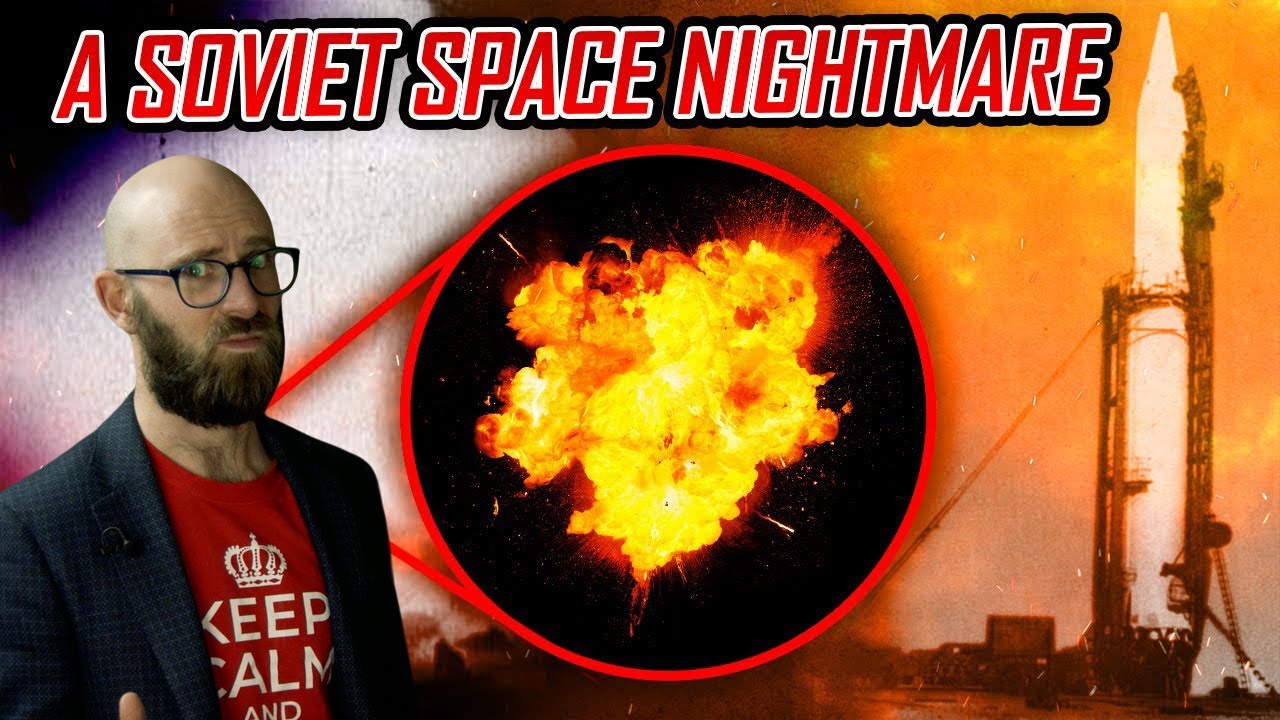 1,500 kilometres southeast of Moscow, sprawling over the rugged steppes of Kazakhstan, lies Baikonur Cosmodrome, the world’s first gateway to space. It is from this hallowed ground that Sputnik 1, the first artificial satellite, and Yuri Gagarin, the first man in space, blasted off on their historic missions – and a long time primary gateway to the International Space Station. Unsurprisingly given the site’s storied past and the often fraught nature of space travel, a great many superstitions have grown up around Baikonur over the decades. For example, prior to a launch cosmonauts traditionally watch the 1970 Soviet film White Sun of the Desert as a good luck ritual. They also urinate on the back-right tyre of the bus that carries them to the launch pad – as Yuri Gagarin is rumoured to have done in 1961. And if you’re curious here, female astronauts these days usually will simply bring a container of their pee with them to pour out on the tire. But one tradition is rather less cheerful and quirky: at Baikonur, rockets are never launched on October 24. This ominous taboo dates back to a largely forgotten 1960 incident in which an explosion on the launch pad led to the horrific deaths of nearly 200 people. This is the story of the Nedelin Catastrophe, Baikonur’s “Black Day”.
The launch of Sputnik I on October 4, 1957 shocked the world and signalled a frightening new phase in the escalating Cold War. For the R-7 Semyorka rocket that carried Sputnik into orbit was also the world’s first intercontinental ballistic missile or ICBM, capable of carrying a nuclear warhead from the heart of the Soviet Union to anywhere in the continental United States within 30 minutes. But while the R-7 was a potent symbol of Soviet technical prowess, like all first-generation ICBMs it was fundamentally flawed as a strategic weapon. The rocket was fuelled by kerosene and liquid oxygen, the latter of which could not be stored for long periods without boiling off. This meant that the missile had to be stored empty and fuelled just before launch – a process that could take up to 20 hours – making it extremely vulnerable to a surprise attack. The first American ICBM, the SM-65 Atlas, suffered from the same basic problem. Thus, by the time the R-7 became fully-operational in 1962, its replacement, the R-16, was already in service.
Designed by engineers Mikhail Yangel and Valentin Glushko of the OKB-586 Design Bureau in Dnipro, Ukraine, the 30-metre-long, 140-ton R-16 differed from the R-7 in a number of significant ways. When the R-7 was being developed, engineers had not yet figured out how to ignite rocket stages in flight, and thus gave the rocket an unusual “parallel staging” design, with four booster engines strapped around a central sustainer engine. All four engines were ignited at launch, with the boosters being jettisoned once they had expended their fuel – forming a distinctive shape known as the “Korolev Cross” after the R-7’s primary designer, Sergei Korolev. The R-16, by contrast, was of a more traditional configuration, its two stages being stacked atop one another. More relevant to its performance as a weapon, however, was the R-16’s propulsion system, which ran on a combination of Unsymmetrical Dimethyl Hydrazine and a mixture of Nitrogen Tetroxide mixed with Red Fuming Nitric Acid – a highly toxic and corrosive concoction nicknamed “Devil’s Venom.” These propellants were hypergolic – meaning they ignited on contact with each other and thus required no external ignition source – and, unlike liquid oxygen, could be stored at room temperature. In normal operation, R-16s were stored horizontally in hangars until the missile battery retrieved an alert. The missiles were then wheeled out, raised onto the launch pad, and fuelled. While this process could take up to three hours, once fuelled, the missile could be kept on alert for several days, ready to launch within 20 minutes of an order being received. But even this capability was limited, for eventually the highly-corrosive Devil’s Venom would begin to corrode the propellant lines, requiring the missiles to be de-fuelled and shipped back to the factory for refurbishment. Nonetheless, the R-16 was a vast improvement over the R-7, and arguably the Soviet Union’s first truly effective ICBM.
Achieving this effectiveness involved a long and painstaking development process – a process the head of the commander of the Soviet Strategic Rocket Forces, Marshal Mitrofan Nedelin, had little patience for. Though in October 1960 the R-16 program was actually several months ahead of its government-mandated schedule, Nedelin, eager to please his superiors, became obsessed with achieving a successful test launch before November 7, 1960 – the 43rd anniversary of the Bolshevik Revolution. In order to meet this deadline, Nedelin accelerated the launch timetable and ordered the technicians preparing the rocket to cut corners and ignore safety protocols. Thus, despite ongoing problems with the guidance system, on October 21 the missile was moved from its assembly building to the launch pad at Baikonur’s site 41, where ground crews began loading the volatile propellants. Though safety protocols called for all non-essential personnel to clear the area during fuelling, around 150 technicians remained on-site to complete other preparations. Marshal Nedelin even reportedly set up a chair at the base of the launch pad in order to personally supervise operations. To his growing frustration, technical problems continued to crop up, including propellant leaks and electrical glitches. On October 23, a major electrical fault prevented the propellant pumps from functioning properly. At the same time, explosive membranes separating the propellant tanks from the propellant lines had accidentally been triggered, flooding the lines with corrosive Devil’s Venom. This placed increased pressure on the Nedelin to launch the rocket as soon as possible, otherwise it would have to be completely rebuilt.
Ordinarily, the propellant would have been drained from the tanks before repairs could be performed, but as this would have further delayed the launch, Nedelin ordered the technicians to work directly on the still-fuelled rocket. Repairs on the propellant pumps dragged on until the next day, prompting Nedelin to return to the launch pad to investigate.
Then, catastrophe.
The subsequent investigation revealed that at some point during the launch preparations, a technician had placed a piece of equipment called the Programming Current Distributor or PTR on the wrong setting. This device determined the sequence in which various missile functions – such as engine ignition – would be activated, and the improper setting cause the batteries connected to the second-stage propellant valves to be powered on. Then, at 6:45 PM on October 24, another technician reset the PTR. This caused the rocket to believe it was already in flight and fire its second stage engines. The flames from the engines ripped through the first-stage propellant tanks, unleashing a massive fireball that engulfed the launch pad. A witness later recalled the horrific scene:
“At the moment of the explosion I was about 30 meters from the base of the rocket. A thick stream of fire unexpectedly burst forth, covering everyone around. Part of the military contingent and testers instinctively tried to flee from the danger zone, people ran to the side of the other pad, toward the bunker…but on this route was a strip of new-laid tar, which immediately melted. Many got stuck in the hot sticky mass and became victims of the fire…The most terrible fate befell those located on the upper levels of the gantry: the people were wrapped in fire and burst into flame like candles blazing in mid-air. The temperature at the center of the fire was about 3,000 degrees. Those who had run away tried while moving to tear off their burning clothing, their coats and overalls. Alas, many did not succeed in doing this.”
At the time of the explosion, there were approximately 250 personnel working on or around the launch pad. Those working on the pad itself were likely killed instantly, while those further away suffered slower, more agonizing fates at the hands of the flames, corrosive propellants, or toxic gases. Many who tried to flee the fireball found themselves trapped against the barbed-wire perimeter fence, where their final moments were captured by automatic cameras meant to record the test launch. 16 of the immediate survivors would later die of their injuries in hospital.
The explosion was so massive it could reportedly be seen as far as 50 kilometres away, while the fire on the launch pad burned for two hours before it was finally brought under control. Due to Soviet state secrecy surrounding the incident, the total number of victims is not known for certain, with official estimates ranging anywhere from 92 to 200. Among the dead were Marshall Nedelin himself, as well as several high-ranking officers including Lev Grishin, deputy chairman of the State Committee for Defense Technology; and Colonel Aleksandr Nosov, chief of the Baikonur Launch Command. Chief designer Mikhail Yangel, who at the time of the explosion was taking a smoke break behind a control bunker, miraculously survived.
The Soviet government quickly moved to cover up the incident, swearing all witnesses to complete secrecy. The death of Marshal Nedelin – well known to the Soviet people from his exploits during WWII – was officially attributed to a plane crash. Immediately upon learning of the disaster, Soviet premier Nikita Khrushchev dispatched Chairman of the Presidium of the Supreme Soviet Leonid Brezhnev to Baikonur to lead the official investigation. Brezhnev’s final report concluded that:“The direct cause of the accident was the shortcomings in the design of the control system, which allowed unscheduled operation of the of the EPK V-08 valve controlling the ignition of the main engine of the second stage during pre-launch processing. This problem was not discovered during all previous tests. The fire on the vehicle LD1-3T could’ve been avoided if the reconfiguration of the current distributor into a zero position was conducted before the activation of the onboard power supply.”
Surprisingly, no one was officially held responsible for the disaster, for, as Brezhnev reportedly explained,“All guilty had been punished already.”
All human remains that could be identified were returned to their families – who were also sworn to secrecy – while those that could not were swept into a single coffin and buried in Baikonur’s Lenisnk Park. A small memorial to the victims was later erected nearby – still visited by officials before every launch. Shrouded in state secrecy, the Nedelin Catastrophe quickly passed into legend, joining the ranks of other shadowy rumours and conspiracy theories swirling around the Soviet space program. And while an American Corona spy satellite captured images of the giant scorch marks on pad 41, analysts were unable to determine what had happened, and the incident lay forgotten for nearly three decades. It was not until 1989, following premier Mikhail Gorbachev’s “perestroika” reforms, that the state magazine Ogonyok finally revealed the full story of the Nedelin Catastrophe. Yet despite its obscurity, the Nedelin Disaster had an outsized impact on global events. By delaying the development of the R-16 missile, the accident likely influenced Nikita Khrushchev’s decision to station intermediate-range ballistic missiles in Cuba, triggering the 1962 Cuban Missile Crisis.
The R-16 program resumed in early 1961, with the first successful test launch taking place on February 2. The missile finally entered service in June 1963, with a total of 202 being deployed before the type was retired in 1976. Three years to the day after the Nedelin Catastrophe, a similar disaster struck Baikonur during the test launch of an R-9 Desna intermediate-range ballistic missile. While the 11-man launch crew was leaving the launch silo, an oxygen leak and electrical short triggered an explosion, killing seven and destroying the silo. Ever since, October 24 has been considered a “Black Day” for Baikonur, and no launches are attempted on that date.
Though barely remembered today, the Nedelin Catastrophe remains the deadliest single accident in spaceflight history, a tragic and humbling embodiment of the old astronaut’s motto per aspera ad astra – “a hard road leads to the stars.”
Speaking of space related shenanigans, why not check out our rather interesting video on the so-called Astronaut Strike Incident, in which NASA got a very expensive lesson in people management and what not to do.
Expand for ReferencesNedelin Disaster, Aerospace Web, https://aerospaceweb.org/question/spacecraft/q0179.shtml
Oberg, James, Disaster at the Cosmodrome, Air & Space Magazine, December 1990, https://web.archive.org/web/20061029060738/http://astronautix.com/articles/therophe.htm
Nedelin’s Disaster, Russian Space Web, https://www.russianspaceweb.com/r16_disaster.html
Chertok, Boris, Rockets and People: Creating a Rocket Industry Vol. II, NASA, Washington D.C, June 2006, https://history.nasa.gov/SP-4110/vol2.pdf



| Share the Knowledge! |
          |
 |