
Banning Michael Jordan from Wearing Air Jordans
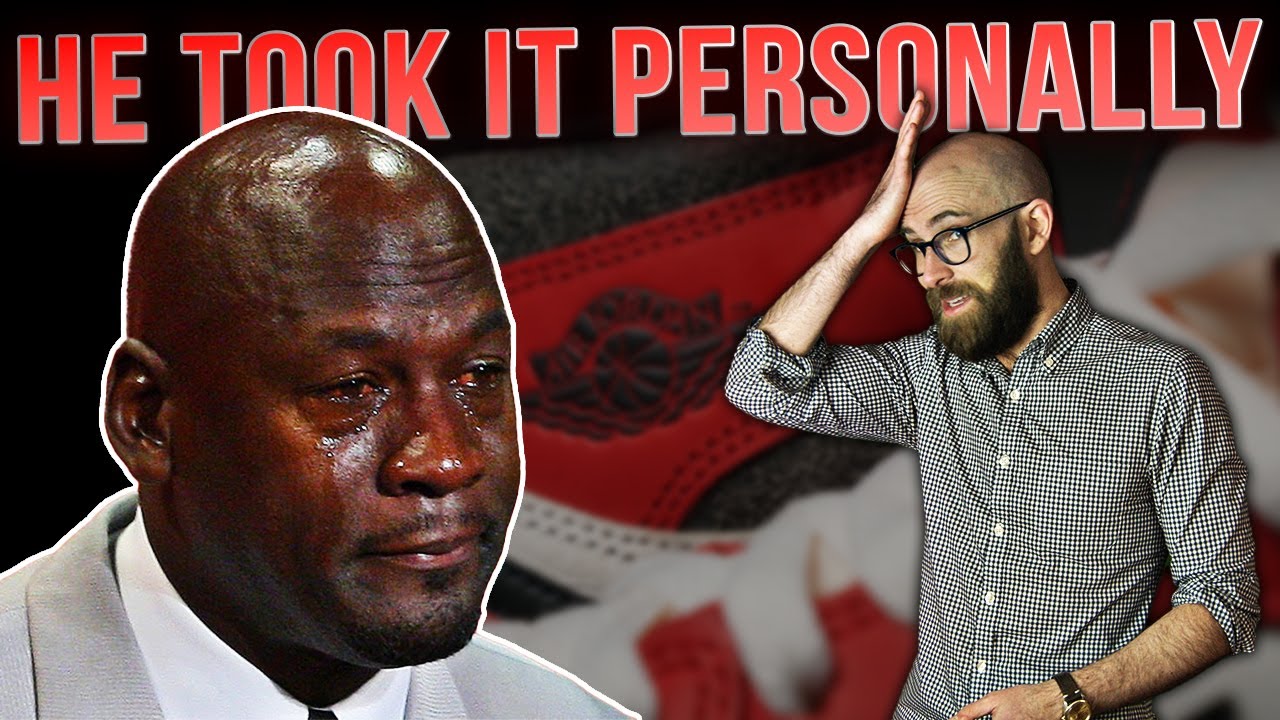 “On September 15th, Nike created a revolutionary new basketball shoe. On October 18th, the NBA threw them out of the game. Fortunately, the NBA can’t stop you from wearing them. Air Jordans from Nike.”
This is a quote from arguably one of the single most successful ad campaigns of all time- the initial release of the Air Jordan sneaker line. A brand that is worth billions to parent company Nike today and has, in its 40 years of existence, accomplished something very few items of clothing from the late 20th century has ever really managed- remaining stylish and something fashion conscious people actually want to wear decades later.
Part of the appeal of the shoe, at least initially and as noted in Nike’s own ad copy quoted previously, is that the shoe was banned by the NBA… Though the ad never mentions why the suggestion is that perhaps the shoe was too good or gave His Airness some kind of unfair advantage on the court. As it turns out, the shoe was never banned, but one that looked very similar was and Nike have gone to a not insignificant effort to bury this fact as it kind of ruins the narrative if you know the truth. But as we’re all about the messy details, let’s dive into this fiasco shall we?
Okay so first let’s tell the story as Nike likes to, at least in their advertising copy. Nike has long implied that Michael Jordan was initially banned from wearing a pair of special Nike shoes made exclusively for him in NBA games, and allegedly MJ was being fined $5,000 per game he wore the shoe. A fine the company happily paid because you literally cannot buy that kind of advertising, even though we guess they sort of did.
But as noted in the intro, the suggestion being made is that the shoe gave Jordan some kind of advantage on the court, which is absolutely a thing and there have been several bits of sporting equipment banned from organised competition for that exact reason.
For example consider the LZR Racer swimsuit which was banned after it was deemed the suit gave anyone wearing it an objective, measurable advantage in the water to the point literally over 90% of podium-placing Olympians at the Beijing games in 2008 wore one. For anyone curious about the numbers, the suit was shown to boost performance by around 1-2%, which may not sound like a lot, but remember that swimming records are measured to the hundredths of a second. As an idea of how much this suit improved performance, when Olympians wearing it started to dominate rumours began to circulate that the Olympic pool was too short. In reality the suit was just really, really good, with its efficiency lying in the fact it totally covered the athletes body in a new type of fabric designed to minimise the drag caused by their inefficient human skin.
When it was eventually discovered that it was the suit that had resulted in the literally record-breaking performance by near enough every athlete wearing it, the official governing body of international swimming, FINA, had it and suits made using a similar technology banned from competition. Deeming that wearing it went against “the spirit of the sport” where ideally, skill and natural talent should be the deciding factor in victory. Not equipment. For anyone wondering why they couldn’t just let every athlete wear one instead The fact a single LZR Racer suit cost upwards of $70,000 and took a team of people almost an hour to help the athlete into, probably helped inform that decision.
Back to the world of shoes and Nike, you have the Nike Alphafly’s, a running shoe that was similarly banned for providing the athlete wearing them with an objective, numerical advantage over someone of roughly equal skill, talent and build wearing an inferior, less cool shoe. With experiments funded by Nike concluding that the Alphafly provided athletes with a 4% boost to their “running efficiency” and a further 3% boost to their overall speed while in motion. Again, in a sport where records are measured in hundredth’s of a second, this is a big deal. As for how the shoe worked, Nike spent millions developing it and the exact science behind it is, according to Nike, closely guarded secret (though it’s possible this is just part of the marketing), but the simplified version is that the shoe has a larger than average midsole which provides superior cushioning to a regular running shoe as well as a “trio of carbon plates” in the base that minimises the energy lost when a runner’s foot hits the ground.
Similar to the LZR suit, the shoe was banned when World Athletics released new guidelines dictating the kind of footwear athletes could wear after Eliud Kipchoge ran a sub two hour marathon in 2019 and it was deemed his shoe was, at least partially, responsible. The specific part of the ruling that affected the Alphafly being a rule limiting the thickness of a shoe’s midsole and limiting the number of carbon plates a running shoe could contain to one. In response, Nike just made a new shoe that adhered to those regulations called the Vaporfly which was subsequently worn by the winners of “31 of 36 major marathons” that very year.
As you’ve probably surmised, this sort of thing is pretty common in organised competition with the governing bodies of various sports having to decide on what does and does not constitute an unfair advantage or go against “the spirit of the sport” and athletes and those who provide their equipment trying to figure out how to bend those rules to their own advantage as much as they’re technically allowed to.
With this in mind, it’s believable that the shoe Michael Jordan was wearing gave him some sort of unseen advantage, we mean, we just told you about a Nike shoe that was banned for literally that reason. And we’re sure Nike absolutely loved all of the speculation in the press about this being the case, but the truth is far more mundane. The shoe just didn’t match Jordan’s Chicago Bulls uniform.
You see, at the time in the NBA there was a rule that while players were allowed to wear whatever shoes they felt most comfortable in, they did have to match the rest of their uniform or be predominantly white. A requirement known informally as the 51% rule. Now on the surface the very specific number would suggest that the NBA were very particular about this but the truth is that they were rather lenient and it served as more of a guideline. They just didn’t want a player to look too out of place alongside the rest of their team and were happy to allow exceptions if it made sense, aesthetically. For example players for the Celtics would frequently wear bright green shoes without issue because, well, their uniform was green and the shoes matched that.
The same could not be said for Jordan when he rocked up wearing a pair of jet black Nikes with red accents for a Chicago Bulls preseason game. Which admittedly, did sort of stand out against Jordan’s uniform, though it’s mostly because he’s wearing them with a pair of crisp, Colgate-white socks, rather than otherwise not matching. Whatever the case the NBA weren’t happy and sent Jordan a letter informing him that he’d be fined if he continued to wear shoes with that colour scheme.
Right away you might notice a few, shall we say, discrepancies between that paragraph and the way Nike would tell the story in ads. The first is that Jordan was wearing the shoes in a pre-season game where the atmosphere is decidedly more relaxed than in regular season games. The second is that you’ll notice we said that the NBA sent Jordan a letter informing him that he would be fined, not that he had been fined. Which is where things start to get, as mentioned in the intro, a little muddy.
We know that His Airness was warned by the NBA against wearing a shoe that clashed with his uniform because Nike framed that letter and even used it in some of their advertising material, but it’s not really clear if the NBA ever actually followed through on this threat or if it was just, as the letter stated, a warning.
We say this because if Jordan was specifically warned against wearing his black and red Nikes in a game, he seems to have listened as there’s no photographic evidence of Jordan wearing that shoe in a game during his Rookie year save for a handful from the aforementioned pre-season game that resulted in the warning and a couple from the 1985 NBA Dunk Contest. For which regular rules on uniform are relaxed anyway.
In addition to there being no proof Jordan wore a shoe that would get him fined, there’s also no evidence of Nike paying any such fine during the same period. Which is, odd, right? Like Nike literally used the letter the NBA sent Jordan as part of its marketing but to date have never shown any proof that Jordan was ever fined or that they paid it.
Admittedly Jordan himself once claimed in a 2014 interview with ESPN that he was fined and that Nike paid it for him, but there aren’t records of either thing happening for this particular shoe.
The only known case Jordan was fined for wearing a certain shoe was the Concord Air Jordan 11’s in 1995. In response Jordan called Nike and asked for a pair of shoes that did adhere to uniform rules, with the only pair they had on hand being some Nike Air Flight Ones. The problem was that this shoe was the signature of another player, Penny Hardaway, and the shoes bore a small tag with Penny’s logo on it. Jordan cut this logo off before each and every game. As far as we can tell, this is the only time Jordan wore another player’s shoes in a game and is the only time we can be reasonably sure that he was actually fined. It’s unclear if Nike paid these fines, though given Nike would want to keep their most valuable brand asset happy, and the fine was a drop in the bucket compared to what they were paying Jordan and what they were making off the whole deal, seems likely enough they may have covered it for him.
But going back to the original shoe and advertising, it would seem then that the whole thing was a very clever bit of marketing on Nike’s part and we have to admit, they really capitalised on what was ultimately routine disciplinary action nobody would have heard or cared about if not for them. Years later Nike were still playing up to the supposed infamy of the Air Jordan, censoring the shoe in ads and as noted, using the initial warning Jordan was sent in advertising.
And here’s the most bizarre part of all of this- Michael Jordan wasn’t even wearing Air Jordans in that game!
To be clear, Michael Jordan absolutely wore Air Jordans throughout his career, he’d have been stupid not to, they literally had his name on them and he was being paid boatloads of money to do so. However, for his rookie year at that point, Jordan wasn’t wearing the shoe that would become synonymous with his name. But one that looked a hell of a lot like it.
The Nike Air Ship.
Now the Air Ship is a sort of forgotten relic of sneaker history, being understandably overshadowed by the megalith that is the Air Jordan brand. This said, in recent years Nike has “retroed” the shoe, releasing an updated version that sold quite well. Though not as well as re-releases of the original Air Jordan 1s, which is weird considering the original Air Jordans were just modified Air Ships.
You see, MJ inked the deal that would result in the Air Jordan brand in 1984 on literally the day that year’s NBA pre-season began, October 26th. While the brand had been working with Jordan to design the shoe that would eventually become synonymous with him, it wasn’t finished and Nike weren’t exactly keen on having Jordan go out and play in a shoe without their branding while they figured it all out. Especially after just paying him two and half million dollars for the privilege of having him exclusively represent their brand.
So the company had its design team cobble together a Frankenstein’s monster of a shoe using a pair of Air Ships as a base that were customised extensively to Jordan’s own taste. This included lower ankle height as well as soles that were less cushioned, with the soles of Jordan’s personal pair being fashioned from the Air Ship upper sole and the, at the time, prototype mid/outer sole of the still-in-production Jordans. Perhaps the most noteworthy feature of the shoes though were their colour, black and red with white accents. Meaning yes, it’s this shoe the NBA initially took issue with.
So how was Nike able to claim that the shoes the NBA complained about were Air Jordans and not a one-of-a-kind custom job made exclusively for Jordan? Well part of the reason why is that the two shoes looked very similar, sneakerheads might scoff at such a statement but Air Jordans were basically Air Ships modified to suit Jordan’s playstyle and the only pictures that existed of the prototypes he wore in that pre-season game or the first half of his rookie season weren’t exactly the highest quality. Today with the benefit of modern technology the differences are obvious, at least if you know what to look for, but keep in mind most people saw MJ wearing his custom Pre-Jordans on a grainy CRT television in a smoky bar or in a black and white photo in a newspaper.
To better sell that the shoes Jordan were wearing were indeed Air Jordans, or at least a prototype version, Nike would additionally print the words Air Jordan onto the heel. Though this wasn’t always the case with some versions instead having the words Nike Air on the heel and at least one pair that simply had the word Air on them. In the end the company decided on the Air Jordan name emblazoned across the ankle. With later versions sometimes incorporating a stylised silhouette of Jordan dubbed the Jumpman onto some aspect of their design, usually the tongue. As an aside, this logo was based on a photo spread Jordan did for LIFE magazine, for which he was dunking a basketball, or at least pictured to be doing so. He was also wearing New Balance shoes at the time, meaning technically, the logo for the Air Jordan is showing Jordan wearing a rival company’s shoes…
In any event, Jordan reportedly mostly made the switch to actual Air Jordan’s in November of 1984 when the shoe’s design was finalised.
Speaking of which, exactly how many jury-rigged Air Jordans Nike made for the man himself isn’t clear, though we do know that they made 25 of the initial black and red shoe that drew the ire of the NBA. These shoes are considered by many sneaker collectors to be the single most important shoe ever made and a handful are known to exist in private hands, though nobody is really sure where the rest are or whether they even still exist anywhere but a landfill.
Jordan was known to frequently give away shoes and other such things after games because, we mean, it’s not like he wasn’t able to get more and making your fans happy is always a good thing for any public figure, so every now and again prototype Jordans do show up at auctions and the like, with, for example, a pair Jordans gifted to a ball boy in 1984 selling for almost $1.5 million in 2021. This pair were revealed to indeed be a one of the custom jobs Nike made for Jordan which is why the price was so high. It’s arguable they’re literally one of a kind. Plus, they were signed, and for some reason a prominent person scribbling their name in ink on an object tends to make it worth more money.
This is, of course, all a drop in the bucket compared to what the man himself made from the brand, with Jordan reportedly still earning millions in royalties from sales of the shoe each and every year to this day. It’s good to be like Mike.
Bonus Facts:
- According to Michael Jordan’s daughter, Jasmine, he wouldn’t let his kids wear anything but Jordans around the house with her recalling that she would constantly bug her dad to buy her a pair of light up Skechers or Heelys (the shoe with wheels in the heel) and he would always say no. According to her the one time someone relented and bought her a pair, the next day she found them in the trash and a clean pair of Jordans in their place.
- Nowadays the NBA has no real formal rules about the kind of shoe a player can wear, allowing them to better express themselves and stand out on the court. Unlike certain other sports like baseball, and in academics history textbook writers, they have realized it’s important to allow the characters in your story to have their personalities if you want to keep people engaged in the story you’re telling. Amusingly in basketball, this has led to a number of informal rules devised by the players themselves, such as it generally being considered bad form to wear another player’s signature kicks when playing against them. Though some players deliberately flout this as a form of pre-game psychological warfare.
Expand for References
On his 60th birthday, 23 little-known sneaker stories about Michael Jordan
How Michael Jordan’s sneakers became a cultural phenomenon
Every Air Jordan Shoe That Michael Jordan Played In
Setting Straight the Story of the Nike Air Ship
The science of why Nike Alphaflys were banned from the Tokyo Olympics
Celebrity rules as the Olympics strays far from its ideal
THE SELLING OF MICHAEL JORDAN – Paywalled NYTimes Link
Nike Air Ship: the Original Air Jordan 1, Explained
The Nike Air Ship and The Genesis of the Jordan Line
The true story of the ‘banned’ Air Jordans
Shipwrecked: The Untold Story Behind Michael Jordan’s Banned Sneakers
History of the Air Jordan Jumpman Logo
Can you wear your opponent’s shoes on an NBA court? The unwritten rules are changing



| Share the Knowledge! |
          |
 |