
How Did Thanksgiving Become a National Holiday?
If you happen to have ever wondered how Thanksgiving became a national holiday in the U.S., this was largely thanks to the author of Mary Had a Little Lamb, Sarah Hale. Hale was insanely influential in just about every facet of American life from architecture to how people dressed to even helping to launch the careers of many American authors, including Edgar Allen Poe.
Here is an excerpt covering all this from my soon to be published book Quincy: The Story of America. If you’re interested in checking the book out, you can sign up to be notified when it launches here
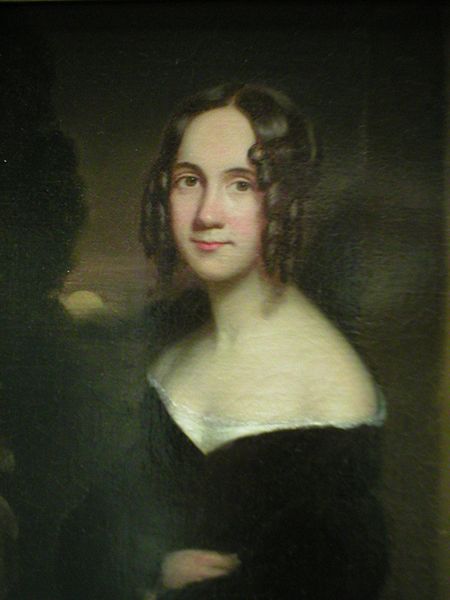 Born in New Hampshire shortly after the American Revolution to war veteran Captain Gordon Buell and his wife Martha, Sarah Josepha Hale’s otherwise relatively humble origins would belie her future massive influence on the United States. Critical for all this, Hale’s parents believed women should be educated and saw to it that she was, with her mother homeschooling her and her brother Horatio. Hale wrote of this in 1837, “I owe my early predilection for literary pursuits to the teaching and example of my mother. She had enjoyed uncommon advantages of education for a female of her times – possessed a mind clear as rock-water, and a most happy talent of communicating knowledge.”
This continued until it was time for her brother to attend a college, in this case Dartmouth, something that wasn’t an option for her. Her education nonetheless continued as she states, “[Horatio] seemed very unwilling that I should be deprived of all his collegiate advantages.”
Thus, after his classes were done each day, he would come home and go over everything he’d learned with his sister and then they’d proceed to study together. The culmination of this education was not only Horatio graduating from Dartmouth, but him awarding Sarah a diploma from the Horatio Gates Buell College, decreeing she’d graduated Summa Cum Laude with a degree in the Arts.
Much like another chief female character in the story of America, Abigail Adams, Sarah’s insatiable love of learning continued throughout her life, and was reciprocated and supported by her eventual husband, lawyer David Hale, whom she married in 1813 at the age of 25.
Hale describes her and her husband’s evening home life, “We commenced, soon after our marriage, a system of study and reading which we pursued while he lived. The hours allowed were from eight o’clock in the evening till ten; two hours in the twenty-four: how I enjoyed those hours! In all our mental pursuits, it seemed the aim of my husband to enlighten my reason… strengthen my judgment, and give me confidence in my own powers of mind, which he estimated much higher than I.”
The two would even help form a literary club where she took her first steps towards becoming a published author.
Unfortunately for the couple, David Hale died of pneumonia in 1822. Despite later becoming something of the queen of dictating fashion in the United States, from her husband’s death for the final 57 years of her life, Hale wore black clothing in perpetual mourning over the loss of her partner.
In the immediate upon his death, she was left with trying to figure out how to support herself and the couple’s five children, the fifth of which was born just two weeks after David’s death, all in an era where lucrative jobs for women were virtually non-existent.
Hale had previously spent time as a teacher, but resuming that profession wouldn’t have been sufficient to support her family, so, with the help of her deceased husband’s Masonic friends and her sister-in-law, she started a business making and selling hats for women.
But as for her long term plan, she elaborated that as there were “very few employments in which females can engage with any hope of profit… my own constitution and pursuits made literature appear my best resource.”
As such, she began writing in earnest, including successfully selling pieces she’d authored to various magazines such as the American Monthly, Minerva, and New York Mirror. On top of this, also with the help of the Free Masons, she published a book of poems called The Genius of Oblivion and Other Original Poems.
This book was initially only marginally successful, but it, combined with her articles and short stories, was enough to allow her to stop making hats and instead focus on writing a novel, Northwood: A Tale of New England, published in 1827, with a revised version published under the title Northwood: Life North And South in 1852.
Going back to Hale’s original 1827 version, beyond being one of the few novels at the time in America written by a woman, this was one of the first books that, in part, dealt with the plight of slaves in the United States as a central part of the plot, outlining not only their horrible situation, but also how she felt it degraded the morality of the slaveholders as well, and thus why the institution of slavery was bad for everyone and for the nation as a whole.
Northwood ended up selling extremely well and was eventually read by the Reverend John Blake, headmaster of the Cornhill School for Young Ladies. He was so impressed by Hale’s work in the novel that he offered her a position as the editor of a monthly he was starting in Boston, The Ladies Magazine.
Upon accepting the position, Hale officially became the first female editor of a magazine in the United States. She proceeded to move to Boston and produced The Ladies Magazine for eight years before it merged with Godey’s Lady’s Book, owned and edited by Louis Godey of Philadelphia.
Impressed with her work in The Ladies Magazine, Godey had previously attempted to woo Hale away from that publication, but she declined, happy with her current work and wanting to remain in Boston. Not giving up, Godey countered by offering to buy The Ladies Magazine and merge it with his own, as well as agreeing to allow her to manage it as she pleased and, for the cherry on top, agreed to allow her to run the whole thing from Boston.
Deal struck amicably, Hale held the position of editor for Godey’s, which would soon become known as “The Queen of Monthlies,” for four decades.
Despite being one of the most expensive magazines in the nation targeted at women throughout its publication run, she nonetheless soon had it also the most circulated, increasing their subscription base from an initial approximately 10,000 to 40,000 within two years of her taking over, to over 150,000 at its peak in 1860. She continued running the publication until she retired in 1877, at which point the periodical slowly dwindled, closing shop under two decades after her departure.
Noteworthy of the magazine’s influence beyond these numbers, owing to extremely rampant copying of Godey’s articles by newspapers and magazines across the nation, by 1845 they decided to take a rather unique step at the time of explicitly copyrighting their issues, the first magazine in the country to do this. This was something that was widely panned by countless other editors who now could no longer legally copy Godey’s articles without paying.
But in the beginning, with no significant competitors in the United States at the time and with her writing nearly half the content for each journal at this stage, both Godey’s Lady’s Book and Hale had a surprising influence in the United States during her tenure.
As to why Hale chose to write approximately half the articles herself in the early going, this was because she was adamant that the magazine would only use American authors, and there simply weren’t enough of them at first to fill the pages with the types of content she wanted each month. Most publications, including Godey’s before she took over, got around this problem by having the majority of the articles they published be copies of pieces by British authors.
Throughout her career, Hale further made a point of seeking out the most talented up and coming American authors she could find to help promote them to the very wide audience that subscribed to her magazine. Because of this, articles by most of the famed American authors of her era can be found in Godey’s, including several pieces by Edgar Allen Poe, with the earliest being among his first published works, the 1834 The Visionary, later renamed by Poe, The Assignation. Other famed authors who contributed pieces to Godey’s included Oliver Wendell Holmes Sr., Washington Irving, and Nathaniel Hawthorne.
She also influenced children’s music through her countless poems, many of which were used by such musicians as Lowell Mason, “The Father of of Musical Education in the United States,” whose Juvenile Lyre songbook both promoted the idea of musical education in school, and was eventually commonly used in schools across the nation.
Beyond all this, something of the Oprah of her day, Hale’s influence can be seen all throughout the United States during her lifetime having a significant effect on how women dressed; what they cooked; what literature they read; how they conducted themselves morally and in and out of the home- the list goes on and on.
She also wrote on a huge range of topics, not just specifically related to women, but also such random things as housing design, with many of Godey’s architectural house plans being popularly used by builders all over the country.
On top of that, she tirelessly promoted education for women, such as campaigning for Vassar College in a series of articles, as well as maintaining an extensive correspondence with Matthew Vassar himself over various facets of how the college should be set up and run, right down to her adamantly arguing for the removal of the word “Female” in the original name for the college, which was Vassar Female College. After much debate, the name was changed to Vassar College and the large marble slab that had the word “Female” engraved on the main building was likewise removed. Controversially, she also helped convince Vassar to hire a female administrator and female teachers for the institution.
On her stance with women and education, she argued, “The companion of man should be able thoroughly to sympathize with him and her intellect should be as well developed as his. We do not believe in the mental inequality of the sexes, we believe that the man and the woman have each a work to do, for which they are specially qualified, and in which they are called to excel. Though the work is not the same, it is equally noble, and demands an equal exercise of capacity.”
On this note, she maintained a regular section in Godey’s titled “Employment for Women” advocating for a broadened role for women in the nation’s workforce. However, while progressive in many areas, still a product of her time, much to the chagrin of suffragists and others advocating for women’s rights in her era, Hale believed in the concept of separate spheres of activity and roles for men and women. In particular, she believed that women should stay out of politics directly. In her view, women getting involved in such would only serve to degrade their morals, which would compromise their ability to function as the moral compass for the nation and for the men and children in it.
Nonetheless, particularly empathetic to women who’d lost their means of financial support in their husbands, in her spare time, she helped found the Seaman’s Aid Society in 1833 in Boston which is an organization that helps women obtain useful job skills, as well provides support by giving them a place to live and food to eat while they attempt to establish themselves. Originally, this society was started to help those women whose husbands were lost at sea, often leaving the surviving women and children destitute.
Hale was also a big part of getting the Bunker Hill Monument built. After construction was put on hold owing to lack of funding, she organized a craft fair in Quincy Market to raise money. A week long event, this, along with her explicitly asking each of her readers to donate towards the cause and why it was important, helped raise about $30,000, or around $1 million today, that strongly contributed to the monument being finished. She used a similar strategy to help see Mount Vernon preserved for posterity as well.
Hale also marshalled her readers in support of Elizabeth Blackwell being able to become the first female doctor in America, something Blackwell accomplished in 1849. In the aftermath, Hale continued campaigning for more women to join the medical field, a profession she felt women were particularly well suited for, in stark contrast to the general view at the time that women lacked the needed intellect and reasoning abilities.
Moving on from there, she regularly pushed exercise as important for the nation’s citizens, especially for kids as “Physical health and its attendant cheerfulness promote a happy tone of moral feeling, and they are quite indispensable to successful intellectual effort.”
On the side, she published nearly fifty novels, books of poetry, cookbooks, housekeeping guides, etc outside of what she produced for the journal she was editor for. One such poetry book published in 1830, targeted at children, included “Mary Had a Little Lamb,” which was originally just called “Mary’s Lamb.”
Apparently bent on making the rest of us feel like underachievers in every possible way, she also edited several issues of the popular gift book: The Opal.
Moving on to holidays, Godey’s and Hale gave America their first popularly circulated picture of a decorated Christmas tree, which helped popularize the practice in the United States.
And, of course, there were her contributions to Thanksgiving and getting the holiday established on a set day nationwide.
Thanksgiving was previously popularly celebrated in New England at various times of the year, and similar practices could occasionally be seen in states throughout the nation.
A handful of times it had also been celebrated nationwide on the same day, with the first instance occurring in 1777 when Continental Congress declared a national day of Thanksgiving.
One of the delegates, Samuel Adams, wrote in the draft of the proclamation, the day was to be used to give thanks to God as “it had pleased him in his abundant Mercy, not only to continue to us the innumerable Bounties of his common Providence; but also to smile upon us in the Prosecution of a just and necessary war, for the Defense and Establishment of our unalienable Rights and Liberties; particularly in that he hath been pleased, in so great a Measure, to prosper the Means used for the Support of our Troops, and to crown our Arms with most signal success… It is therefore recommended to the legislative or executive Powers of these United States to set apart Thursday, the eighteenth Day of December next, for Solemn Thanksgiving and Praise: That at one Time and with one Voice, the good People may express the grateful Feelings of their Hearts, and consecrate themselves to the Service of their Divine Benefactor.”
George Washington would, on January 1, 1795, also proclaim February 19th of that year to be a national day of Thanksgiving. President John Adams would do similar in 1798 and 1799, with President Thomas Jefferson breaking the tradition. It would be taken up again by President James Madison in 1814, but the practice on the national level died off after Madison.
Throughout all of this, New Englanders in particular commonly celebrated thanksgivings at various times each year when there was something significant to give thanks for. Hale simply felt a version of the tradition should become a national holiday on a set day. She thus proceeded to petition every governor in the United States to unify to declare a day of Thanksgiving on the same day in every state across the nation.
While some progress was made over time, such as in 1847 when she celebrated in one of her editorials, “the last Thursday of last November [1847] was kept as Thanksgiving Day in twenty-four of the twenty-nine states.” It still wasn’t every state, and depended on the whims of given governors each year.
Thus, beyond these efforts, she also petitioned five presidents from Zachary Taylor to Abraham Lincoln on the matter, not to mention Congressman, Senators, and writing annual editorials on the subject pushing the idea with her readers and the types of things that should be tradition to do and eat on that day.
This all brings us to President Abraham Lincoln, who was seeking any and all methods possible to help unify the country.
While Lincoln had previously declared a day of Thanksgiving in April of 1862 following Union victories at Fort Donelson and Fort Henry, Hale had long argued the national holiday should occur at the end of November, as “The last Thursday in November has these advantages — harvests of all kinds are gathered in — summer travellers have returned to their homes — the diseases that, during summer and early autumn, often afflict some portions of our country, have ceased, and all are prepared to enjoy a day of Thanksgiving.”
Hale’s final letter to Lincoln on the subject was mailed on September 28, 1863, in which she wrote of the near universal approval of the idea of such a national holiday among governors and other political leaders she’d discussed with, but how slow the progress was going towards this end. However, she writes, “it has occurred to me that a proclamation from the President of the United States would be the best, surest and most fitting method of National appointment… As the President of the United States has the power of appointments for the District of Columbia and the Territories; also for the Army and Navy and all American citizens abroad who claim protection from the U. S. Flag — could he not, with right as well as duty, issue his proclamation for a Day of National Thanksgiving for all the above classes of persons? And would it not be fitting and patriotic for him to appeal to the Governors of all the States, inviting and commending these to unite in issuing proclamations for the last Thursday in November as the Day of Thanksgiving for the people of each State? … [By] the noble example and action of the President of the United States, the permanency and unity of our Great American Festival of Thanksgiving would be forever secured…”
After reading Hale’s letter and thinking the matter over, on October 3rd, Lincoln decided to declare the last Thursday in November as a national Thanksgiving holiday, which it became that same year.
Lincoln’s proclamation on the matter read in part,
“In the midst of a civil war of unequalled magnitude and severity, which has sometimes seemed to foreign States to invite and to provoke their aggression, peace has been preserved with all nations, order has been maintained, the laws have been respected and obeyed, and harmony has prevailed everywhere except in the theatre of military conflict… Needful diversions of wealth and of strength from the fields of peaceful industry to the national defence, have not arrested the plough, the shuttle, or the ship; the axe had enlarged the borders of our settlements, and the mines, as well of iron and coal as of the precious metals, have yielded even more abundantly than heretofore. Population has steadily increased, notwithstanding the waste that has been made in the camp, the siege and the battle-field; and the country, rejoicing in the consciousness of augmented strength and vigor, is permitted to expect continuance of years, with large increase of freedom.
No human counsel hath devised nor hath any mortal hand worked out these great things. They are the gracious gifts of the Most High God, who, while dealing with us in anger for our sins, hath nevertheless remembered mercy.
It has seemed to me fit and proper that they should be solemnly, reverently and gratefully acknowledged as with one heart and voice by the whole American people. I do therefore invite my fellow citizens in every part of the United States, and also those who are at sea and those who are sojourning in foreign lands, to set apart and observe the last Thursday of November next, as a day of Thanksgiving and Praise to our beneficent Father who dwelleth in the Heavens… and fervently implore the interposition of the Almighty Hand to heal the wounds of the nation and to restore it as soon as may be consistent with the Divine purposes to the full enjoyment of peace, harmony, tranquility and Union…”
Happy, but not fully satisfied, Hale would shift the focus of her campaign to Congress to try to get them to establish the date of Thanksgiving officially without need of a Presidential proclamation, writing in 1871, “As things now stand, our Thanksgiving is exposed to the chances of the time. Unless the President or the Governor of the State in office happens to see fit, no day is appointed for its observance. Is not this a state of things which calls for instant remedy? Should not our festival be assured to us by law? We hope to see, before many months have elapsed, perhaps before our next Thanksgiving, the passage of an act by Congress appointing the last Thursday in November as a perpetual holiday, wherein the whole nation may unite in praise to Almighty God for his bounty and love, in rejoicing over the blessings of the year, in the union of families, and in acts of charity and kindness to the poor.”
But she had already won. From that point on until the point when congress officially set the date of Thanksgiving into U.S. law in 1941, every U.S. President would annually declare the last Thursday in November as a national holiday for giving thanks, with the exception of Lincoln’s successor in Andrew Johnson picking December 7, 1865 for the day, and much later Franklin D. Roosevelt mixing it up as well.
As for Roosevelt, he declared the second to last Thursday in November as Thanksgiving in 1939, 1940, and 1941.
Why the break from tradition?
Well, by the 1930s, the Friday after Thanksgiving had become the official start of the Christmas shopping season among the vast majority of retailers. However, this tradition resulted in those institutions being unhappy with the length of that shopping season on Novembers where the last Thursday was the fifth Thursday in November. Thus, with the strong encouragement of lobbyists for various retailers, and hoping for any boost in the economy he could help spur, in 1939 Roosevelt decided to change the official date of Thanksgiving to be on the second to last Thursday in November, in order to lengthen the Christmas shopping season as much as possible.
Humans often hating change, “Franksgiving” wasn’t exactly a hit for many, with a full 22 states refusing to go along with Roosevelt’s date. Proving yet again that everything is bigger in Texas, Texans decided to hold a Thanksgiving holiday on both days.
This mess finally spurred congress to step in, officially setting the date for Thanksgiving in October of 1941 to go into effect in 1942. In true congressional form, the date they set was a compromise, being the fourth Thursday, which was sometimes the last and sometimes the second to last of November.
Going back to Sarah Hale, her contributions to Thanksgiving didn’t stop with her advocacy for it. She wrote numerous editorials that were widely circulated outlining various recipes to be used for Thanksgiving dinner, mostly derived from common recipes found at New England Thanksgivings at the time. These included many things now traditional to serve on Thanksgiving, such as turkey, stuffing, pumpkin pie, cranberry sauce, and mashed potatoes.
Hale retired in 1877 when Godey’s was sold to Frank Munsey, which coincidentally was the same year Thomas Edison recorded her children’s poem Mary Had a Little Lamb with his revolutionary phonograph, the first device in human history able to record and play back sound. Hale died two years later on April 30, 1879 at the age of 91 years old.
If you enjoyed this, you can sign up to be notified when the book it comes from, Quincy: The Story of America, launches here


| Share the Knowledge! |
          |
 |