
Did the Hanging Gardens of Babylon Actually Ever Exist?
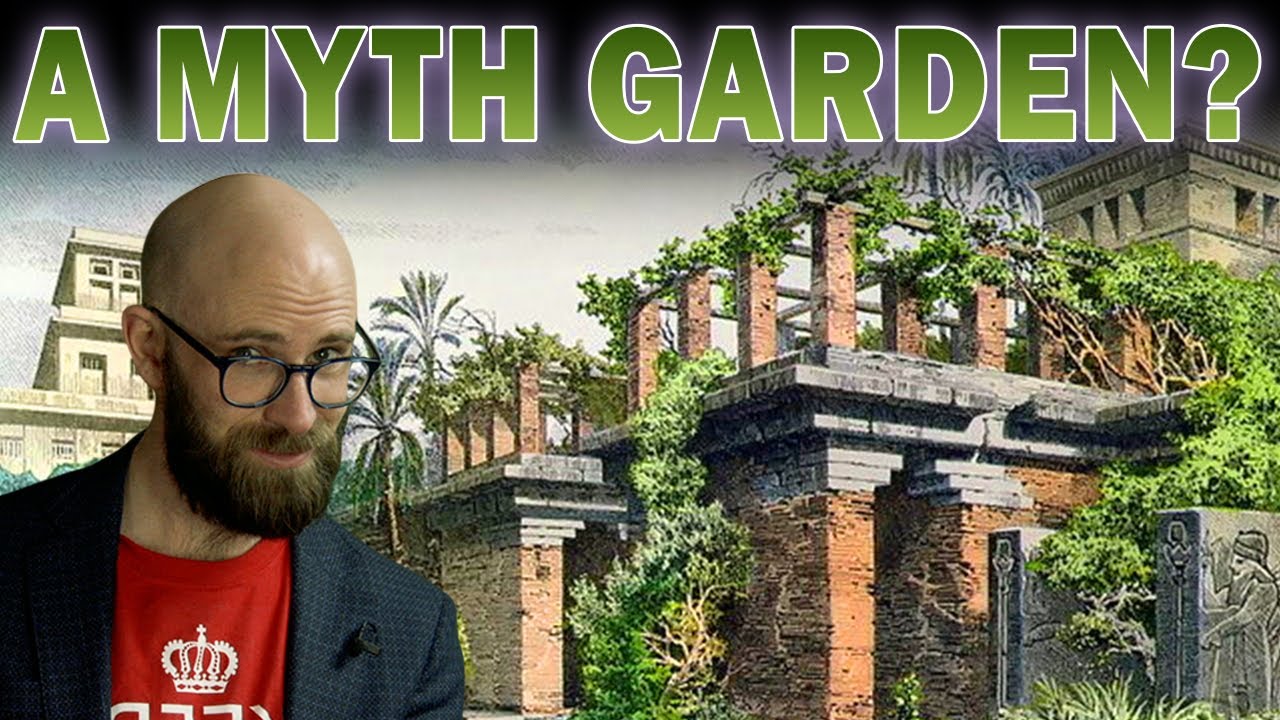 The Pyramids of Giza. The Pharos of Alexandria. The Colossus of Rhodes. The Temple of Artemis at Ephesus. The Hanging Gardens of Babylon. The Statue of Zeus at Olympia. The Mausoleum at Halicanarnassus. These are the Seven Wonders of the Ancient World, celebrated for millennia as the greatest architectural achievements of antiquity. Sadly, today only one of the original wonders – the Pyramids of Giza – are still standing, the rest having long ago crumbled to ruins. But while one can still visit many of these ruins and ponder their former magnificence, one ancient wonder remains frustratingly elusive: the Hanging Gardens of Babylon. Despite more than a century of searching, no trace of this enigmatic structure has ever been found. So what were the Hanging Gardens? What made them so special? Did they actually exist – and, if so, what happened to them? Let’s find out as we delve into the history and mystery of the missing Seventh Wonder.
The classic legend of the Hanging Gardens of Babylon tells that they were constructed by King Nebuchadnezzar II, who ruled the Neo-Babylonian Empire from 603-562 B.C.E. (And for those of you who paid attention in Sunday school, yes: this is the same Nebuchadnezzar who sacked Jerusalem and forced the Israelites into bondage). As the story goes, Nebuchadnezzar’s wife, princess Amytis of the ancient Persian kingdom of Media, found the sun-baked landscape of Mesopotamia depressing and longed for the lush forest and mountains of her homeland. So, in order to cheer her up, her husband constructed an oasis in the middle of the desert – an artificial mountain of brick and stone covered in hundreds of trees and other plants. But while this is the most common account, a rival story attributes the construction of the gardens to Queen Semiramis, a semi-mythical figure who supposedly ruled the Assyrian Empire during the late 9th Century B.C.E. Thus, several sources instead refer to the structure as the Hanging Gardens of Semiramis.
Whatever the case, the only evidence of the Gardens’ existence comes from the writings of seven ancient historians – all of whom wrote their accounts centuries after the Gardens were supposedly built. The oldest and most credible of these is Berossus of Kos, a priest of the Babylonian god Marduk who in 280 B.C.E. composed a guide to Mesopotamia and its culture titled Babyloniaca. Unfortunately, the original text has been lost, though it was extensively quoted by later writers like 1st Century C.E. Roman-Jewish historian Josephus:
“At his palace he had knolls made of stone which he shaped like mountains and planted with all kinds of trees. Furthermore, he had a so-called pensile paradise planted because his wife, who came from Media, longed for such, which was the custom in her homeland…within his palace he erected lofty stone terraces, in which he closely reproduced mountain scenery, completing the resemblance by planting them with all manner of tress and constructing the so-called Hanging Garden.”
It is interesting to note here that the modern term “paradise” is thought to derive from the walled gardens constructed in the region – specifically the old Persian pairi-daeza, meaning “to build a walled enclosure.”
Furthermore, the term “pensile” in Josephus’s account is derived from the ancient Greek word kremastos. This was originally translated as “hanging”, implying that the garden beds were suspended – for example, by a system of ropes. Today, however, scholars typically interpret the word’s meaning as closer to overhanging, evoking a more practical structure of stepped, overhanging terraces. Indeed, the next commonly cited account of the Gardens, by 1st Century Greek historian Diodorus Siculus, describes their construction as follows:
“The park extended four plethra on each side, and since the approach to the garden sloped like a hillside and the several parts of the structure rose from another tier on tier, the appearance of the whole resembled that of a theatre. When the ascending terraces had been built, there had been constructed beneath them galleries which carried the entire weight of the planted garden and rose lists by lists one above the other along the approach; and the uppermost gallery, which was fifty cubits high, bore the highest surface of the park, which was made level with the circuit wall of the battlements of the city. Furthermore, the walls, which had been constructed at great expense, were twenty-two feet thick, while the passageway between the two walls was ten feet wide. The roofs of the galleries were covered over with beams of stone between sixteen foot long, inclusive of the overlap, and four feet wide.”
For the curious, a plethron – plural plethra – was an ancient Greek unit of measurement composed of 100 podes or Greek Feet – themselves equivalent to between 296 and 324 millimetres. 600 podes made up one stadium – plural stadia – while 5000 podes made up one milion or Greek Mile. The cubit, meanwhile, was an ancient unit of measurement equivalent to the distance between one’s elbow and the tip of one’s fingers. Standard cubits were typically based on the measurements of a particular king, and thus varied by region and time period. At the time of the Gardens’ supposed construction, the Mesopotamian Cubit measured around 533 millimetres. Thus, according to Diodorus’s account, the Gardens measured 120 metres to a side – an area of around 1/10 of a square kilometre or 3.5 acres.
In addition to the Gardens’ general construction, Diodorus also describes how the terraces were waterproofed and irrigated:
“The roof above these beams had first a layer of reeds laid in great quantities of bitumen, over this two courses of baked brick bonded by cement, and as a third later a covering of lead, to the end that the moisture of the soil might not penetrate beneath. On all this again the earth had been piled to a depth sufficient for the roots of the largest trees; and the ground, when levelled off, was thickly planted with trees of every kind that, by their great size or any other charm, could give pleasure to the beholder. And since the galleries, each projecting beyond another, all received the light, they contained many royal lodges of every description; and there was one gallery which contained openings leading from the topmost surface and machines for supplying the gardens with water, the machines raising the water in great abundance from the river although no one outside could see it being done.”
Such waterproofing would have been essential to the Gardens’ operation, since stone as a building material was difficult to come by in Mesopotamia. Therefore, most structures were made out of sun-baked mud bricks. These were resilient enough to withstand the region’s infrequent rains, but under the vast flow of water needed to keep such a giant horticultural construction irrigated would have quickly dissolved away. Therefore, the Hanging Gardens were likely to have been one of the few structures in Babylon to make use of large stone slabs – a vital clue for archaeologists searching for their remains today.
As for the irrigation “machines” described by Diodorus, these are but one of the enduring mysteries surrounding the Hanging Gardens. Based on the accounts of Diodorus and others, archaeologists have long suspected that these machines were a form of Archimedean screw, a spiral ramp mounted inside a tube which, when rotated, can efficiently scoop up and raise water over large distances. While such screws were traditionally thought to have been invented around the 3rd Century B.C.E, a cuneiform tablet dating from the reign of Assyrian king Sennacherib, who ruled from 704-681 B.C.E, appears to describe the casting of Archimedean screws in bronze – pushing back the origins of these devices by 500 years. Another possibility is that the machines were a form of noria, a bucket-covered wheel driven by oxen or donkeys used throughout the middle east to raise water into irrigation canals. However, the earliest recorded use of noria dates from the 1st Century B.C.E, suggesting once again that these devices may be far older than originally thought.
The next two commonly cited accounts of the Hanging Gardens come from Roman historians Quintus Curtius Rufus and Strabo, the latter of whom confirms the dimensions and irrigation methods described by Diodorus:
“Babylon, too, lies in a plain; and the circuit of its wall is 385 stadia. The thickness of its wall is 32 feet; the height thereof between the towers if fifty cubits; that of the towers is sixty cubits; and the passage on top of the wall is such that four-horse chariots can easily pass one another; and it is on this account that this and the hanging garden are called one of the Seven Wonders of the World. The garden is quadrangular in shape, and each side is four plethora in length. It consists of arched vaults, which are situated, one after another, on checkered, cube-like foundations. The checkered foundations, which are hollowed out, are covered so deep with earth that they admit of the largest of trees, and have been constructed of baked brick and asphalt – the foundations themselves and the vaults and the arches. The agent to the uppermost terrace-roofs is made by a stairway; and alongside these stairs there were screws, through which the water was continually conducted up into the garden from the Euphrates by those appointed for this purpose, for the river, a stadium in width, flows through the middle of the city; and the garden is on the bank of the river.”
And finally, we come to the writings of Greek scientist Philo of Byzantium, who in 250 B.C.E. further elaborated on the sophisticated structural and hydraulic engineering of the Gardens:
“The whole mass is supported on stone columns, so that the entire underlying space is occupied by carved column bases. The columns carry beams set at very narrow intervals. The beams are palm trunks, for this type of wood – unlike all others – does not rot and, when it is damp and subjected to heavy pressure, it curves upwards. Moreover it does itself give nourishment to the root branches and fibres, since it admits extraneous matter into its folds and crevices. This structure supports an extensive and deep mass of earth, in which are planted broad-leaved trees of the sort that are commonly found in gardens, a wide variety of flowers of all species and, in brief, everything that is most agreeable to the eye and conducive to the enjoyment of pleasure….Streams of water emerging from elevated sources flow partly in a straight line down sloping channels, and are early forced upwards through bends and spirals to gush out higher up, being impelled though the twists of these devices by mechanical forces….This is a work of art of royal luxury, and its most striking feature is that the labour of cultivation is suspended above the heads of the spectators.”
Yet despite these lavish descriptions by Greek and Roman writers, contemporary Babylonian records do not mention the Hanging Gardens at all. This is especially strange given that Mesopotamian rulers were obsessed with recording lists of their achievements. Indeed, one set of cuneiform clay tablets called the Topography of Babylon describes the features of Nebuchadnezzar’s capital city in exhaustive detail, from giant constructions like walls, gates, and temples to the names of individual streets. Yet nowhere in this list does anything resembling a massive walled garden appear. Even stranger is the fact that such gardens were common throughout Mesopotamian history, with well-documented examples being constructed by rulers such as Tiglath Pileser at Nineveh in the 12th Century B.C.E, Assurnasirpal II at Nimrud in the 9th, and Martuk-Aplaiddina at Babylon in the 8th. Nonetheless, the sheer volume of later descriptions makes it impossible to dismiss the existence of the Gardens outright, forcing historians to look for other, more tangible evidence.
But while Babylon was one of the largest and most famous cities in the ancient world, its ruins remained buried and unexplored until 1899, when German archaeologist Robert Koldewey began his excavations of the site – located some 80 kilometres south of modern Baghdad. Over the course of 14 years, Koldewey uncovered many of the city’s major architectural features, including its outer walls, the lavishly decorated Ishtar Gate, and the remains of the Ziggurat of Martuk – the temple which some have speculated inspired the Biblical story of the Tower of Babel. While excavating the city’s southern citadel, Koldewey discovered a large basement containing 14 rooms with stone arches and strange holes in the floor. As the Hanging Gardens were one of the few sites in Babylon known to use stone in its construction, Koldewey concluded that he had at last discovered the location, and that the holes were for chain pumps that raised water from the basement to the roof. However, later archaeologists disputed Koldewey’s conclusions arguing that the site was located too far away from the Euphrates river to be practically irrigated. Furthermore, clay tablets discovered in the ruins suggest that the building was actually used as an administrative centre and storehouse. And despite more than a century of excavation, no other structure matching the descriptions of Josephus, Diodorus, Strabo and others has been discovered on the Babylon site.
So what, then, happened to the Hanging Gardens of Babylon? Sadly, the simplest explanation is that they never existed at all, and were simply invented by Greek and Roman writers as a romantic ideal of a Middle Eastern pleasure garden. Alternatively, some scholars suggest that the Gardens did exist but were destroyed by an earthquake in the Second Century B.C.E. Stripped of the protection of their elaborate stone and asphalt waterproofing, the largely mud-brick ruins then slowly eroded into oblivion. Or it may be that the ruins simply haven’t been found yet. After all, the Babylon site is enormous – covering 8.5 square kilometres – but only a small proportion of it has been thoroughly excavated. Furthermore, the River Euphrates has shifted significantly westward since the time of Nebuchadnezzar II, raising the possibility that the ruins of the Gardens may lay beneath its waters. Another, more disturbing possibility is that the ruins were bulldozed in 1987 along with large swaths of ancient Babylon when Iraqi dictator Saddam Hussein attempted to build a theme-park reconstruction of the ancient city on the site – and this is why we can’t have nice things…
All that said, some scholars now believe that the Hanging Gardens did indeed exist, just not in Babylon. While reexamining ancient Babylonian texts in 2013, Oxford University scholar Stephanie Dalley discovered that they had been mistranslated. Based on her own translations, Dalley began to suspect that the accounts of Josephus, Strabo and others actually refer to earlier gardens located in the city of Nineveh, 480 kilometres from Babylon. These gardens, built by Assyrian king Sennacherib between 704 and 681 B.C.E, are well-documented, being depicted in several carvings on the walls of the royal palace. Furthermore, the ruins of the Jerwan aqueduct, which carried water 50 kilometres from the mountains to Nineveh, bear the following inscription:
“Sennacherib king of the world . .. Over a great distance I had a watercourse directed to the environs of Nineveh, joining together the waters . . . Over steep-sided valleys I spanned an aqueduct of white limestone blocks. I made those waters flow over it . . .”
Carved depictions of these Gardens also adorn the walls of the palace, while extensive remains of irrigation equipment – including the 50-kilometre-long Jerwan aqueduct – have been uncovered around the Nineveh site.
This theory helps explain many of the inconsistencies in traditional accounts of the Gardens. For example, of the six main accounts we have covered, only those of Josephus – and by extension Berossus – definitively name Nebuchadnezzar II as the Gardens’ builder; all subsequent writers simply refer to an unnamed “Syrian King”. Thus it is possible that the achievements of Sennacherib and Nebuchadnezzar simply became conflated over time. This is supported by the fact that many of the classic accounts of the Hanging Gardens are ultimately derived from observations made during the Persian campaign of Alexander the Great. Prior to their victory over the Achaemenid Empire of King Darius III at the Battle of Gaugamela in 331 B.C.E, Alexander and his army camped for four days near the aqueduct of Jerwan outside Nineveh. This would have given the historians and other scholars travelling with the army a chance to examine the ruins and write up detailed descriptions, which were later copied and misattributed to Babylon and Nebuchadnezzar. Interestingly, this mix-up may have been due to a simple misunderstanding of the Akkadian language. The word Babylon translates to “Gate of the Gods,” and was applied to a number of ancient Mesopotamian cities. Thus, while Nineveh might have been a Babylon, it was not the Babylon familiar to the Greeks and Romans, resulting in a misunderstanding that has persisted for millennia.
The Nineveh theory also helps to explain a glaring inconsistency in the writings of Herodotus, the famous Greek historian from the 5th Century B.C.E. Despite being the only Greek chronicler believed to have actually visited Babylon, nowhere in his accounts does Herodotus mention anything resembling the Hanging Gardens – further suggesting that they were actually located elsewhere. Then again, Herodotus may not have actually visited Babylon – and even if he did, many of his accounts of other historic sites are strangely incomplete. For example, his detailed descriptions of the Pyramids of Giza do not once mention the Great Sphinx.
Yet despite this compelling evidence, the Nineveh theory remains only one of many possible explanations for the fate of the Hanging Gardens of Babylon. The whole truth cannot be known without either consulting Doctor Emmit Brown or with more concrete archaeological evidence – evidence that has become increasingly difficult to obtain due to the turbulent political situation in Iraq. In addition to Saddam Hussein’s 1987 vandalism of Babylon, in 2016 the great Maskhi Gate of Nineveh, along with hundreds of artefacts in the nearby Mosul Museum, were destroyed by the fundamentalist group ISIL as blasphemous idols. Such destructive acts, and the fact that so grand a structure as the Hanging Gardens of Babylon could have disappeared entirely, serve as sobering reminders of the fragility of the ancient past, how much human history may have been lost forever, and how much nothing any of us do matters because we’ll all be forgotten in due time, likely without even a single reference to use ever existing, if you think about it, putting our lives below the likes of some random garden that someone made at some point…
Expand for ReferencesJames, Peter & Thorpe, Nick, Ancient Inventions, Random House Publishing Group, 2006
The Hanging gardens of Babylon, The Museum of Unnatural History, http://www.unmuseum.org/hangg.htm
Cartwright, Mark, Hanging Gardens of Babylon, World History Encyclopedia, July 17, 2018, https://www.worldhistory.org/Hanging_Gardens_of_Babylon/
Alberge, Dayla, Babylon’s Hanging Garden: Ancient Scripts Give Clue to Missing Wonder, The Guardian, May 5, 2013, https://www.theguardian.com/science/2013/may/05/babylon-hanging-garden-wonder-nineveh
Johns, Kieren, The Hanging Gardens of Babylon: History, Legends, and More, The Collector, January 3, 2023, https://www.thecollector.com/hanging-gardens-babylon/
Learn, Joshua, A 2,500-Year-Old Mystery: The Hanging Gardens World Wonder, Discover, September 12, 2022, https://www.discovermagazine.com/the-sciences/a-2-500-year-old-mystery-the-hanging-gardens-world-wonder
Clayton, Peter & Price, Martin, The Seven Wonders of the Ancient World, Routledge, 1990, https://books.google.ca/books?id=vGhbJzigPBwC&pg=PA38&redir_esc=y#v=onepage&q&f=false



| Share the Knowledge! |
          |
 |